Ingredient selection
Frozen fruit vs fresh fruit is not about one universal winner
The correct format depends on the intended result and the operating model. Fresh fruit creates a particular experience where appearance and bite are critical; frozen fruit can support availability, portioning, and standardization. Both require controlled specifications and handling.
Quick answer
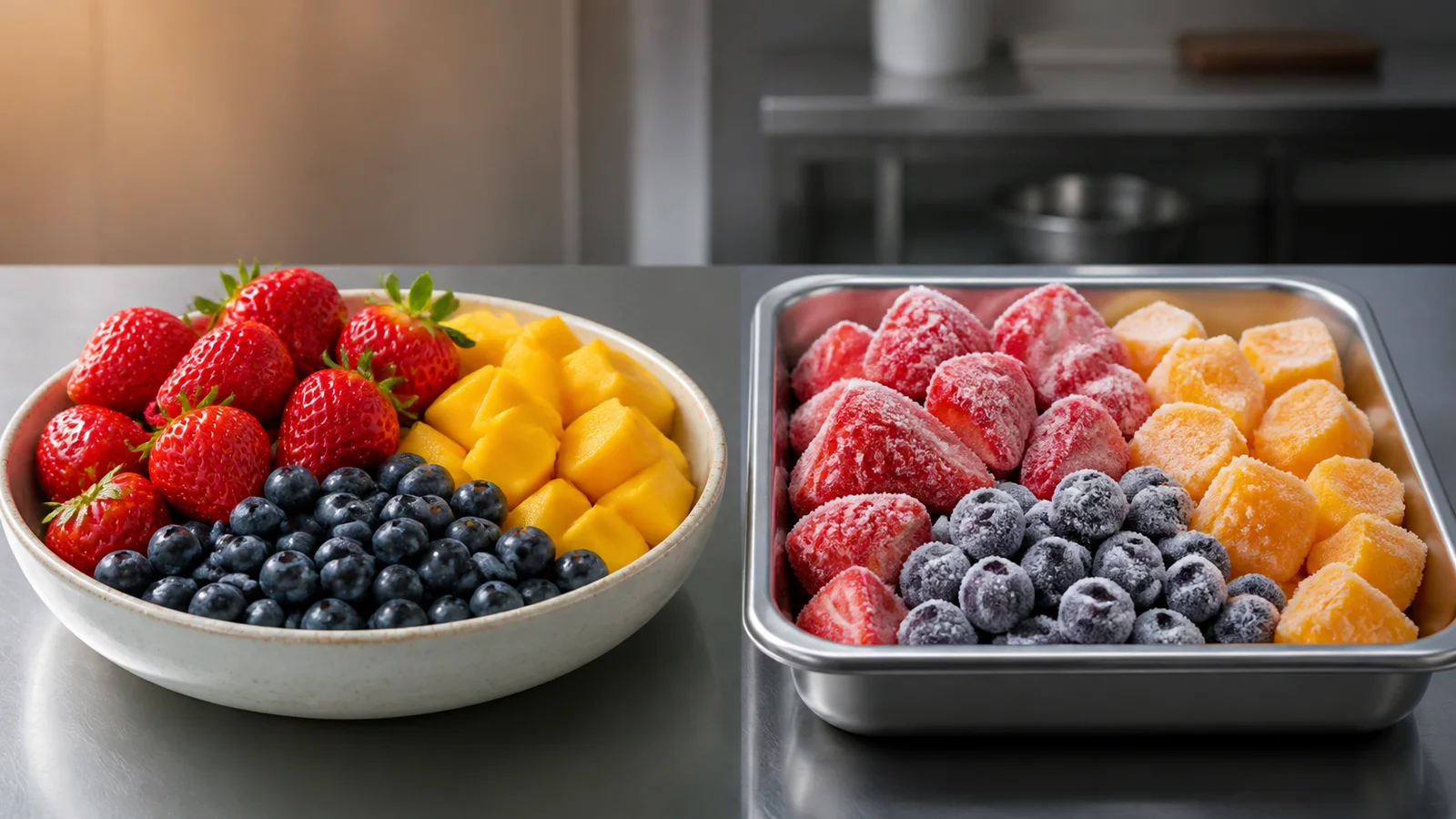
Frozen Fruit vs Fresh Fruit: Which Fits the Operation?
Choose fresh fruit for applications built around crispness, appearance, or immediate service. Consider frozen fruit when the operation needs planable stock, portion control, or out-of-season supply. Test texture, drip, yield, storage capacity, labor, and performance in the finished application before deciding.
- 01Compare cost per usable yield rather than purchase price per kilogram alone.
- 02Use the same process and thawing condition in a side-by-side trial.
- 03Do not claim that either format is always more nutritious or safer without product-specific evidence.
Start with the fruit's job in the product
Fruit used as a garnish, fruit cup, or visible topping is judged by shape, color, bite, and fresh appearance. In a smoothie, sauce, filling, or blend, the job may shift toward flavor, body, color contribution, and dosing. No format needs to win every application.
Write the critical-to-quality attributes before sourcing. If intact shape is mandatory, define size and defect limits. If the product will be blended, measure dosage, yield, and consistency. The brief lets the team assess fresh and frozen against the same criteria.
Availability, waste, and labor
Fresh fruit can vary with season, ripeness, and lead time. Operations may need to sort, wash, peel, trim, or cut it. These activities add labor and create trim loss that belongs in the yield calculation.
Frozen fruit is commonly supplied in a defined format, which can improve planning and portioning. It still requires freezer capacity, energy, protected handling, and a thawing plan. An overloaded or frequently opened freezer can become a bottleneck that removes the operating advantage.
| Area | Fresh fruit | Frozen fruit |
|---|---|---|
| Texture | Can retain bite for immediate use | May soften after thawing |
| Preparation | May require sorting and cutting | Often supplied in a defined cut style |
| Storage | Chilled or ambient by commodity | Requires a cold chain and freezer |
| Planning | Affected by season and ripeness | Stock can be scheduled when supply is available |
Texture and drip after thawing
Freezing creates ice crystals that can disrupt part of the cell structure. During thawing, some fruits release liquid and become softer. The change depends on fruit type, maturity, cut size, freezing, storage history, and thawing method.
That can be a disadvantage for a garnish but may not matter in a smoothie or sauce. A trial should reproduce real use and handle released liquid as the operating procedure will. Do not discard drip in the trial if operations will use it, or include it if they will not.
Food safety and the cold chain
Freezing stops or slows the activity of many microorganisms but does not sterilize food. After thawing, conditions may again support growth, so time-temperature control, hygiene, and separation remain important. Fresh fruit also requires controlled sourcing and handling.
For a frozen format, review temperature history, pack integrity, lot code, and signs of thaw-refreeze. For fresh fruit, review maturity, damage, contamination risk, and transport. The food-safety program should follow the hazard assessment for the product rather than an assumption based on format.
Building a fair cost comparison
Calculate landed cost, preparation labor, trim loss, storage, energy, spoilage, portion variance, and service time. A lower ingredient price can become more expensive when usable yield is poor or preparation limits throughput. A frozen format can likewise be inefficient if freezer and thawing workflow are inadequate.
Run a pilot long enough to observe waste and labor, not merely one tasting session. Review supplier lead time, minimum order, pack size, documentation, and contingency planning. The decision should connect product performance with operating capability.
Primary references
These references support the educational framework. Product-specific and regulatory decisions still require current-document review by qualified personnel.
Related ingredients
Frozen Fruit
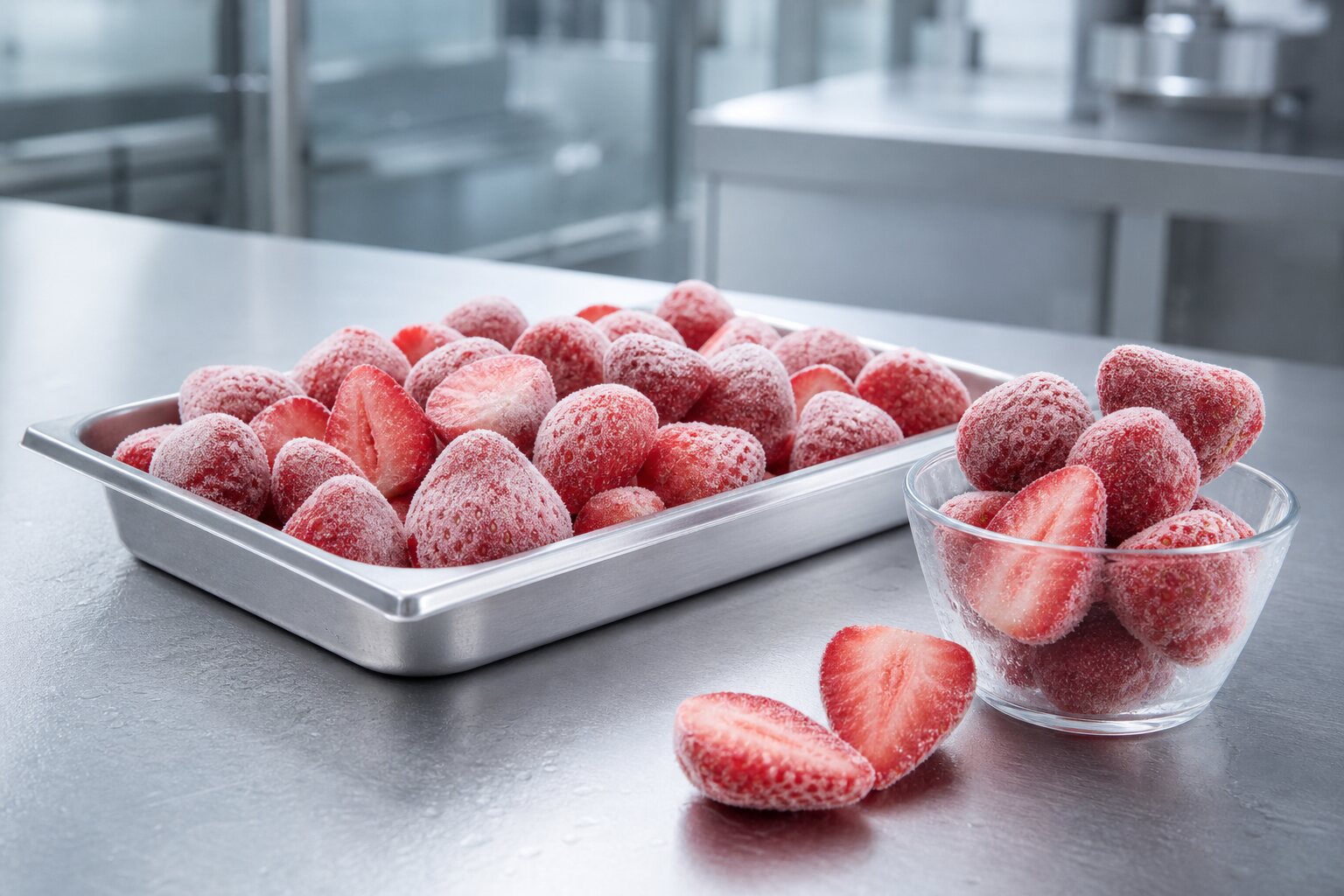
Frozen Strawberry
Frozen strawberry for hotel, beverage-chain, dessert, bakery, and central-kitchen use with application-led review of fruit format, thawing, liquid release, portioning, yield, and workflow.
Frozen Fruit
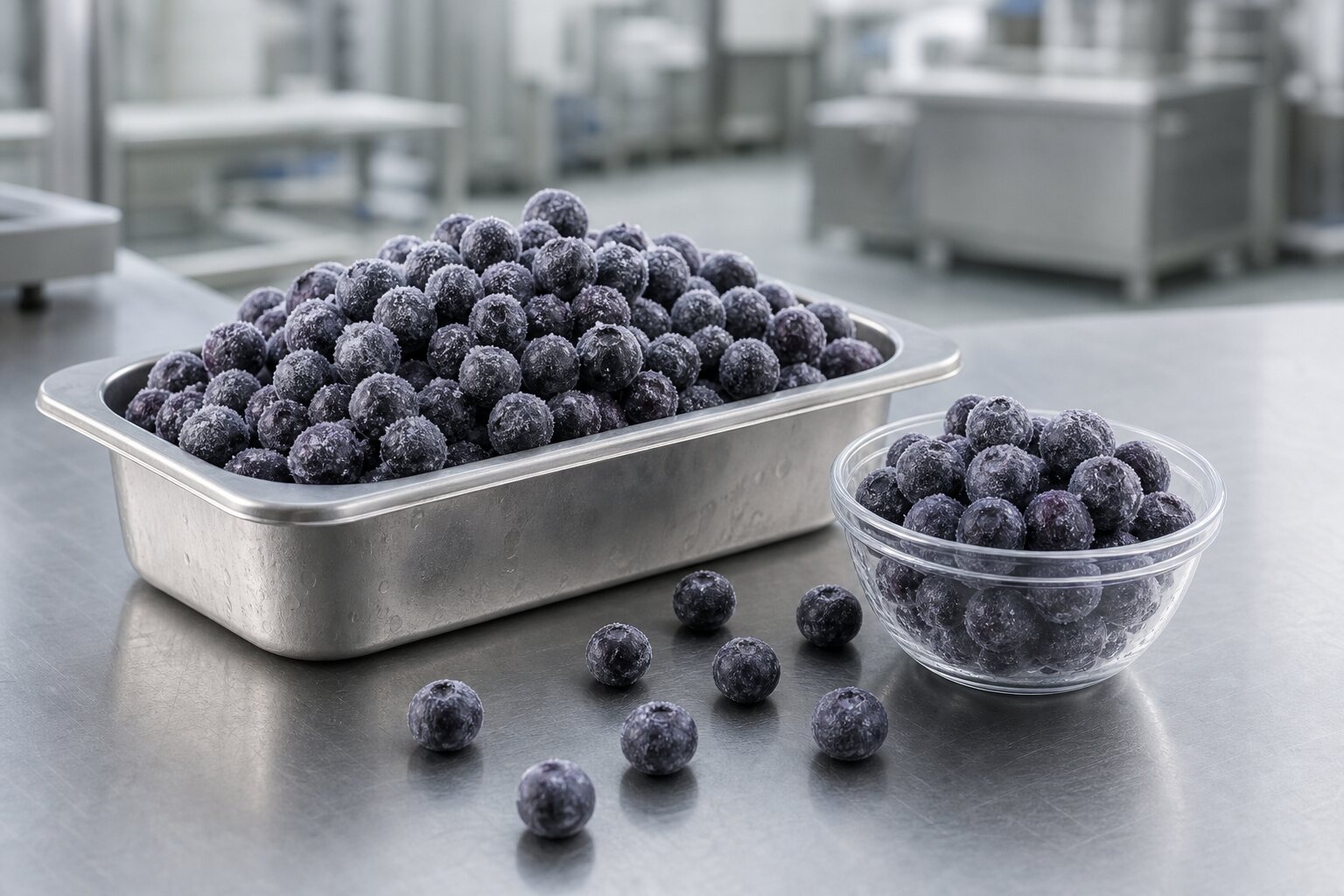
Frozen Blueberry
Frozen blueberry for hotel, cafe, bakery, dairy, dessert, and beverage use with application-led review of cold handling, thawing, liquid release, fruit integrity, yield, and workflow.
Slicing & Chunky
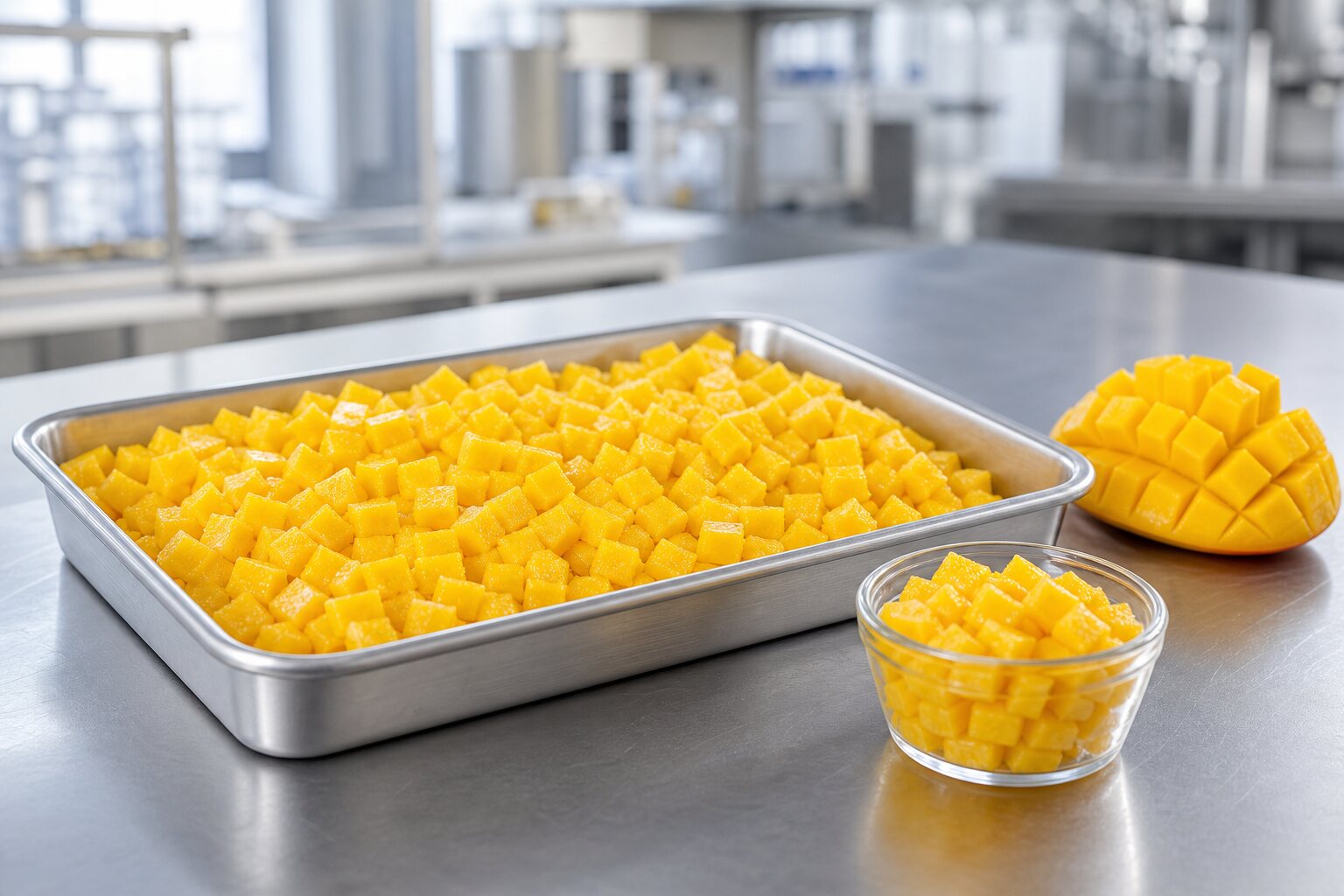
Mango Chunky
Mango chunky for hotel, cafe, beverage, dessert, bakery, topping, and filling use with application-led review of cut size, bite, piece integrity, portioning, yield, and costing.
Continue to sourcing guides
Frozen fruit for F&B operations
Frozen fruit for horeca, bakery, dairy, dessert, and F&B production. Practical for stock control and daily use in service or production.
Frozen fruit for smoothies, juice bars, and beverage chains
Frozen fruit for smoothies, juice bars, cafes, hotels, and beverage chains that need practical fruit stock, easier portion control, and consistent menus.
Keep learning
Related articles
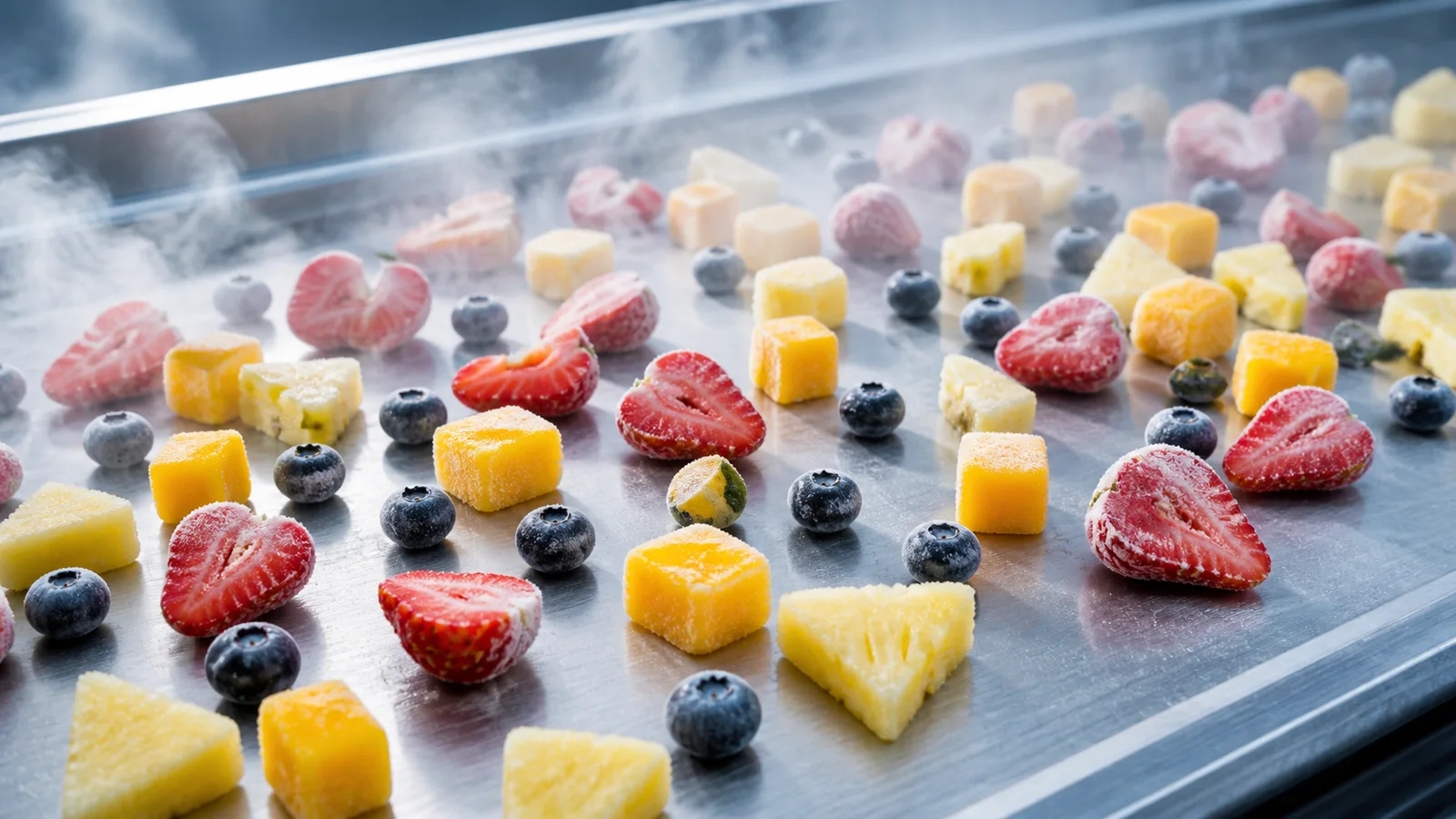
Frozen fruit
What is IQF, and what does it mean for a frozen-fruit user?
Understand Individually Quick Frozen fruit, piece separation, handling and quality implications, plus a practical sourcing checklist.
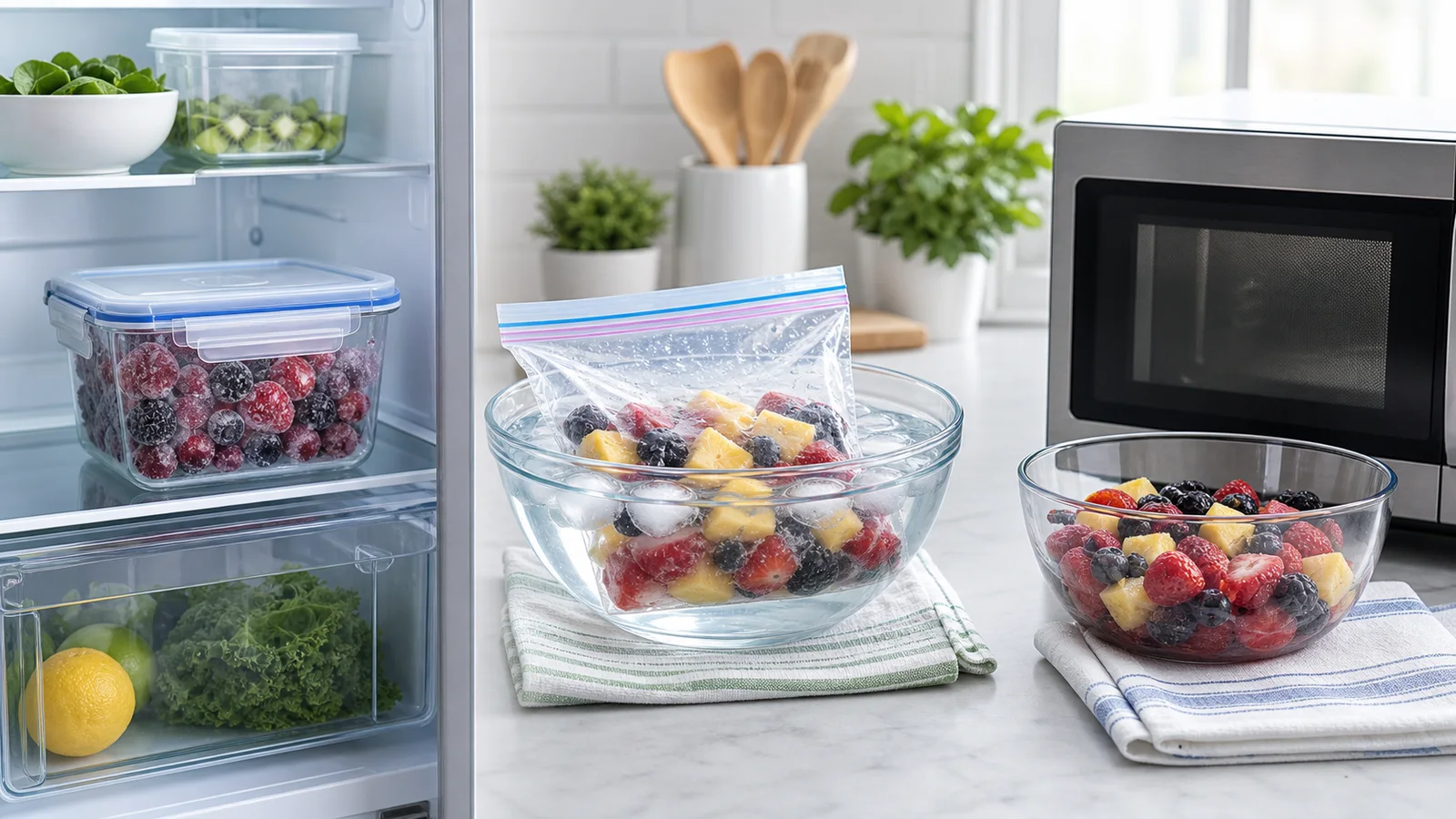
Food handling
How should frozen fruit be thawed safely?
A practical guide to refrigerator, cold-water, and microwave thawing for frozen fruit, including handling, use timing, and common mistakes.
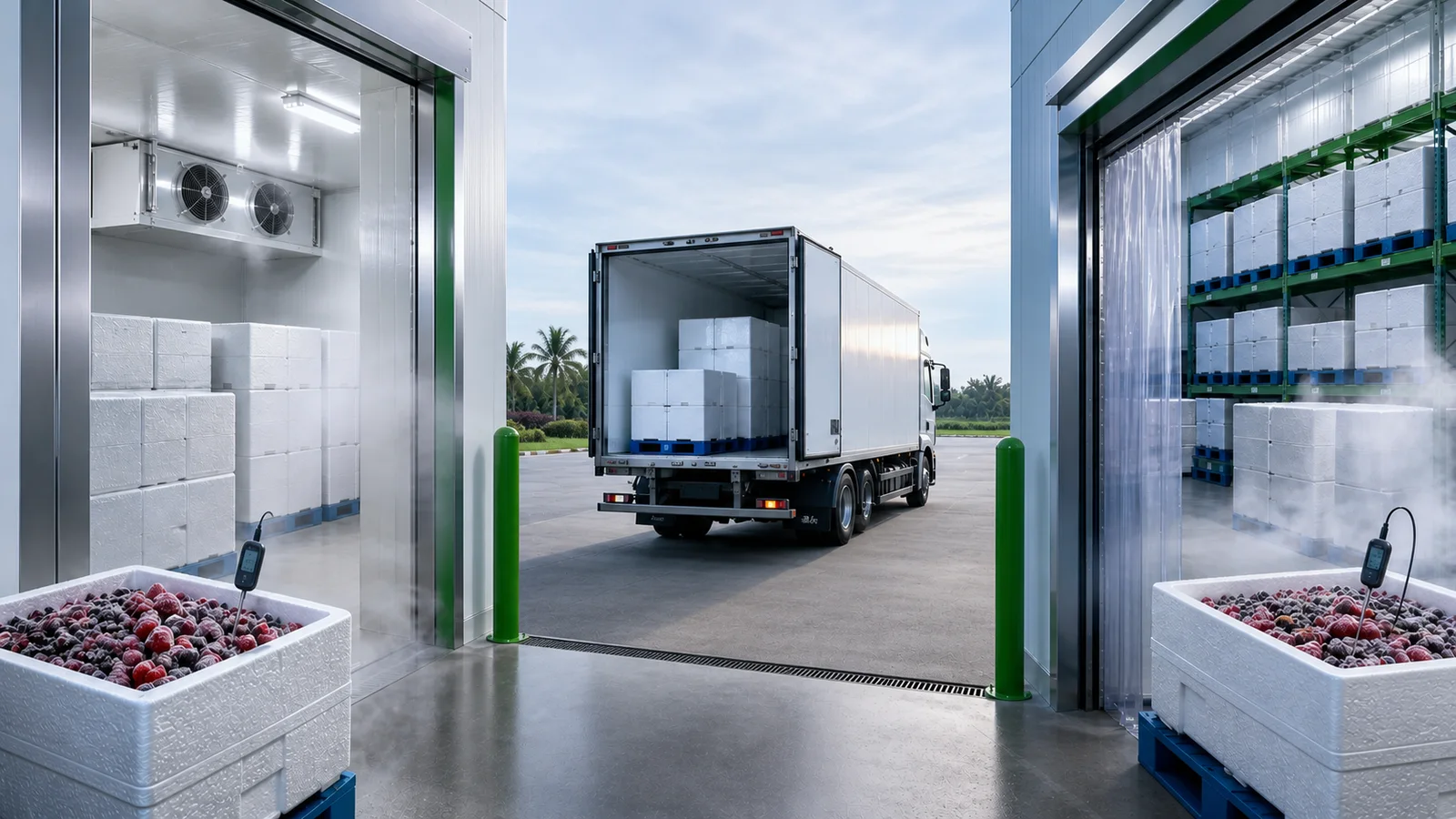
Supply chain
The cold chain is one system, not merely a freezer
Understand frozen-food cold-chain control across storage, loading, transport, receiving, and use, including temperature evidence and traceability.