Food handling
How should frozen fruit be thawed safely?
Thawing moves frozen fruit from storage condition to a state ready for processing or service. The method affects time, drip loss, texture, and food safety. Leaving a pack at room temperature for hours is not a controlled workflow.
Quick answer
How to Thaw Frozen Fruit Safely: Three Practical Methods
Use the refrigerator for the most controlled routine, cold water for faster thawing in a leakproof pack, or a microwave when the fruit will be processed immediately. Follow product instructions and internal procedures, maintain hygiene, and do not hold thawed material without time-temperature control.
- 01Plan demand so refrigerator thawing can happen without service-time pressure.
- 02For cold-water thawing, use a leakproof pack and refresh the cold water as directed.
- 03Fruit thawed in a microwave should move directly into the next process.
Three controllable methods
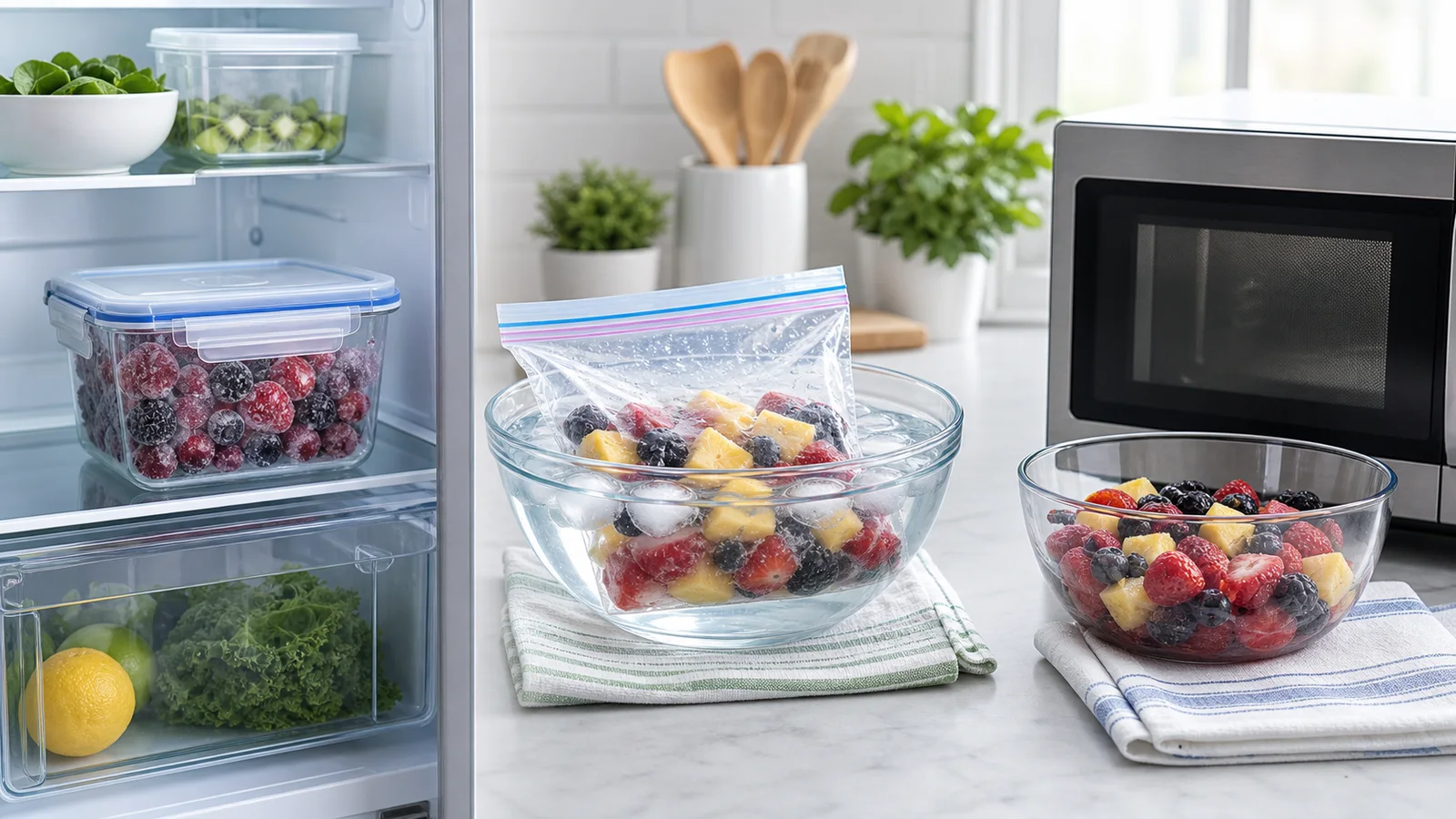
Refrigerator thawing keeps the product in a cold environment and allows more even conditioning, making it useful for daily planning. Place the pack or container in a tray to capture drips and prevent cross-contamination. Time depends on pack size, fruit type, and equipment temperature; one duration cannot cover every product.
Cold-water thawing uses a leakproof pack submerged in cold water. BPOM guidance describes water below 20°C and changing it every 30 minutes. Microwave thawing can be useful when speed matters, but uneven energy can begin to soften or warm portions, so the material should be processed immediately.
| Method | Useful for | Control point |
|---|---|---|
| Refrigerator | Planned demand and larger packs | Tray, time, unit temperature, segregation |
| Cold water | Faster need in a closed pack | Leakproof pack, cold water, water changes |
| Microwave | Small quantity processed immediately | Heat distribution and immediate use |
Procedure before and after thawing
Before starting, check the lot, pack integrity, frost condition, and supplier instructions. Match quantity to the forecast so the team does not open or thaw more than required. Use clean equipment, containers, and utensils, and identify the material with the time it left frozen storage.
After thawing, evaluate appearance, aroma, texture, and pack condition under the receiving or use procedure. Hold the material in a covered container, control time and temperature, and record disposition for any remainder. The procedure should state who can extend a hold, reprocess, or reject material.
Managing drip loss and texture change
Ice crystals and fruit cell structure influence the liquid released during thawing. Drip is not automatically a safety failure, but it can change yield, body, flavor, and appearance. A sauce or smoothie may use the liquid, while a visible topping may be more sensitive to texture and surface moisture.
Decide during trials whether the material will be used frozen, partly thawed, or fully thawed. Apply the same condition when comparing suppliers. If R&D and operations use different thawing methods, sensory results and yield may differ, so the method should be part of the internal specification.
Can thawed frozen fruit be refrozen?
The answer depends on the thawing method, time and temperature history, pack condition, and the company's food-safety policy. USDA explains that food thawed in a refrigerator can be safely refrozen, although quality may decline. That principle is not an automatic authorization for every product or operation.
For a business, refreezing needs a written procedure and risk assessment. Material thawed by cold water or microwave generally needs immediate processing. If time-temperature history is unclear, appearance alone cannot support a decision; use the established escalation and disposition process.
Common failures of control
Leaving packs on a counter, submerging damaged packaging, mixing lots without records, or returning thawed material to a freezer without assessment can break time-temperature control and traceability. Repeatedly opening a pack also increases exposure and handling risk.
The most effective improvement is usually planning: forecast usage, appropriate pack sizes, time labels, a designated thawing area, and operator training. Under that workflow, thawing becomes part of product consistency rather than an emergency action at the start of every service.
Primary references
These references support the educational framework. Product-specific and regulatory decisions still require current-document review by qualified personnel.
Related ingredients
Frozen Fruit
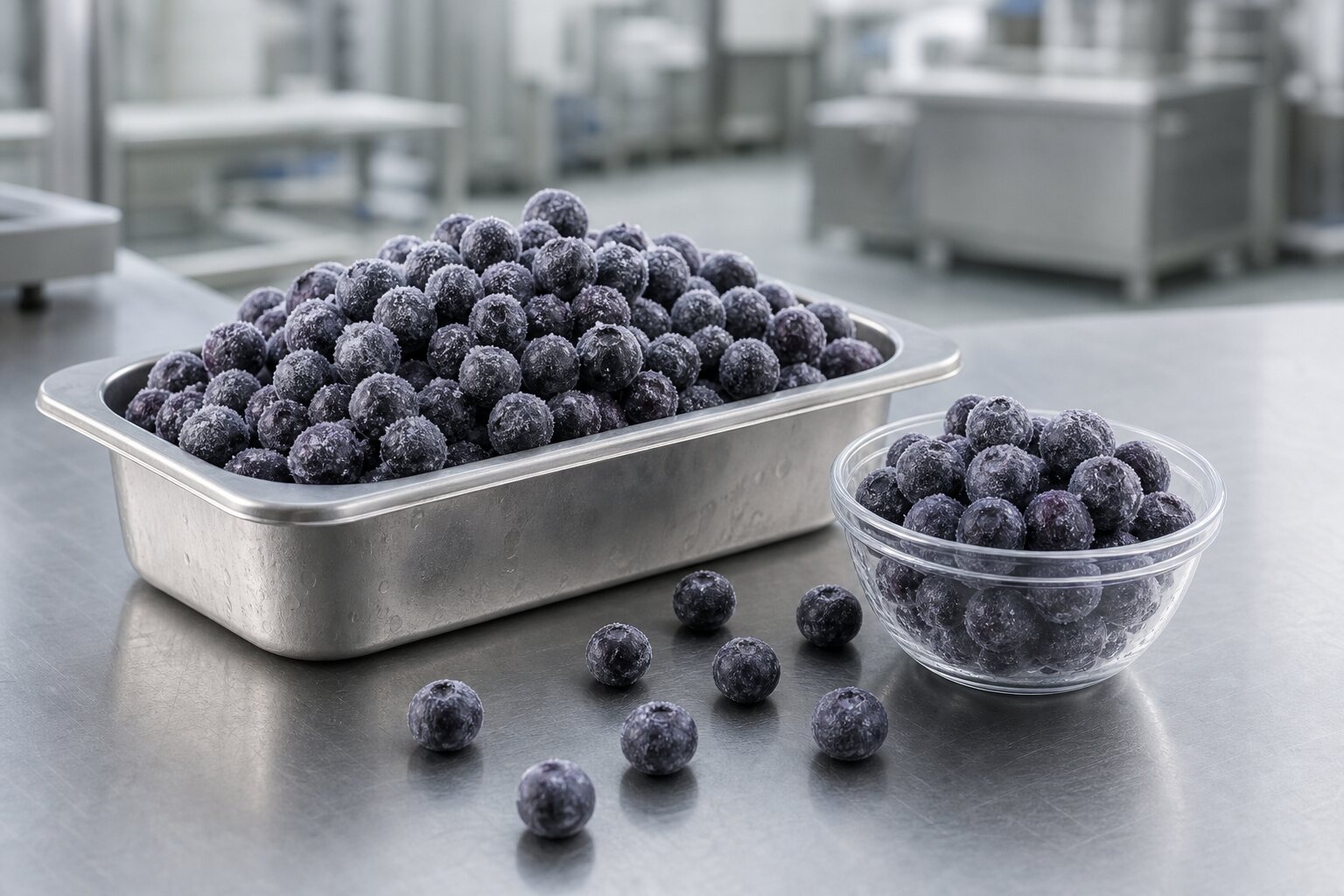
Frozen Blueberry
Frozen blueberry for hotel, cafe, bakery, dairy, dessert, and beverage use with application-led review of cold handling, thawing, liquid release, fruit integrity, yield, and workflow.
Frozen Fruit
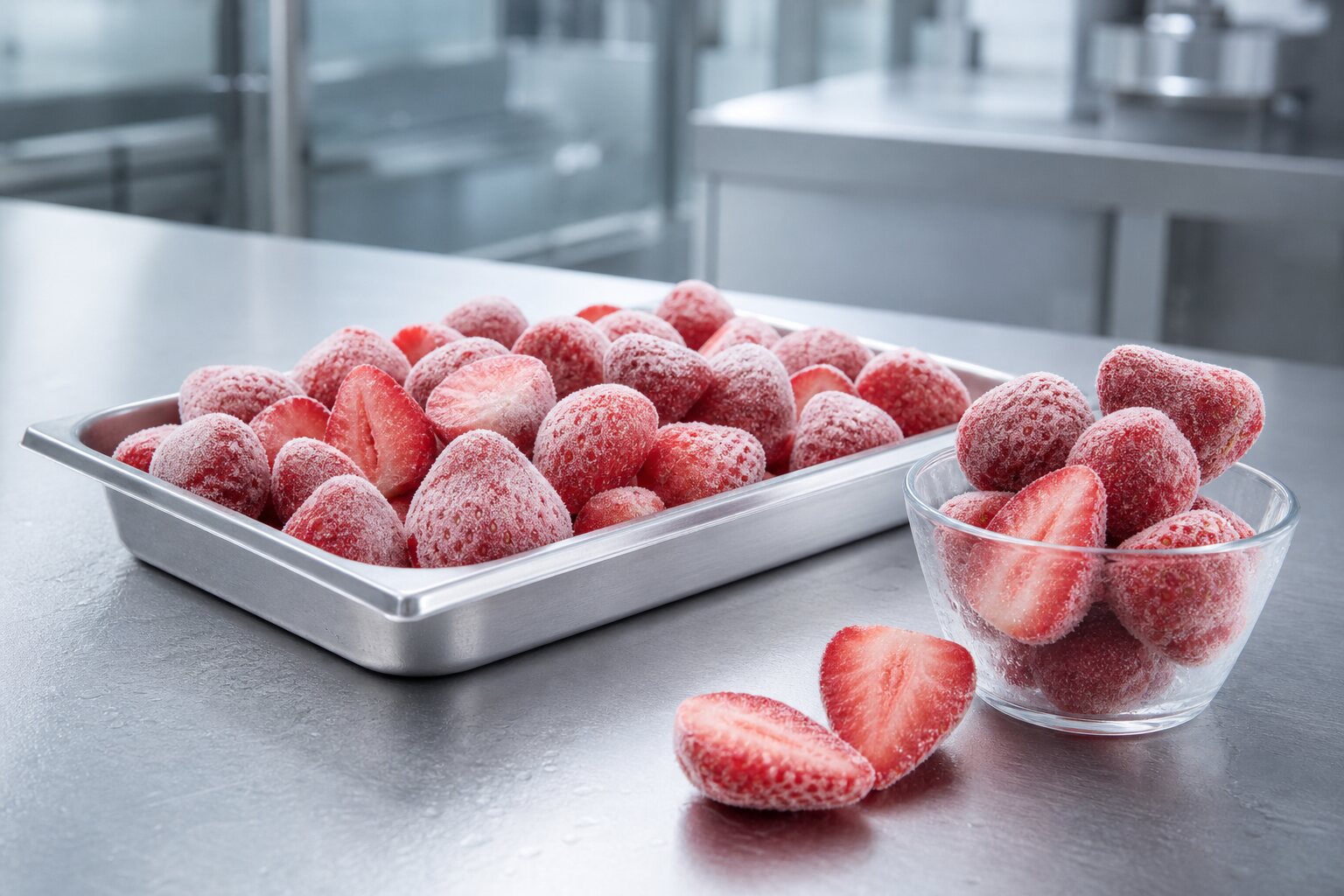
Frozen Strawberry
Frozen strawberry for hotel, beverage-chain, dessert, bakery, and central-kitchen use with application-led review of fruit format, thawing, liquid release, portioning, yield, and workflow.
Slicing & Chunky
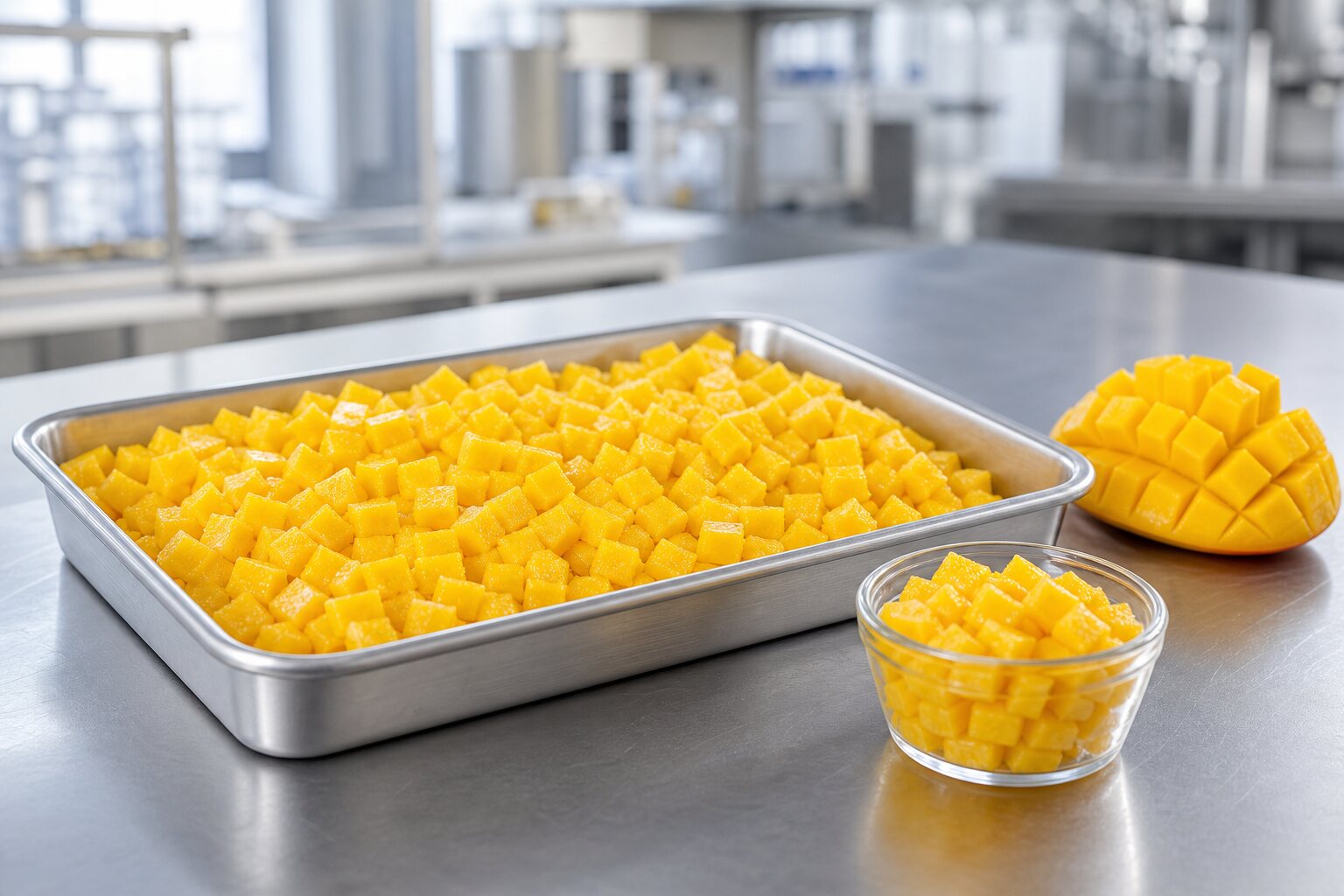
Mango Chunky
Mango chunky for hotel, cafe, beverage, dessert, bakery, topping, and filling use with application-led review of cut size, bite, piece integrity, portioning, yield, and costing.
Continue to sourcing guides
Frozen fruit for cafes, hotels, and catering
Frozen fruit for cafes, hotels, catering, and dessert menus. Practical for daily service and easy to use across drinks, toppings, and desserts.
Frozen fruit for smoothies, juice bars, and beverage chains
Frozen fruit for smoothies, juice bars, cafes, hotels, and beverage chains that need practical fruit stock, easier portion control, and consistent menus.
Keep learning
Related articles
Frozen fruit
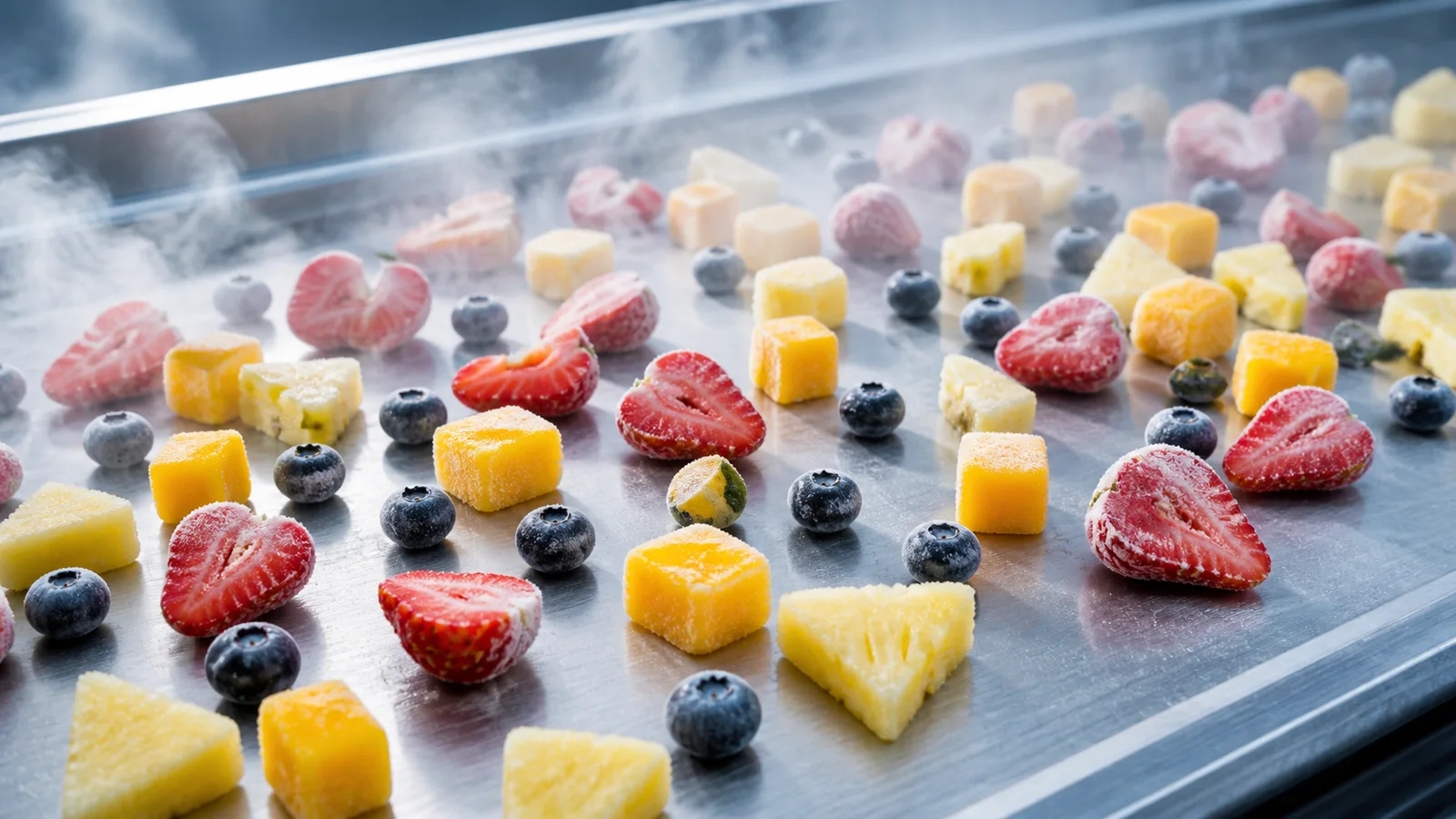
What is IQF, and what does it mean for a frozen-fruit user?
Understand Individually Quick Frozen fruit, piece separation, handling and quality implications, plus a practical sourcing checklist.
Ingredient selection
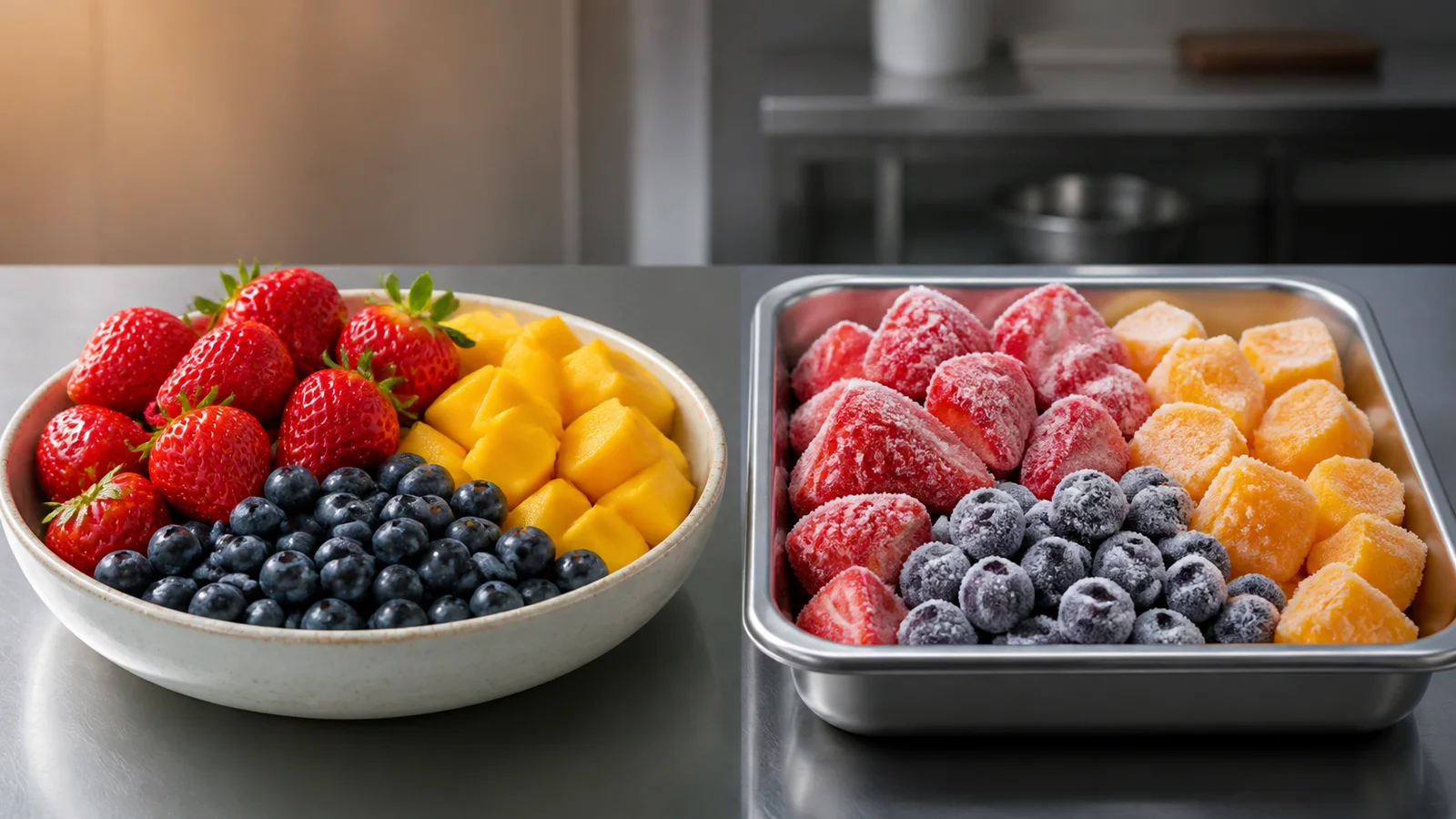
Frozen fruit vs fresh fruit is not about one universal winner
Compare frozen and fresh fruit across texture, availability, yield, storage, handling, and consistency to select the right format by application.
Supply chain
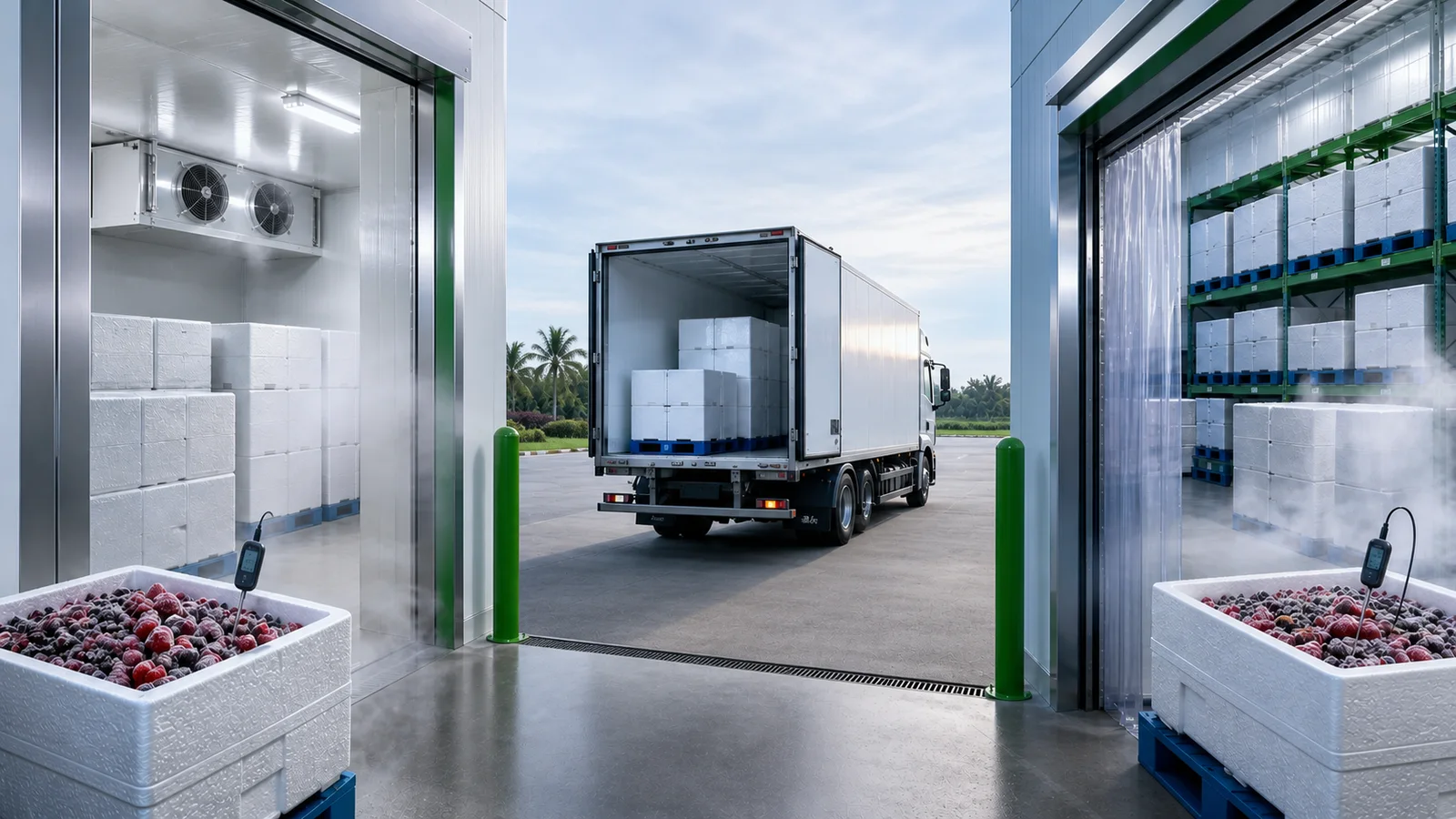
The cold chain is one system, not merely a freezer
Understand frozen-food cold-chain control across storage, loading, transport, receiving, and use, including temperature evidence and traceability.