Frozen fruit
What is IQF, and what does it mean for a frozen-fruit user?
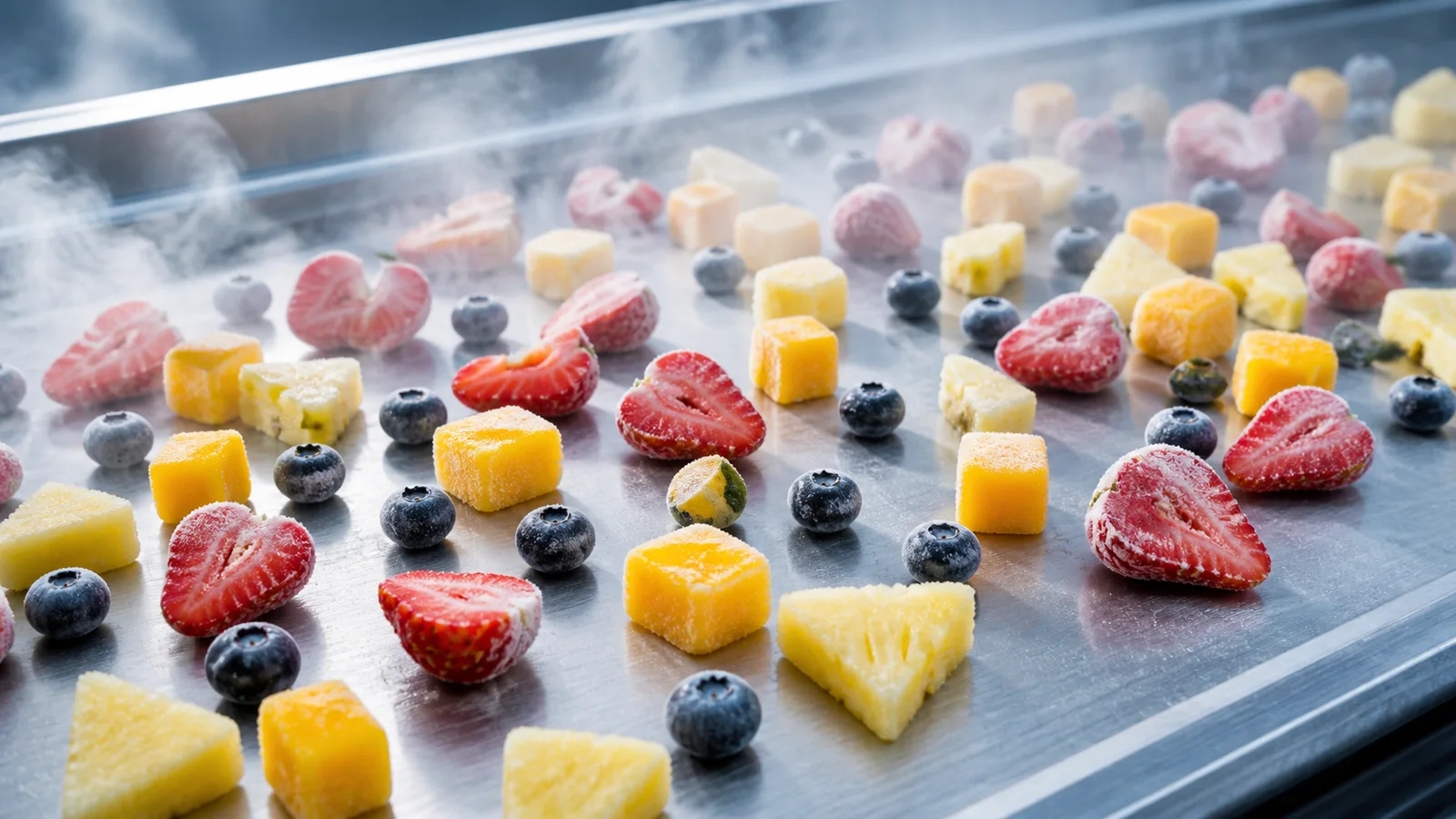
IQF stands for Individually Quick Frozen. In practical use it describes pieces frozen rapidly enough to remain separate, allowing a user to portion part of a pack instead of thawing one large block. The label alone does not guarantee size, pack condition, or quality at receipt.
Quick answer
What Is IQF? How It Works and a Buyer Checklist
The operational value of IQF is piece separation and flexible portioning. Performance still depends on raw-material preparation, freezing rate, piece size, any glazing, packaging, and the cold chain. A buyer should review the specification and an actual sample rather than assume every product described as IQF behaves alike.
- 01Confirm that IQF applies to the exact product and SKU offered.
- 02Evaluate free-flowing condition, piece size, defects, and ice build-up after receipt.
- 03A disrupted cold chain can remove the separation advantage even when initial freezing was appropriate.
A simple view of the IQF process
Fruit pieces are prepared to a defined format and pass through rapid, controlled freezing. The objective is to lower the temperature of each piece without allowing the batch to become one large mass. Equipment and operating parameters vary, so a buyer should not infer a specific technology from the IQF term alone.
Rapid freezing can help limit crystal growth compared with very slow freezing, but thawed texture still depends on fruit structure, ripeness, cut size, and use. IQF is not a promise that thawed fruit will be identical to fresh fruit.
Operational benefits worth testing
For bakery, beverage chains, central kitchens, and food service, separated pieces can make weighing and portion control easier. The team can take what a batch or order requires and return the protected pack to storage under the correct procedure, rather than thawing the full quantity.
That benefit exists only when the contents are actually free flowing at storage temperature. Clumping, heavy frost, or fused pieces can reflect temperature fluctuation, moisture, handling, or product characteristics. Define a receiving criterion that operators can inspect consistently.
- Ease of removing a partial quantity without damaging the remainder.
- Size and shape consistency for the intended application.
- Broken pieces and defects within the agreed specification.
- Ability to close and protect the pack after portioning.
IQF is not a synonym for every frozen format
Frozen fruit may be supplied whole, sliced, diced, in blocks, as frozen puree, or as individual pieces. A block can be entirely suitable for a blender or a process that consumes one complete pack. IQF matters most when separation and portioning flexibility create operating value.
The buyer should therefore describe the real use. Visual toppings may prioritize size distribution and appearance. Smoothies may give more weight to dosing and flavor. A cooked filling may require yield and behavior after heating to be tested.
Specification and receiving checklist
Request product identity, variety where relevant, cut style, size range, defect tolerance, net weight, any glazing or treatment, storage condition, basis of shelf life, and sampling plan. Confirm that the COA and lot code can be connected to the shipment received.
At receiving, record vehicle or pack condition, temperature under your procedure, seal integrity, signs of thaw-refreeze, and the appearance of a representative sample. Do not judge the whole lot from one piece at the top of a pack. Retain evidence and follow the escalation process for deviations.
Connecting IQF to the cold chain
Codex places quick-frozen food inside a cold chain intended to maintain product temperature. A common reference is -18°C or colder, subject to applicable tolerances and requirements. Each business still needs operating limits based on its product, regulation, and controlled procedure.
Temperature fluctuation can drive moisture migration and recrystallization, increasing clumping and quality loss. Supplier evaluation should therefore cover storage, transport, receiving, and handling after opening—not only the initial freezing step.
Primary references
These references support the educational framework. Product-specific and regulatory decisions still require current-document review by qualified personnel.
Related ingredients
Frozen Fruit
Frozen Blueberry
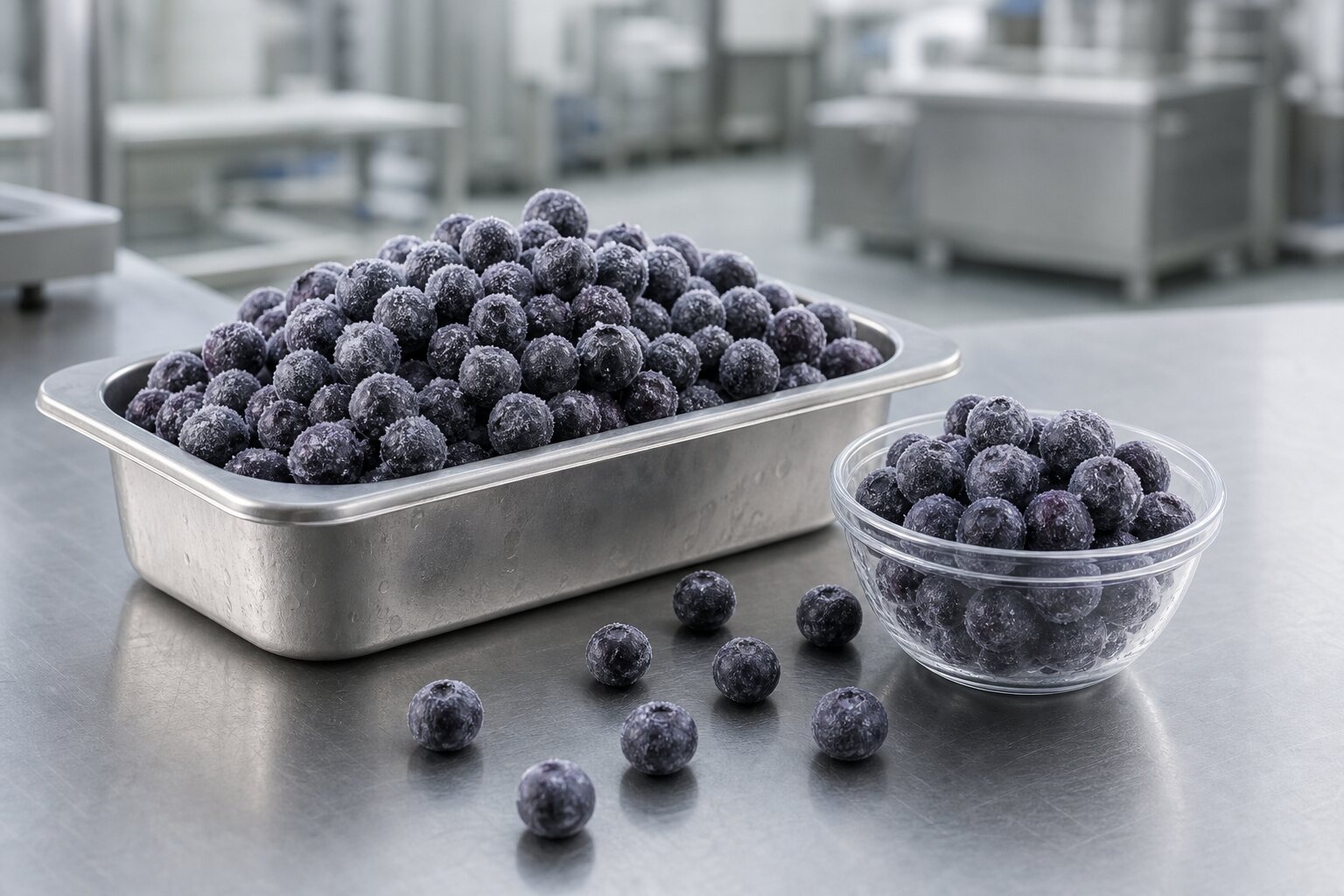
Frozen blueberry for hotel, cafe, bakery, dairy, dessert, and beverage use with application-led review of cold handling, thawing, liquid release, fruit integrity, yield, and workflow.
Frozen Fruit
Frozen Strawberry
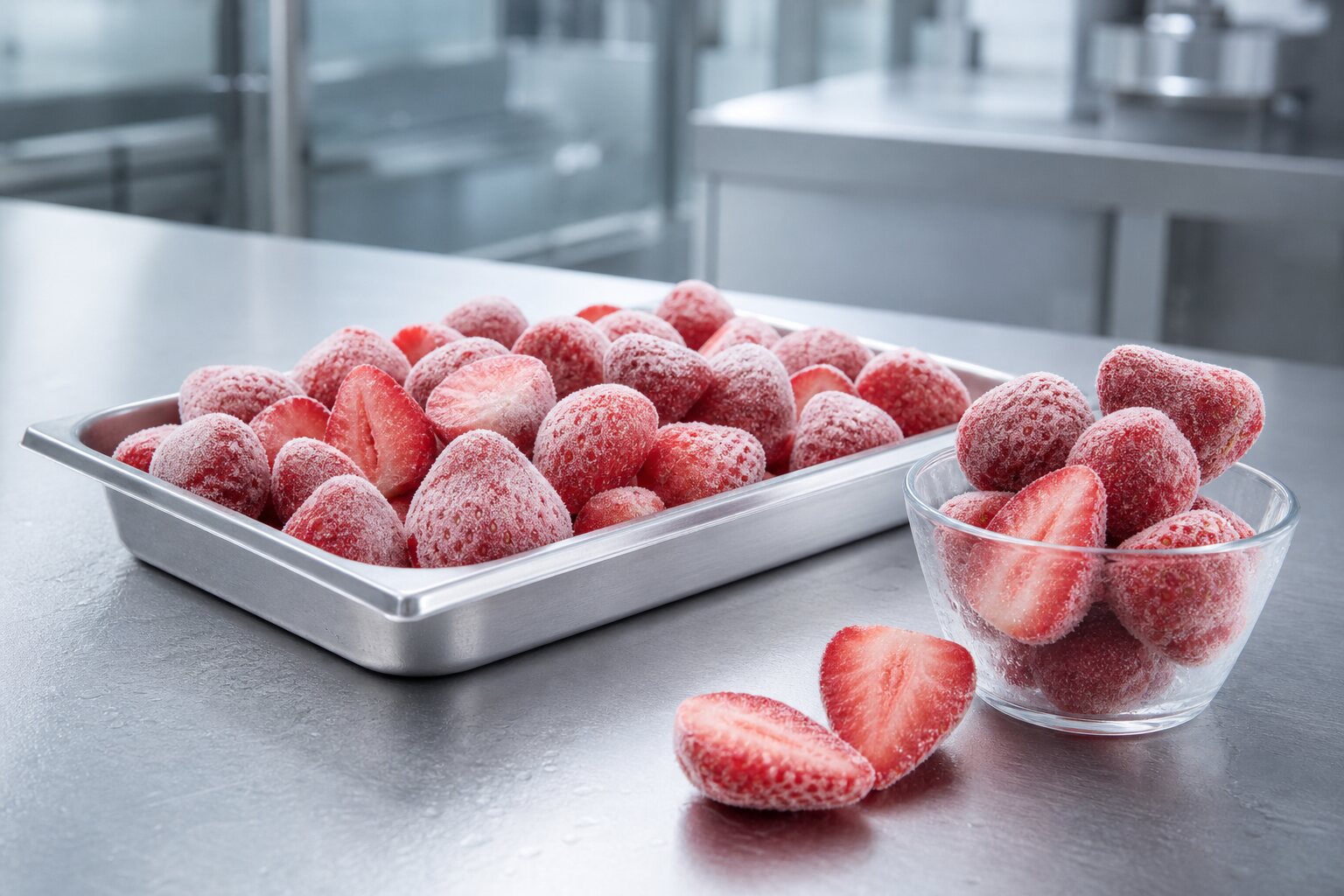
Frozen strawberry for hotel, beverage-chain, dessert, bakery, and central-kitchen use with application-led review of fruit format, thawing, liquid release, portioning, yield, and workflow.
Slicing & Chunky
Mango Chunky
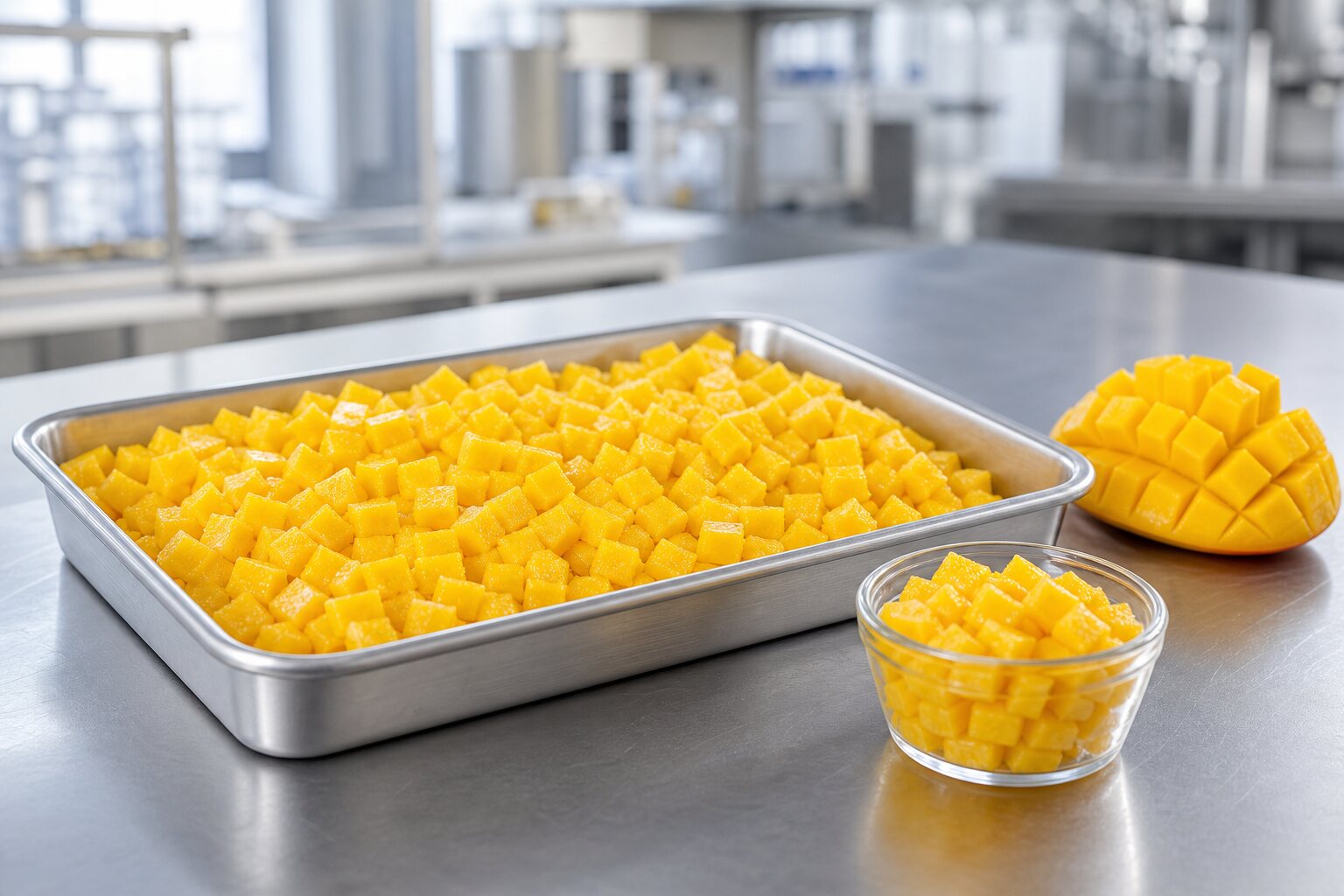
Mango chunky for hotel, cafe, beverage, dessert, bakery, topping, and filling use with application-led review of cut size, bite, piece integrity, portioning, yield, and costing.
Continue to sourcing guides
Frozen fruit for F&B operations
Frozen fruit for horeca, bakery, dairy, dessert, and F&B production. Practical for stock control and daily use in service or production.
Frozen fruit for cafes, hotels, and catering
Frozen fruit for cafes, hotels, catering, and dessert menus. Practical for daily service and easy to use across drinks, toppings, and desserts.
Keep learning
Related articles
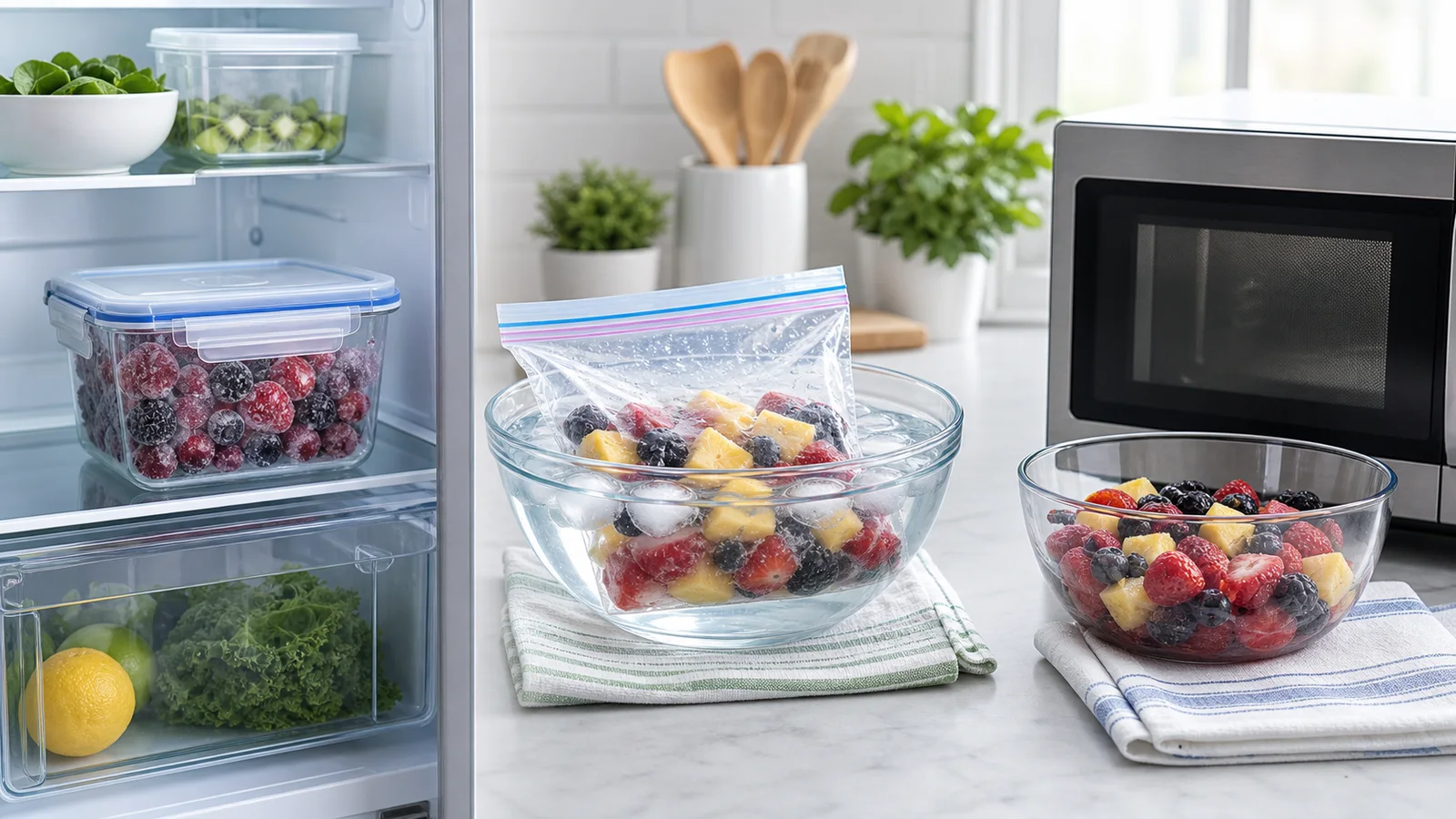
Food handling
How should frozen fruit be thawed safely?
A practical guide to refrigerator, cold-water, and microwave thawing for frozen fruit, including handling, use timing, and common mistakes.
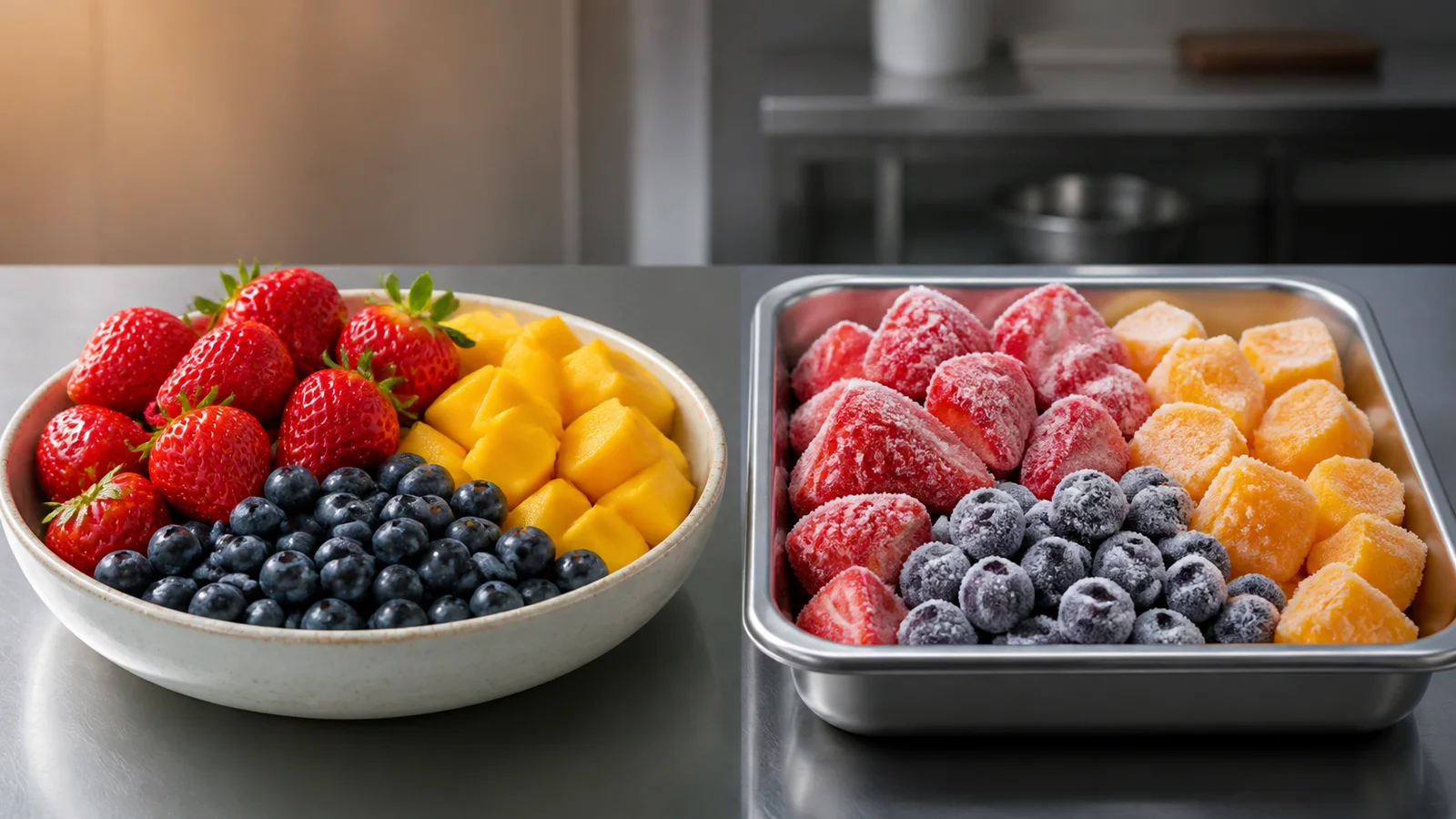
Ingredient selection
Frozen fruit vs fresh fruit is not about one universal winner
Compare frozen and fresh fruit across texture, availability, yield, storage, handling, and consistency to select the right format by application.
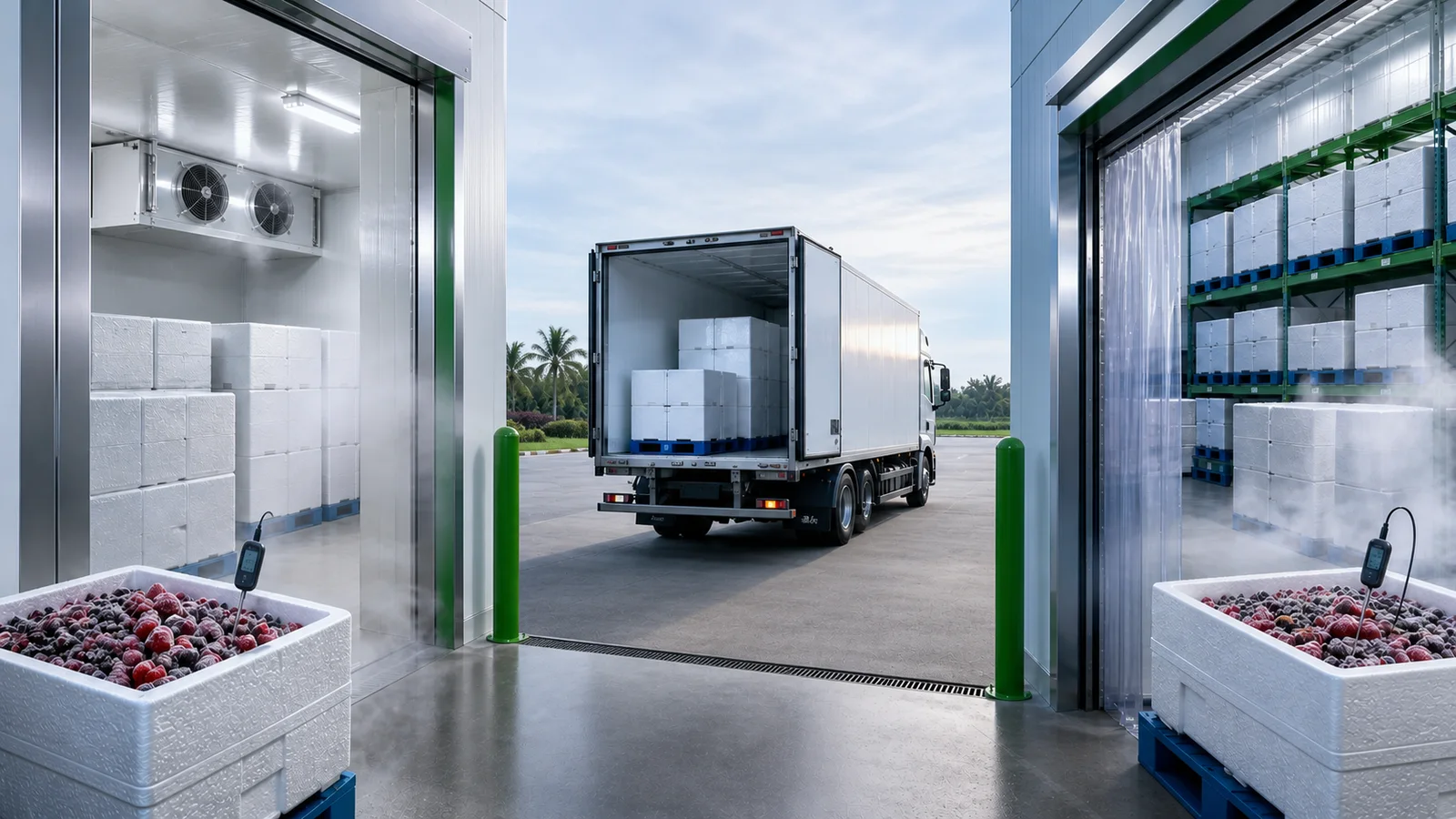
Supply chain
The cold chain is one system, not merely a freezer
Understand frozen-food cold-chain control across storage, loading, transport, receiving, and use, including temperature evidence and traceability.