Procurement and supplier quality
Supplier evaluation should test fit, risk, and supply capability
A supplier with an attractive product may not fit the buyer's application, quality system, delivery model, or risk profile. Effective evaluation connects trials, technical documents, food-safety controls, commercial readiness, and performance after approval.
Quick answer
Food Ingredient Supplier Evaluation Checklist
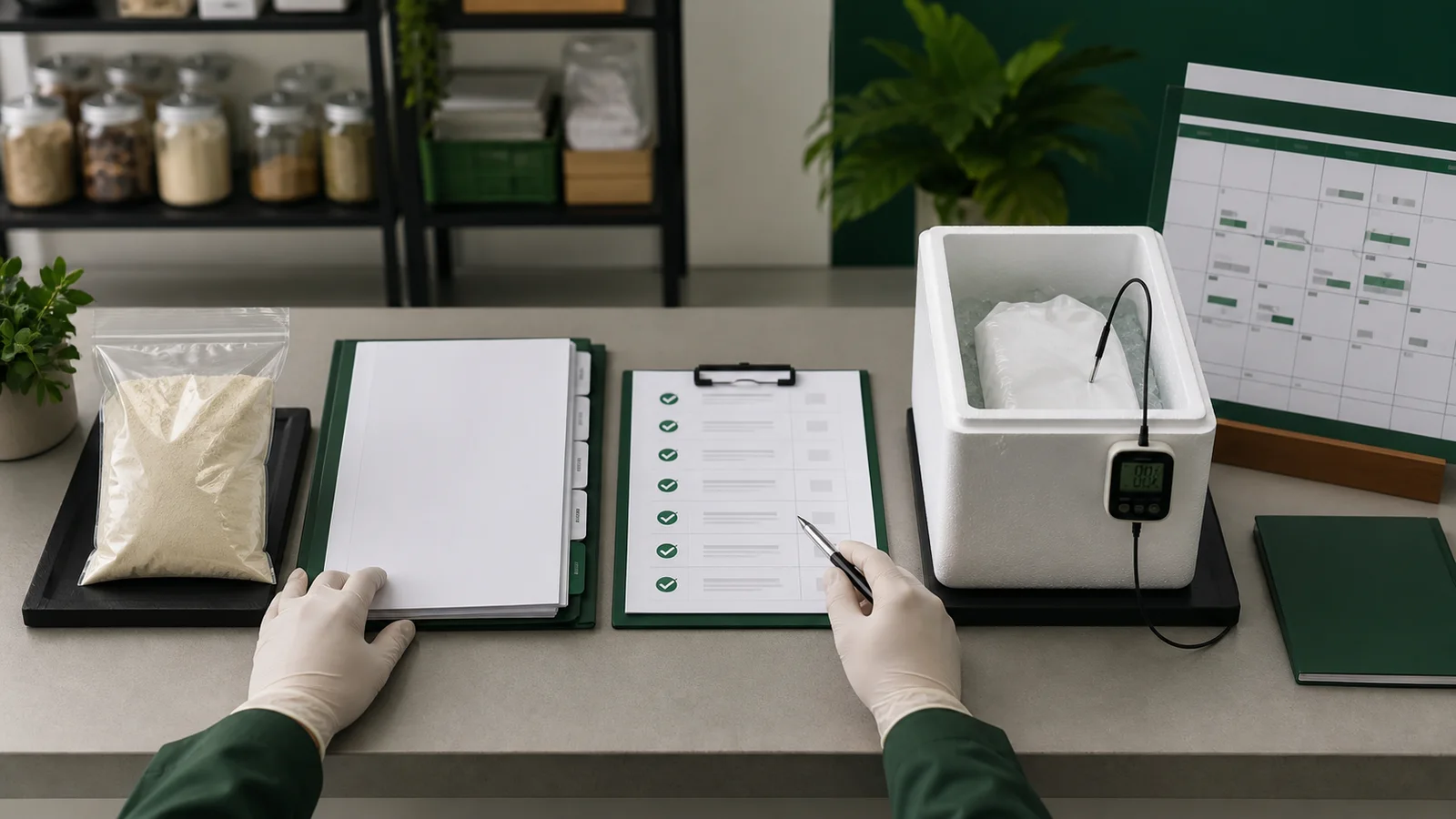
Use a risk-based checklist across seven areas: identity and scope, product fit, specification and COA, food safety, traceability and change, supply and cold chain, and commercial or service performance. Assign evidence, owner, status, gap, action, and re-evaluation trigger.
- 01Separate requirements before trial, before purchase order, and before commercial production.
- 02Assess the correct manufacturing site and product family rather than a general company profile.
- 03Monitor approval through scorecards and triggers; it should not continue indefinitely without review.
Stage 1 — set risk and scope
Define the ingredient, intended use, consumer group, buyer process, possible kill step, allergens, storage, volume, and the ingredient's role. This determines review depth. A ready-to-eat ingredient without a later control may require different verification from material that passes through a validated process.
Identify the entity and manufacturing site under assessment, including a warehouse or cold store where relevant. A distributor may be the commercial counterparty while another business makes the product. Traceability, responsibility, and change notification need to be clear across the chain.
Stage 2 — product and technical fit
Compare ingredient identity, composition, specification, relevant Brix/pH/acidity, physical attributes, storage, pack, shelf-life basis, and application guidance with the brief. Run a sample trial at actual dosage and process, and document acceptance criteria before seeing the result.
Review the COA for the sample lot and connect it with the specification. Ask which measures are tested per lot and which are periodically verified. Define re-trial and approval needs after scale-up or site transfer.
| Area | Minimum evidence | Example trigger |
|---|---|---|
| Product fit | Specification, sample, trial result | Formula or process changes |
| Food safety | Plan/system evidence proportionate to risk | Incident, recall, major audit gap |
| Supply | Lead time, capacity, storage/delivery plan | Repeated delay or volume increase |
| Quality | COA, complaint and deviation response | Out-of-specification or declining trend |
Stage 3 — food-safety and quality systems
Review certificates where used, including scope, site, validity, and relevance. Obtain proportionate HACCP or food-safety-plan evidence, prerequisite programs, allergen controls, sanitation, pest control, calibration, nonconforming product, complaints, corrective action, and training based on risk.
An audit is not mandatory for every supplier, but the rationale should be documented. Options include questionnaires, document review, remote assessment, on-site audit, third-party evidence, and verification testing. Use the combination that answers the hazard and continuity questions rather than merely collecting files.
Stage 4 — traceability, change, and incident readiness
The supplier should connect raw material, production lot, test result, finished pack, shipment, and buyer. Review recall or traceability exercises and retrieval time. Codex and FAO position traceability as a tool supporting action in a food-control system, not an isolated objective.
The supplier agreement should cover notification of relevant changes in raw material, formulation, process, site, critical equipment, pack, test method, certificate status, and sub-supplier. Define who receives a notification at the buyer and who decides on re-review.
Stage 5 — supply, cold chain, and commercial readiness
Confirm capacity, lead time, minimum order, pack configuration, forecast process, safety-stock expectations, delivery area, incoterms where relevant, and contingency plans. For frozen products, review storage temperature, vehicle, handoffs, temperature evidence, receiving requirements, and deviation action.
Commercial readiness also includes responsiveness, sample handling, document turnaround, complaint response, and the ability to state limitations. Compare price with usable yield, waste, storage, labor, quality risk, and disruption cost.
- Owner and due date for every gap.
- Approved, conditional, hold, or rejected status.
- Approved product, site, specification, and validity period.
- Re-evaluation frequency and event triggers.
After approval — manage performance
Build a scorecard from on-time delivery, quantity accuracy, COA completeness, incoming results, complaint rate, corrective-action closure, service, and change notification. Weight measures by risk and business impact. Trends are more useful than one event without context.
Set thresholds for an improvement plan, increased inspection, audit, suspension, or re-sourcing. FDA supplier resources are an example of a risk-based framework in the United States rather than a universal legal checklist for Indonesia. Each company must fit its program to applicable regulation, customers, products, and markets.
Primary references
These references support the educational framework. Product-specific and regulatory decisions still require current-document review by qualified personnel.
Related ingredients
Fruit Puree
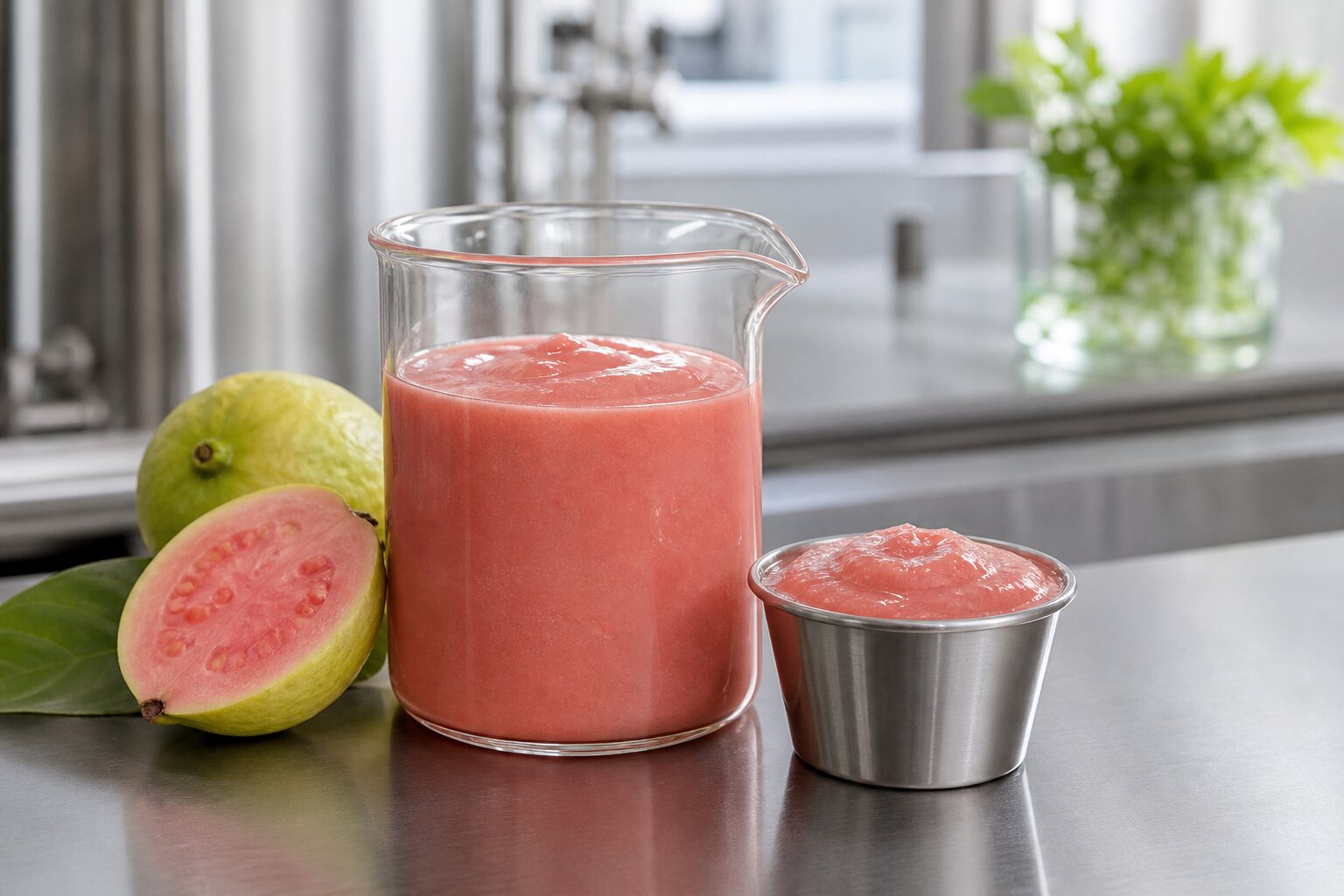
Guava Puree
Guava puree for RTD beverage, dairy, bakery, dessert, and beverage-service development with application-led review of flavour, body, process, and vendor needs.
Fruit Concentrate
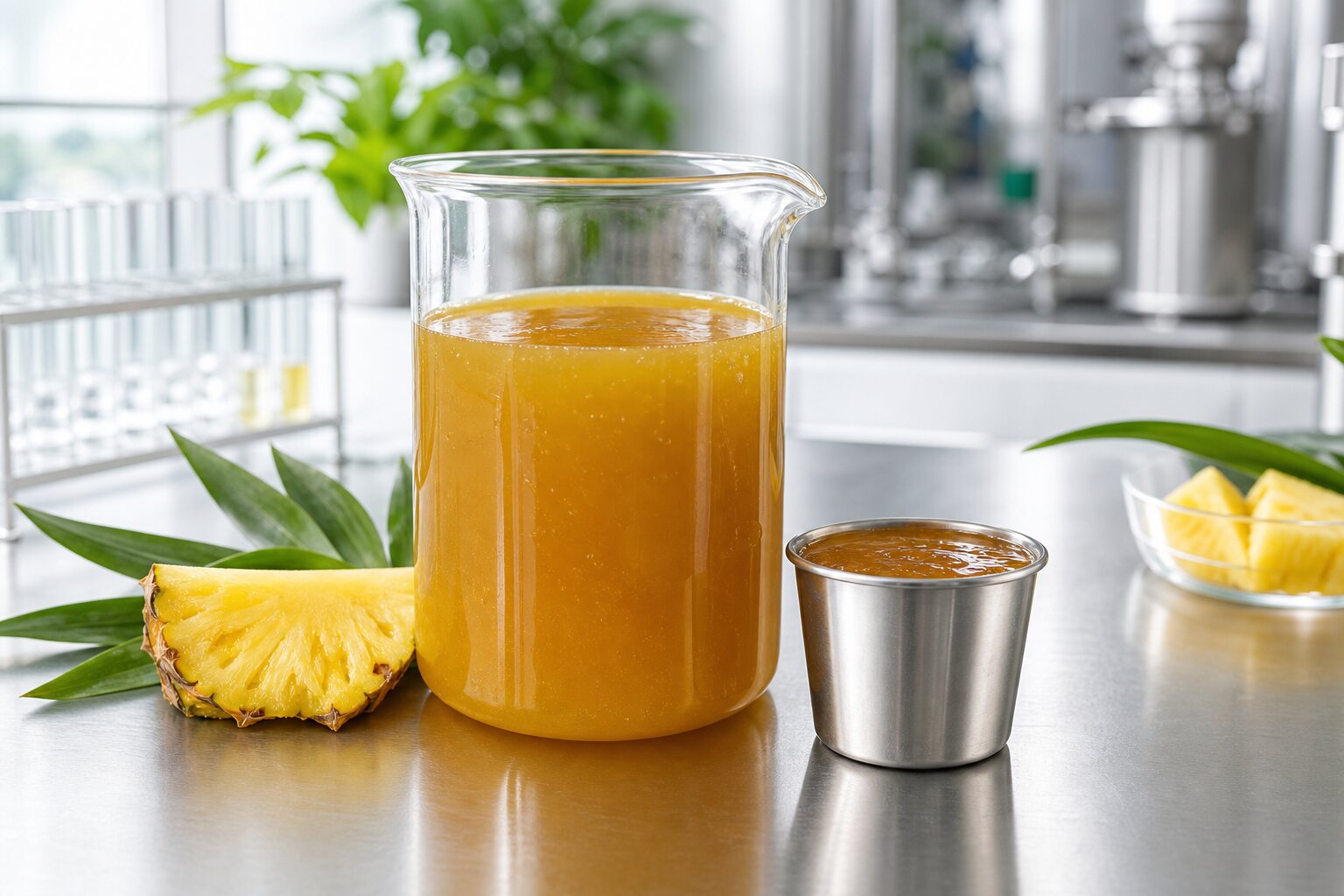
Pineapple Concentrate
Pineapple concentrate for beverage, sauce, dressing, glaze, bakery, and fruit-blend development with application-led review of dosage, sweet-tart balance, process, and formula efficiency.

Frozen Fruit
Frozen Strawberry
Frozen strawberry for hotel, beverage-chain, dessert, bakery, and central-kitchen use with application-led review of fruit format, thawing, liquid release, portioning, yield, and workflow.
Continue to sourcing guides
F&B ingredient supplier for vendor audit
Vendor audit ready supplier for F&B ingredients, with samples, product information, and supporting documents for internal supplier checks.
F&B ingredient supplier with ISO 22000 & HACCP
F&B ingredient supplier with ISO 22000 and HACCP standards, offering puree, concentrate, and frozen fruit for food and beverage production.
Keep learning
Related articles

Supply chain
The cold chain is one system, not merely a freezer
Understand frozen-food cold-chain control across storage, loading, transport, receiving, and use, including temperature evidence and traceability.

Food safety management
HACCP and ISO 22000 are connected but not identical
Understand how HACCP and ISO 22000 differ in scope and certification, plus the evidence procurement and quality teams should review.
Procurement and quality
A COA should connect one lot to the agreed specification
A practical guide to identity, lot, specification limits, test results, methods, authorization, and traceability on a food-ingredient COA.