Procurement and quality
A COA should connect one lot to the agreed specification
A Certificate of Analysis summarizes testing or conformance for a defined lot. It is useful when identity, lot, parameter, limit, result, unit, method, and authorization can be read and linked to the correct product. Without context, a COA does not prove every aspect of quality or safety.
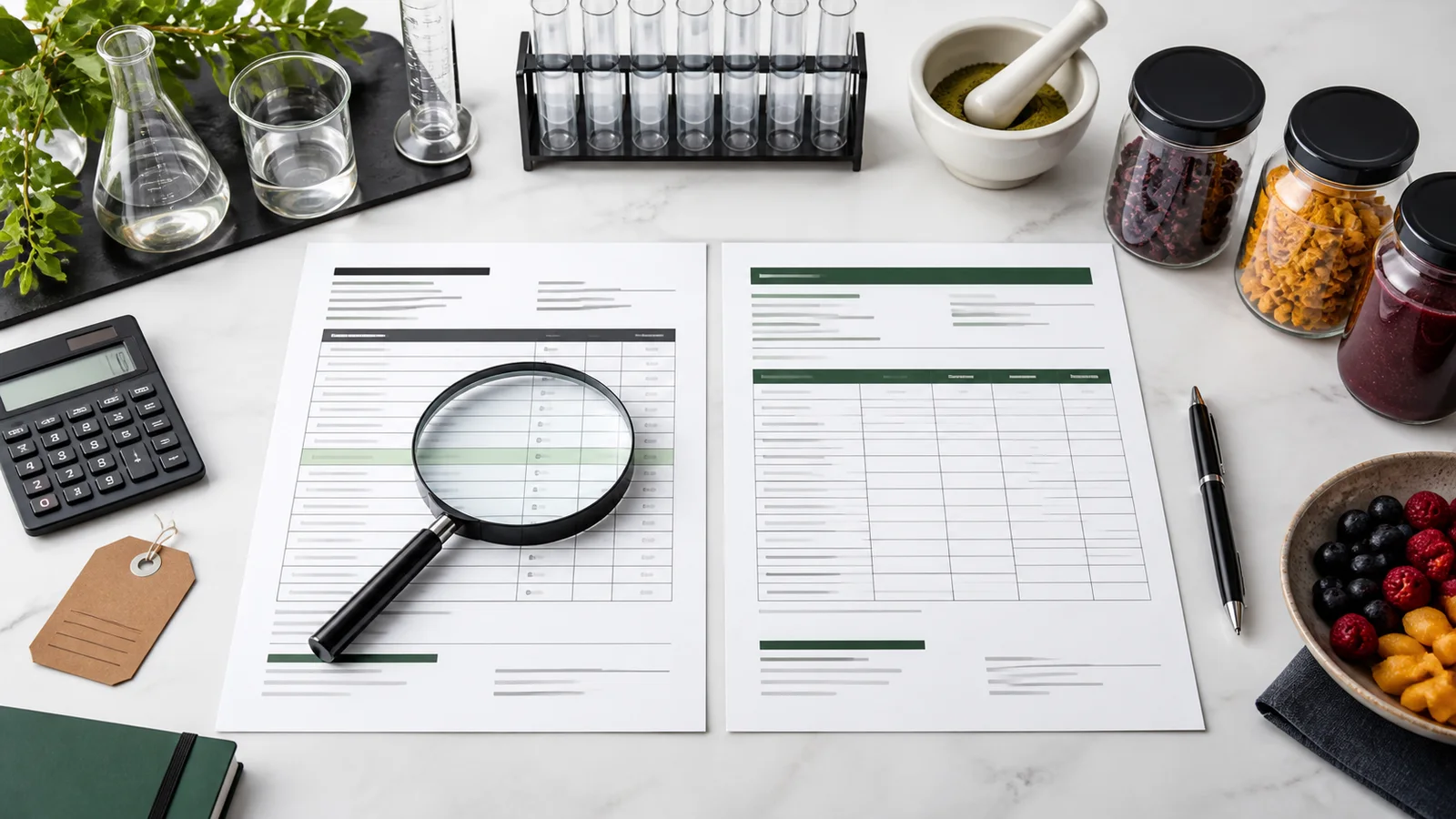
Quick answer
How to Read a Food Ingredient COA: Buyer and QA Guide
Start with the header: supplier, product name and code, lot or batch, relevant manufacture or expiry information, and dates. Compare every result with the agreed specification limit and unit. Verify method, pass/fail status, authorization, and the connection between the COA and shipment labels.
- 01Match product code and lot across the COA, pack label, purchase order, and receiving record.
- 02Distinguish a specification limit from the actual result; they are not the same value.
- 03A COA is one form of evidence in supplier control, not a replacement for risk-based verification.
Begin with identity and traceability
Review the supplier's legal or trading name, manufacturing site where stated, product name, product code, lot or batch, and quantity or pack reference. Similar names can represent different grades or specifications. The lot on the document must trace to physical labels and the receiving record.
Review production date, test date, issue date, and shelf-life information where relevant. Illogical dates or a document created long after shipment require clarification. Retain the COA with the purchase order and disposition for a complete audit trail.
Separate parameter, limit, result, and unit
Each row should explain what was tested, the specification or acceptance limit, the actual result, and its unit. 'Conforms' may be acceptable for an agreed parameter, but an actual value can be necessary for trending or formulation. The supplier agreement should define that need.
The unit is part of the result. Brix, pH, percentage acidity, microbiological counts, and physical size cannot be compared when units or bases differ. For total acidity, review the acid basis; for microbiology, review count format and limit; for sensory checks, understand the evaluation basis.
| Element | Question | Red flag |
|---|---|---|
| Identity | Is the product and lot correct? | Different code or missing lot |
| Specification | Does the limit match the approval? | Changed limit without approval |
| Result | Is the value/unit clear and within limit? | Template only or implausible data |
| Authorization | Who released it and when? | No status or approval |
Method and sampling define the result
Different methods can have different bias or detection limits. When a parameter drives acceptance, align supplier and buyer methods. The sampling plan also determines how far a result represents the lot; one sample may not capture variation across a batch.
Ask whether testing is performed per lot, through periodic verification, on a composite sample, or from an upstream supplier certificate. None is automatically wrong, but the basis needs to be known so quality teams can set verification proportionate to risk.
What to do when the COA does not match
Place the lot on hold when identity, lot, result, or limit cannot be verified and the gap affects acceptance criteria. Review data entry, document version, sampling, method, calibration, and condition before deciding. Request a corrected document through an official channel; the buyer should not edit the supplier's COA.
If incoming testing differs, use retained samples and the investigation procedure. A difference does not automatically prove misconduct; heterogeneity, method, temperature, or units may explain it. Repeated patterns should enter supplier-performance review and may trigger increased verification or requalification.
Why a COA is not sufficient alone
A COA shows reported data for a lot but does not replace supplier qualification, audits where needed, traceability, change control, complaint history, and verification testing. FDA resources provide examples of risk-based supplier controls in the United States; an Indonesian business still needs to apply requirements relevant to its product and market.
Define which measures require every-lot testing, which can be periodically verified, and which events increase frequency. Consider the hazard, buyer process controls, intended use, supplier history, and impact of failure against specification.
Primary references
These references support the educational framework. Product-specific and regulatory decisions still require current-document review by qualified personnel.
Related ingredients
Fruit Puree
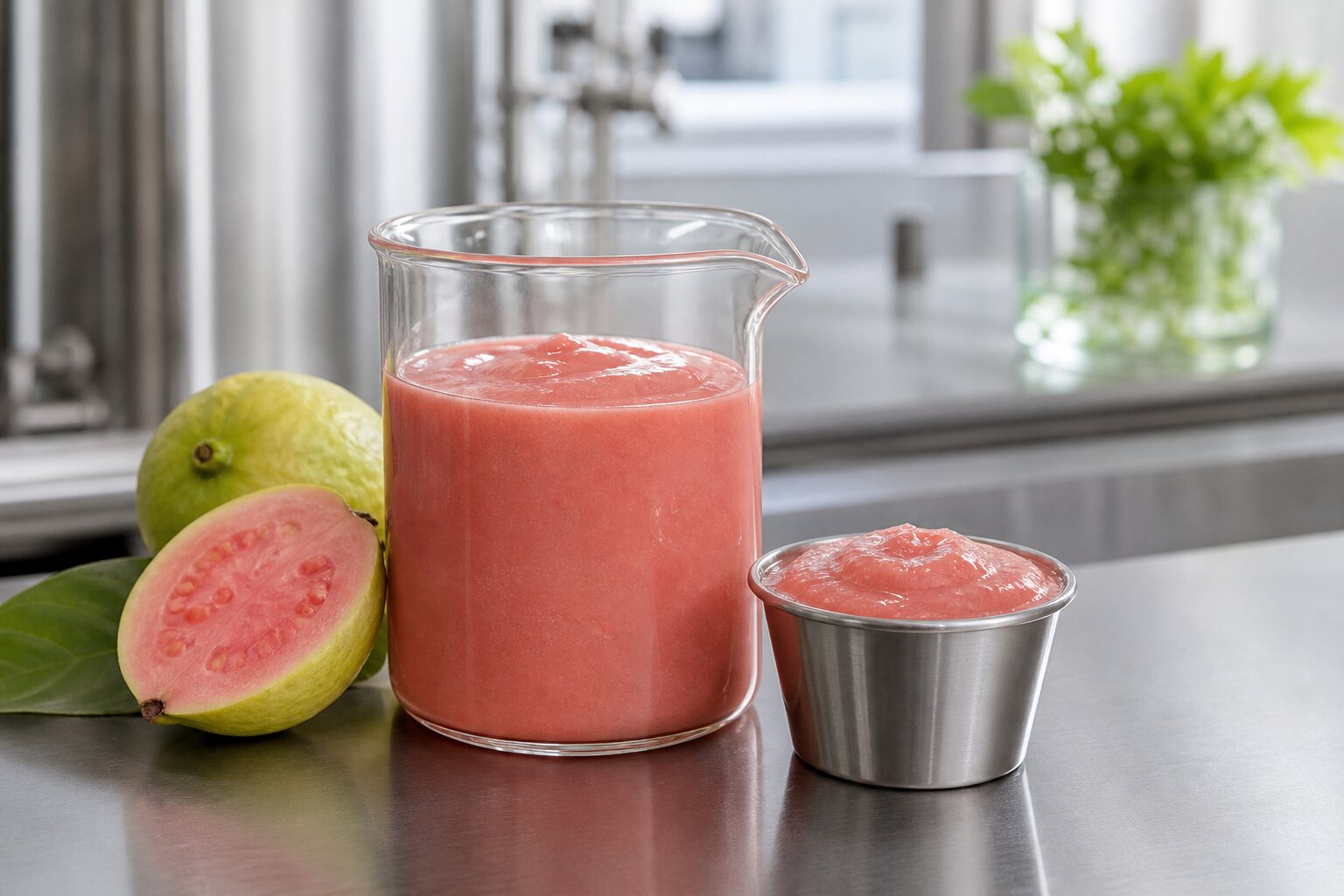
Guava Puree
Guava puree for RTD beverage, dairy, bakery, dessert, and beverage-service development with application-led review of flavour, body, process, and vendor needs.
Fruit Concentrate
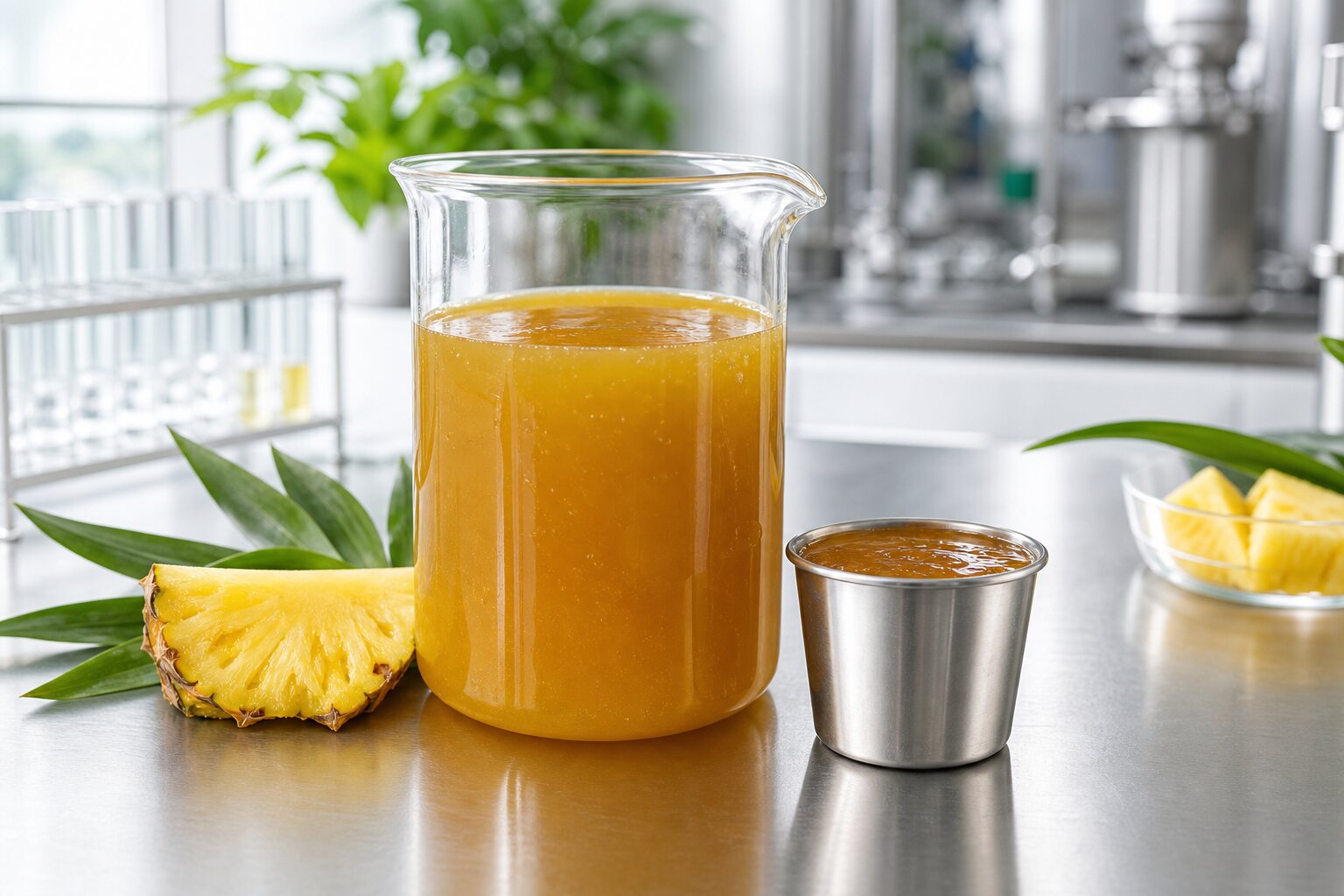
Pineapple Concentrate
Pineapple concentrate for beverage, sauce, dressing, glaze, bakery, and fruit-blend development with application-led review of dosage, sweet-tart balance, process, and formula efficiency.

Frozen Fruit
Frozen Strawberry
Frozen strawberry for hotel, beverage-chain, dessert, bakery, and central-kitchen use with application-led review of fruit format, thawing, liquid release, portioning, yield, and workflow.
Continue to sourcing guides
F&B ingredient supplier for vendor audit
Vendor audit ready supplier for F&B ingredients, with samples, product information, and supporting documents for internal supplier checks.
F&B ingredient supplier with ISO 22000 & HACCP
F&B ingredient supplier with ISO 22000 and HACCP standards, offering puree, concentrate, and frozen fruit for food and beverage production.
Keep learning
Related articles
Quality control
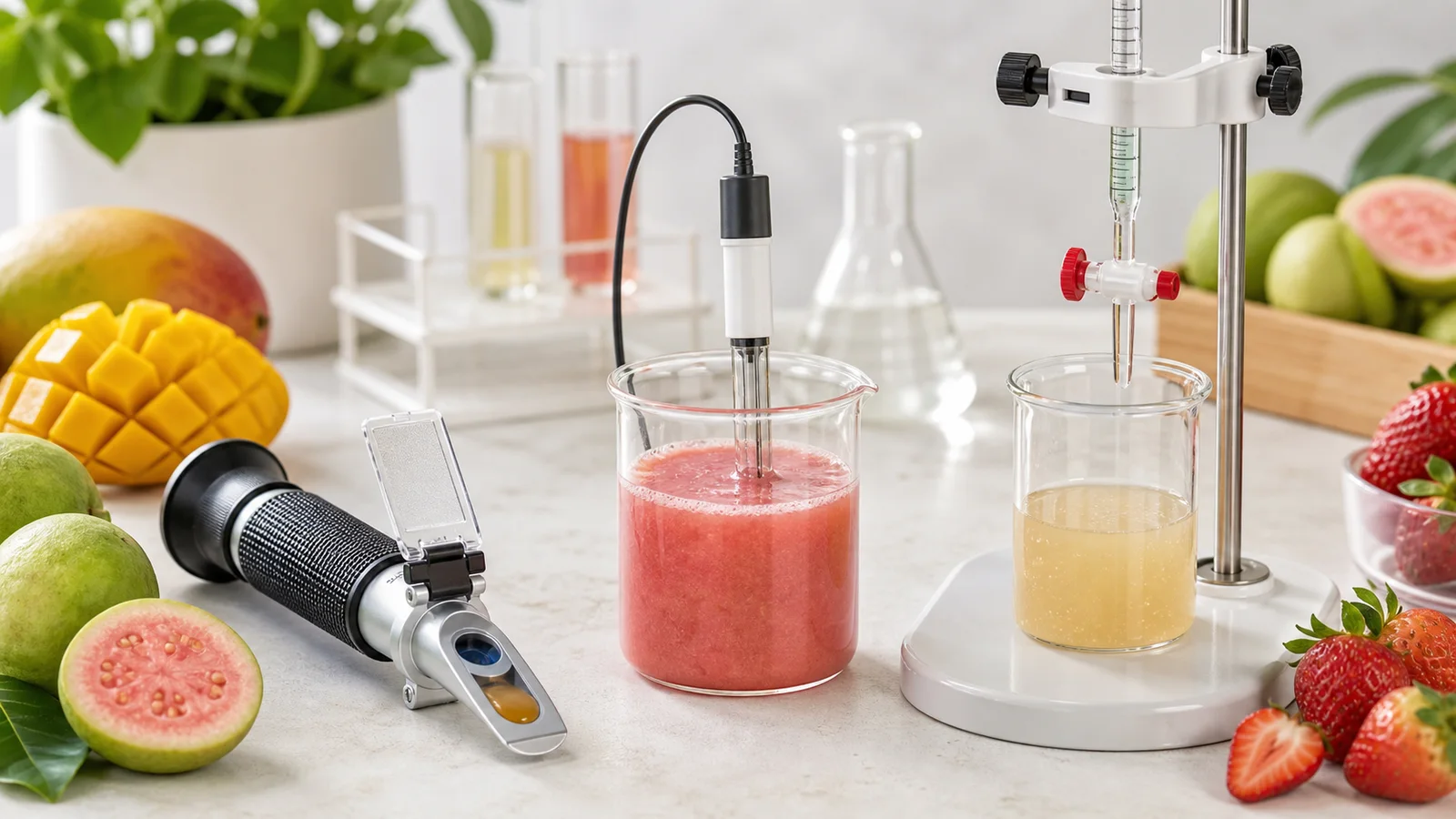
Brix, pH, and total acidity answer different questions
Understand Brix, pH, and total acidity, how they relate to sensory consistency, and how to use them in formulation trials and quality control.

Food safety management
HACCP and ISO 22000 are connected but not identical
Understand how HACCP and ISO 22000 differ in scope and certification, plus the evidence procurement and quality teams should review.
Procurement and supplier quality
Supplier evaluation should test fit, risk, and supply capability
A practical checklist for product fit, food safety, quality, supply, cold chain, traceability, commercial readiness, and ongoing performance.