Formulation fundamentals
Fruit concentrate and syrup perform different jobs
Both may look thick and sweet, but their identity and formulation role differ. Fruit concentrate comes from fruit material from which water has been removed; syrup is a liquid system based on sweetener and may carry flavor, color, acid, stabilizer, or other components.
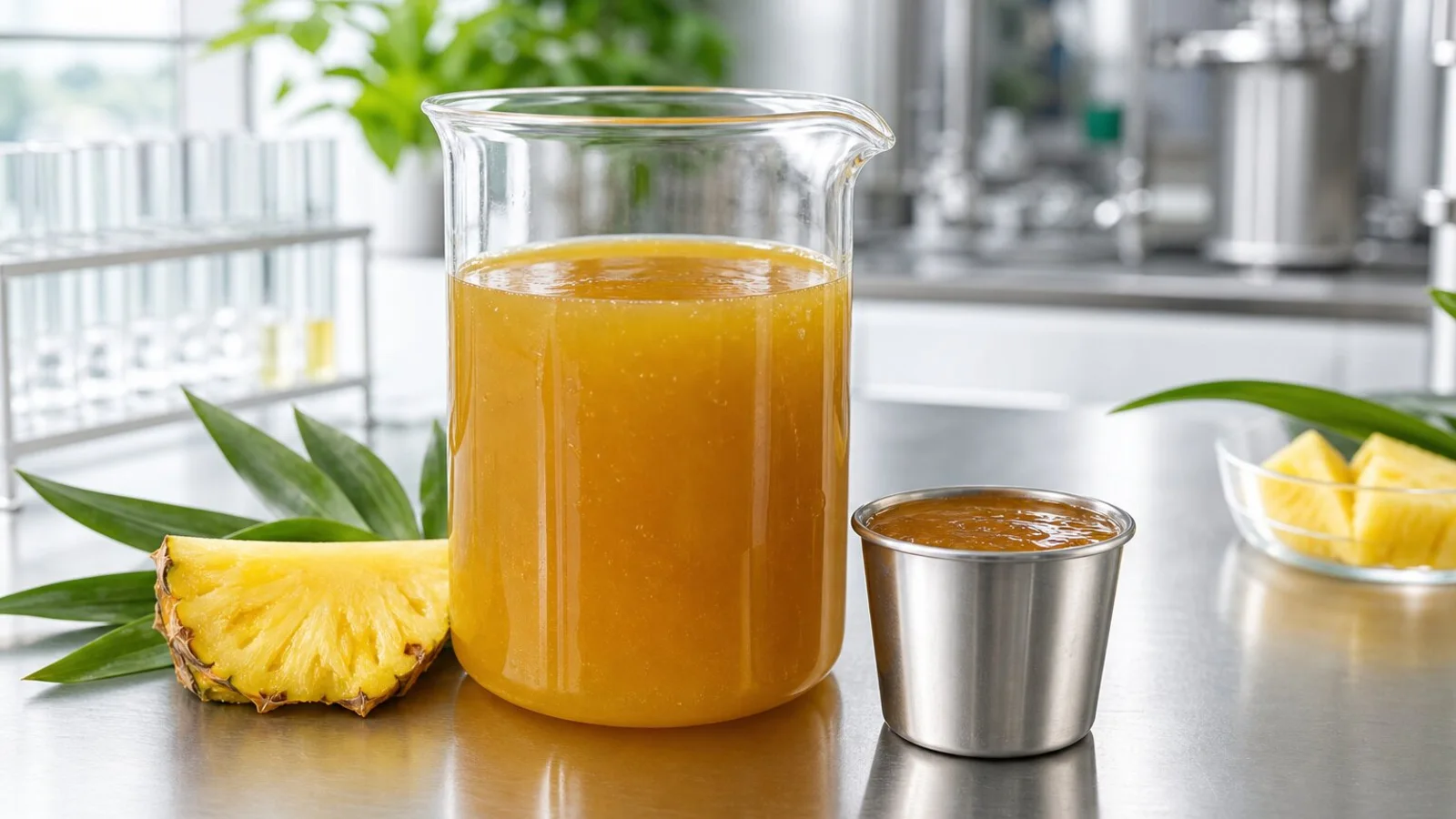
Quick answer
Fruit Concentrate vs Syrup: Formulation Differences
Choose concentrate when a formula needs concentrated fruit contribution and soluble solids. Choose syrup when operations need a ready-to-dose base with designed sweetness and flavor. Always read the ingredient statement, specification, and finished-product category; a trade name does not disclose composition.
- 01High Brix does not prove that two materials have the same identity or flavor profile.
- 02Account for every contribution of sugar, acid, water, color, and flavor to the finished formula.
- 03Compare cost in use at the actual dosage, not price per kilogram alone.
Different ingredient identities
Fruit concentrate is produced by removing part of the water from juice or relevant fruit material, increasing soluble solids and certain fruit characteristics. A specification may include Brix, acidity, pH, color, aroma, and storage. Reconstitution information may matter when the concentrate is used to rebuild a single-strength profile.
Syrup can be a simple sugar solution or a complex formula already containing flavor, acid, color, preservatives, and stabilizers. Two syrups sold under the same flavor name can have very different ingredient statements. The team therefore needs the actual documentation rather than the assumption that syrup is only sugar and water.
Effect on formulation control
Concentrate gives R&D more control to build sweetness, acidity, flavor, and viscosity separately. That flexibility also requires weighing, standardization, and management of natural-material variation. Syrup can simplify dosing because several functions are combined, but adjustment space may be narrower.
Decide whether the business prioritizes formulation flexibility or operating simplicity. A central kitchen supplying many outlets may value easy dosing; a manufacturer with an R&D team may choose concentrate for greater control. Process capability decides more than the ingredient name.
| Area | Fruit concentrate | Syrup |
|---|---|---|
| Identity | Fruit material with water removed | Sweetener-based liquid or designed formula |
| Control | Formula components adjusted separately | Several functions may be combined |
| Key documents | Specification, COA, Brix/acidity, storage | Ingredient statement, dosage, specification, storage |
| Trial | Requires balancing in the base | Requires sweetness and flavor checks at dosage |
Brix, sweetness, and flavor intensity
Brix indicates soluble solids refractometrically; it does not identify the source of every solid. A concentrate and syrup can share a reading while differing in sugar composition, acid, aroma, color, and aftertaste. Sensory evaluation in the finished base is still necessary.
Build a mass balance including water from all ingredients, sweetener contribution, target Brix, pH, titratable acidity, and yield. A one-for-one replacement by weight can move the product far from its sweetness and flavor target.
Labeling and category implications
Different ingredient statements affect declaration and may influence product category or claims. Use of fruit language in marketing needs to match the formula and applicable rules. Concentrate does not automatically make the finished product a juice, and syrup does not by itself assign one category.
Involve regulatory affairs before approving the name and artwork. Supplier documentation should support ingredient identity, then the finished formula must be assessed as a whole. A relevant supplier change in composition or process should trigger internal review through change notification.
How to run a side-by-side trial
Compare against the same product objective rather than forcing the same dosage. Create a control formula, then adjust each candidate so the selected Brix or sensory point can be compared. Record total water, sugar, acid, flavor, processing, and cost in use.
Evaluate immediate sensory performance and change after processing and storage. For beverages, review clarity or sediment where relevant. For sauces and dressings, review viscosity, emulsion behavior, color, and aftertaste. Select for fit with the brief and workflow, not the neat sample alone.
Primary references
These references support the educational framework. Product-specific and regulatory decisions still require current-document review by qualified personnel.
Related ingredients
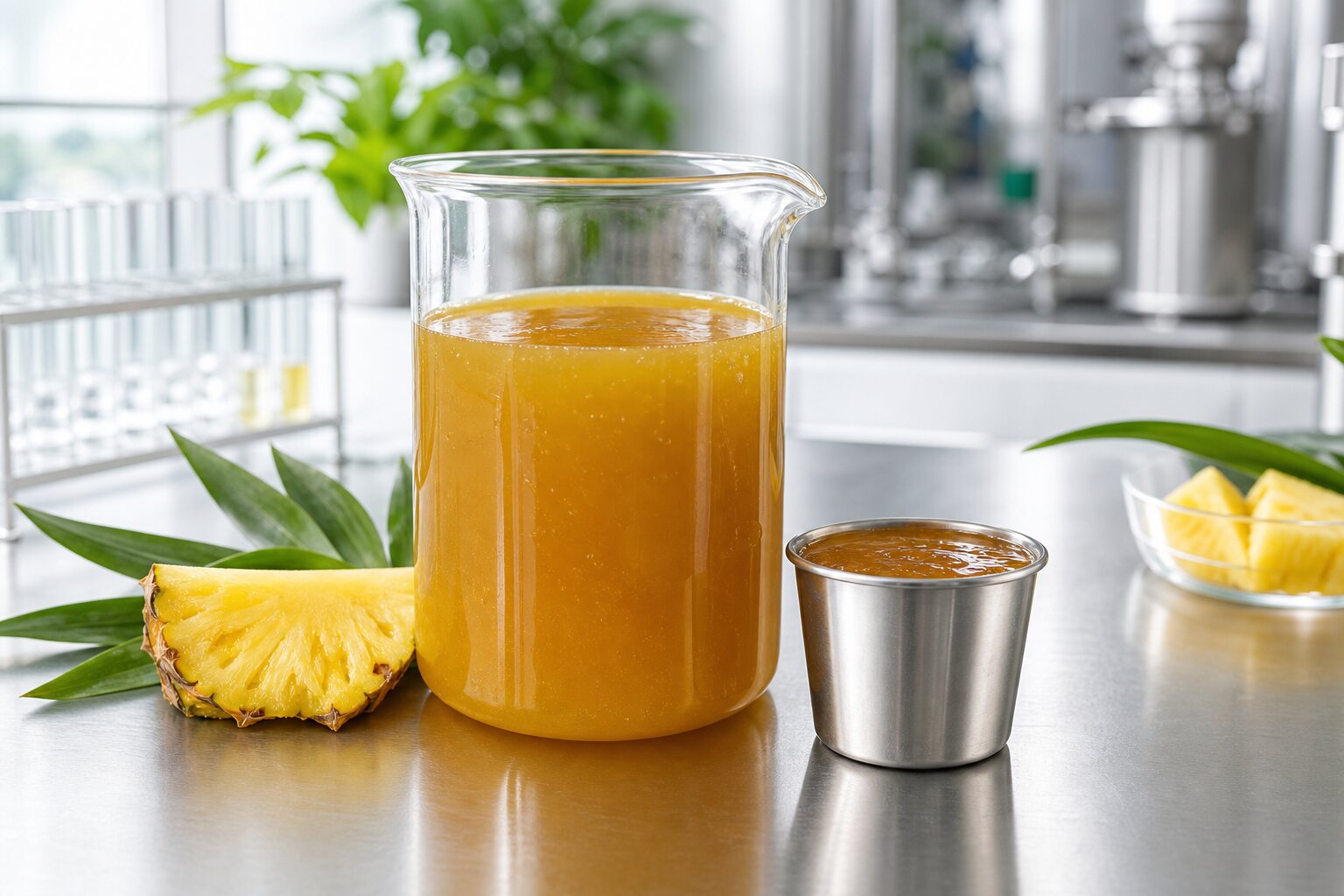
Fruit Concentrate
Pineapple Concentrate
Pineapple concentrate for beverage, sauce, dressing, glaze, bakery, and fruit-blend development with application-led review of dosage, sweet-tart balance, process, and formula efficiency.
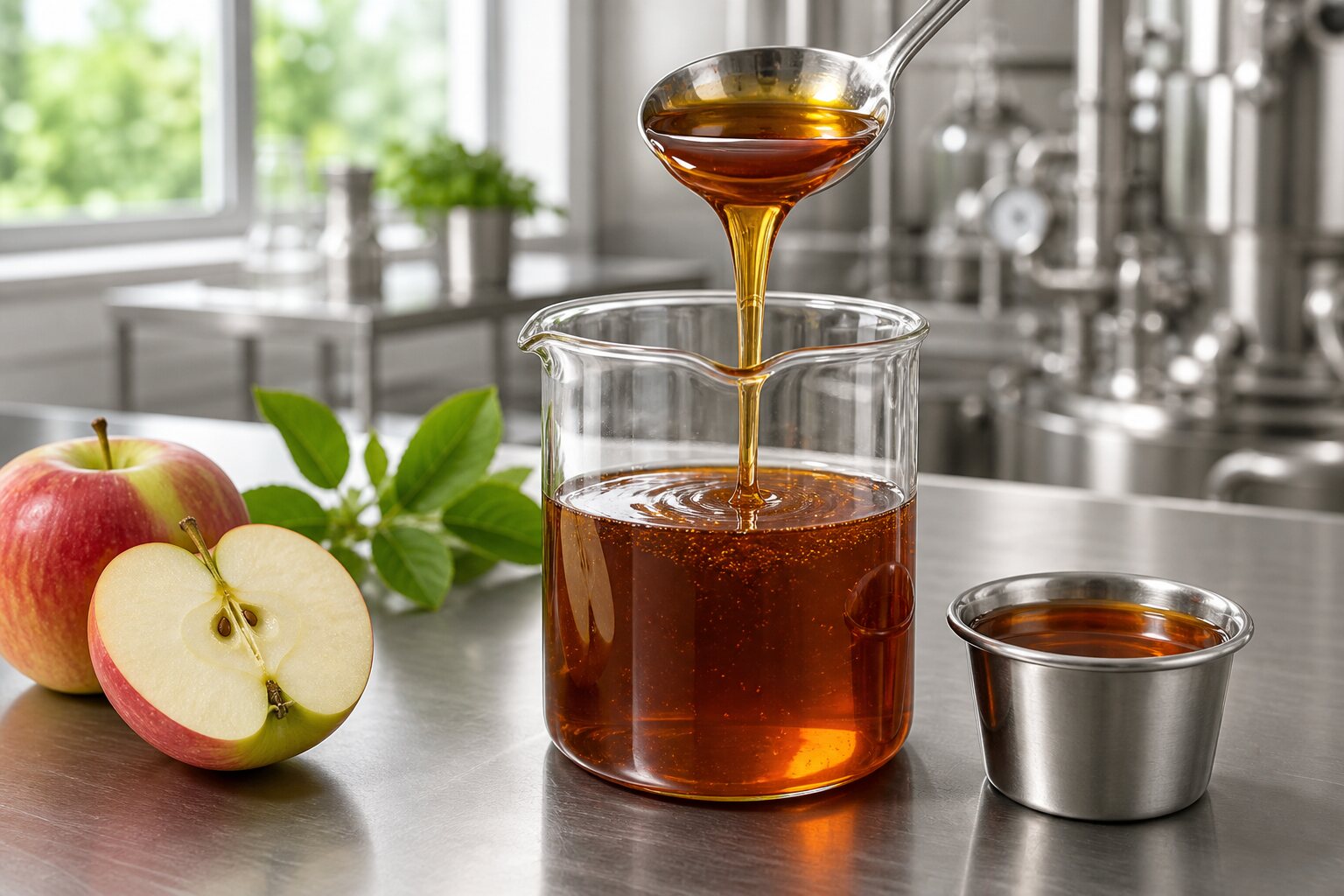
Fruit Concentrate
Apple Concentrate
Apple concentrate for beverage, fruit-blend, sauce, glaze, and bakery development with application-led review of dosage, sweetness-acidity, apple intensity, process, yield, and formula efficiency.
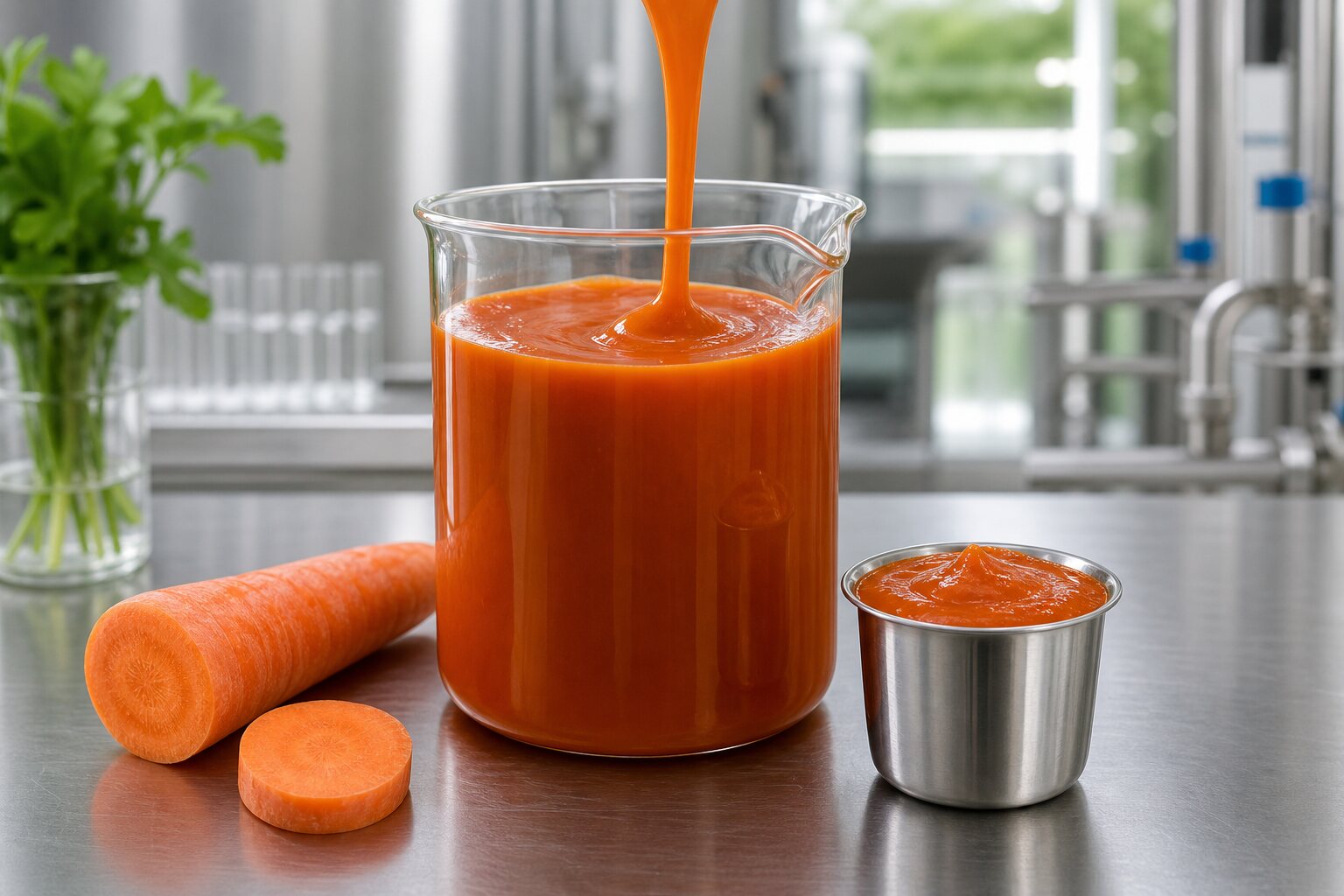
Fruit Concentrate
Carrot Concentrate
Carrot concentrate for functional beverage, fruit-vegetable blend, soup, sauce, and ready-meal development with application-led review of colour, vegetable character, blending, dosage, and process.
Continue to sourcing guides
Fruit concentrate for F&B products
Fruit concentrate for beverages, sauces, bakery, and food service products that need stronger fruit flavor in a more efficient format.
Fruit concentrate for sauces, dressings, and marinades
Fruit concentrate for sauces, dressings, marinades, glazes, and savory applications that need clear fruit flavor in a more efficient ingredient format.
Keep learning
Related articles
Fruit ingredient fundamentals
What is fruit puree, and when is it the right format?
Learn how fruit puree differs from juice, pulp, and concentrate, plus the checks R&D and procurement teams should make before formulation trials.
Quality control
What is Brix, and what does it actually measure?
Understand degrees Brix, refractometer use, temperature and matrix effects, and why Brix is not always an exact measure of sugar content.
Regulation and formulation
Juice, nectar, juice drink, or fruit-flavored beverage?
A practical starting guide to juice, nectar, juice drink, and fruit-flavored beverage categories in Indonesia before formula and label approval.