Regulation and formulation
Juice, nectar, juice drink, or fruit-flavored beverage?
Similar-sounding names can point to different food categories, compositions, and labeling expectations. Before R&D locks a formula or marketing selects a product name, the team should review the applicable Indonesian category and test it against the actual composition.
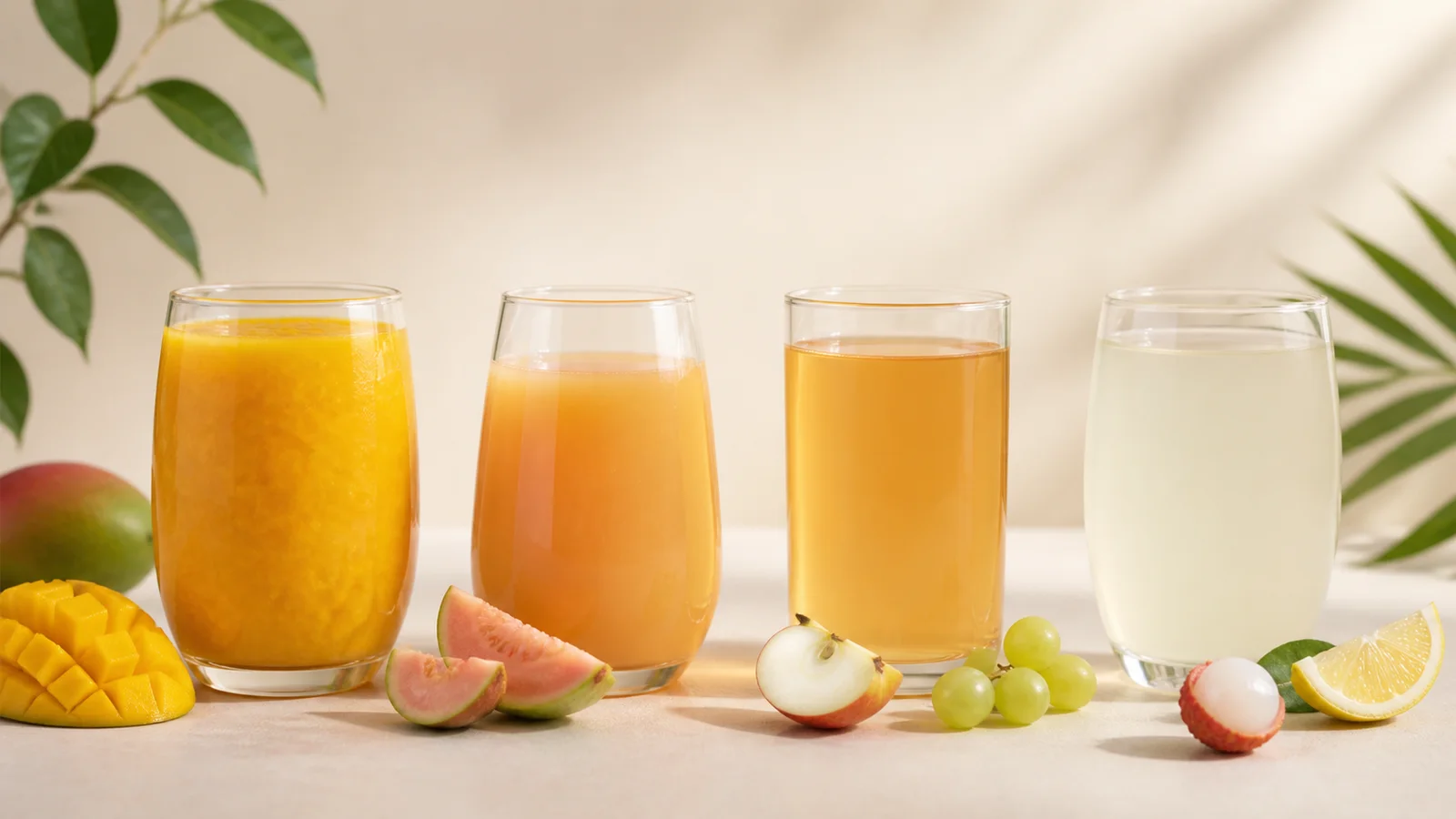
Quick answer
Fruit Beverage Categories in Indonesia: Juice, Nectar, and Drinks
Category is not determined by flavor or color alone. Fruit source and format, proportion, added water and other ingredients, process, and proposed name must be reviewed together. Indonesia's BPOM Regulation No. 13 of 2023 is a starting point; Codex helps explain juice and nectar terminology, but a local label decision must follow applicable Indonesian requirements.
- 01Set a target category before final formulation so name, composition, and documentation remain aligned.
- 02Do not use juice as a synonym for every fruit-tasting beverage.
- 03Obtain a regulatory review of the final formula and label; this guide is not a product-specific classification.
Why category belongs at the start of development
A food category frames product identity. Two beverages that both use puree or concentrate may follow different paths because their proportions of fruit, water, sweeteners, flavors, or other ingredients differ. A front-of-pack name cannot be selected only because it sounds attractive.
For the development team, the early decision affects the formulation brief, Brix and acidity targets, sensory profile, ingredient choice, and information prepared for registration. If category is discussed only after the formula is finished, reformulation and artwork changes can add avoidable time.
A working map of the terms
In broad terms, fruit juice refers to liquid derived from edible fruit under a defined identity and process. Fruit nectar commonly involves added water and may have specific compositional rules. Juice drink or fruit drink sits under a different compositional framework, while a fruit-flavored beverage places flavoring more centrally in the identity of the taste.
That high-level map does not replace regulation. Category names, definitions, and requirements can contain detail by food and fruit type. Work from the current official text, document the classification rationale, and involve regulatory affairs before approving the formula and label.
| Working term | Formulation question | Risk of assumption |
|---|---|---|
| Juice | What is the fruit source and format? | Name and identity do not align |
| Nectar | What are the proportions of fruit, water, and other ingredients? | Formula falls outside the category framework |
| Juice/Fruit drink | What does fruit contribute to the finished beverage? | Claims exceed the composition |
| Fruit-flavored | Does flavoring primarily create the fruit character? | Name and ingredient statement confuse the buyer |
Puree and concentrate do not decide the category alone
Puree contributes pulped fruit material and body; concentrate provides a more concentrated source of soluble solids and fruit character after water removal. They are ingredient formats, not finished-product category names. A formula using concentrate still requires compositional calculations and a complete regulatory review.
When comparing suppliers, obtain ingredient identity, ingredient statement, Brix, acidity, storage conditions, and reconstitution information where relevant. Those details support mass balance and regulatory assessment, but the final category still depends on the product as a whole.
A practical pre-approval workflow
Begin with a one-page product brief covering the consumer, serving format, working name, sensory target, and possible claims. Regulatory affairs maps potential categories and key constraints. R&D then develops options inside that space and tests sensory fit, process compatibility, and the shelf-life plan.
For the selected option, cross-check the formula, supplier documents, product name, ingredient list, nutrition information, and artwork. Retain versions and approvals so any change in ingredient or dosage is traceable. A reformulation should trigger another review of category and labeling impact.
- Confirm the regulation current on the review date.
- Use actual composition, not only the supplier's product name.
- Separate sensory language from category identity requirements.
- Document decisions and change control.
The boundary of this guide
This article helps a team frame questions; it does not assign a legal classification to a particular formula. Details can depend on fruit type, fruit content, process, additives, claims, and other applicable provisions. Always consult the current official documents and qualified regulatory personnel.
For ingredient sourcing, ask the supplier for data needed to assess the formula. Avoid asking a supplier to guarantee a finished-product category without full formula and regulatory context. The product owner still needs a controlled approval process.
Primary references
These references support the educational framework. Product-specific and regulatory decisions still require current-document review by qualified personnel.
Related ingredients
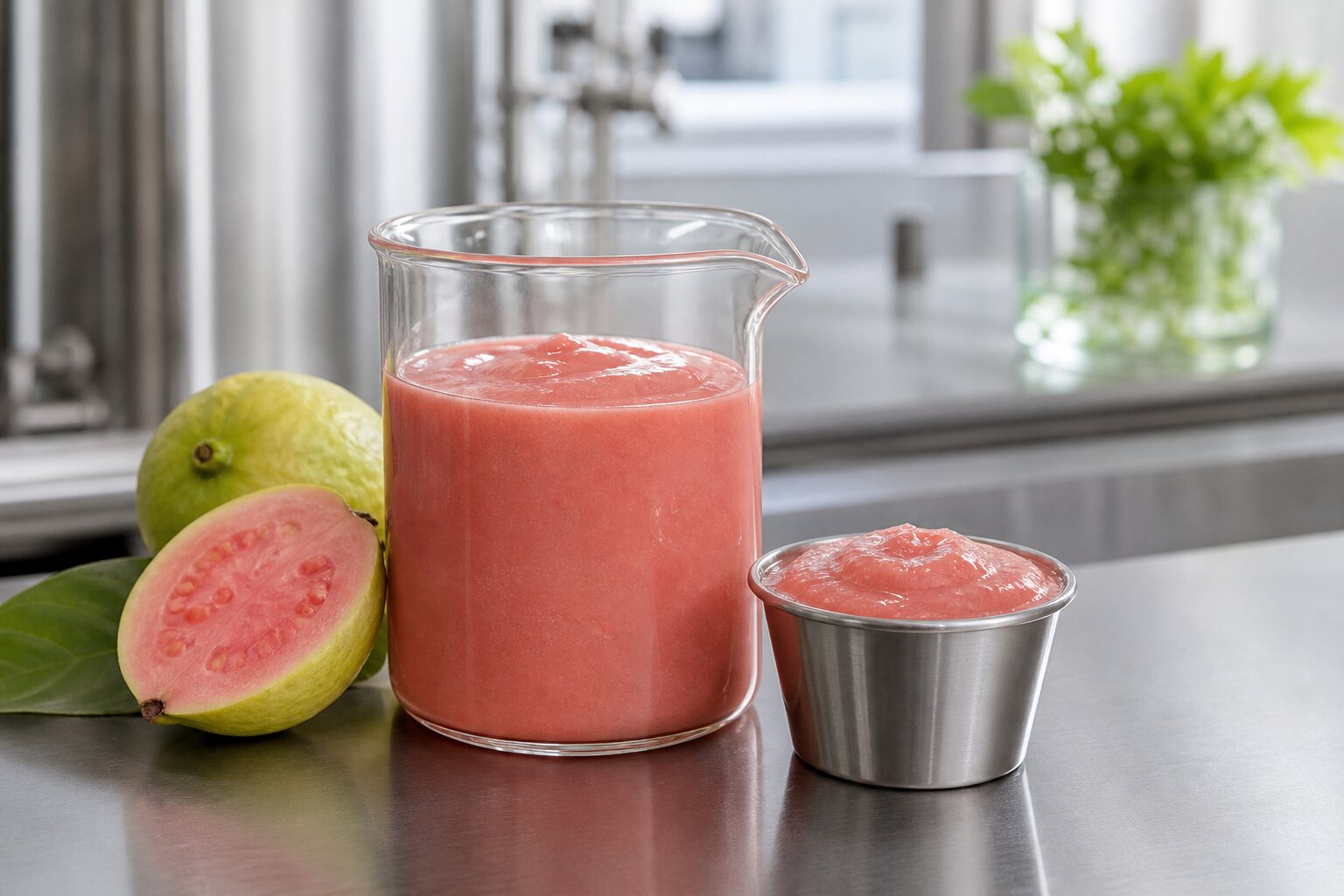
Fruit Puree
Guava Puree
Guava puree for RTD beverage, dairy, bakery, dessert, and beverage-service development with application-led review of flavour, body, process, and vendor needs.
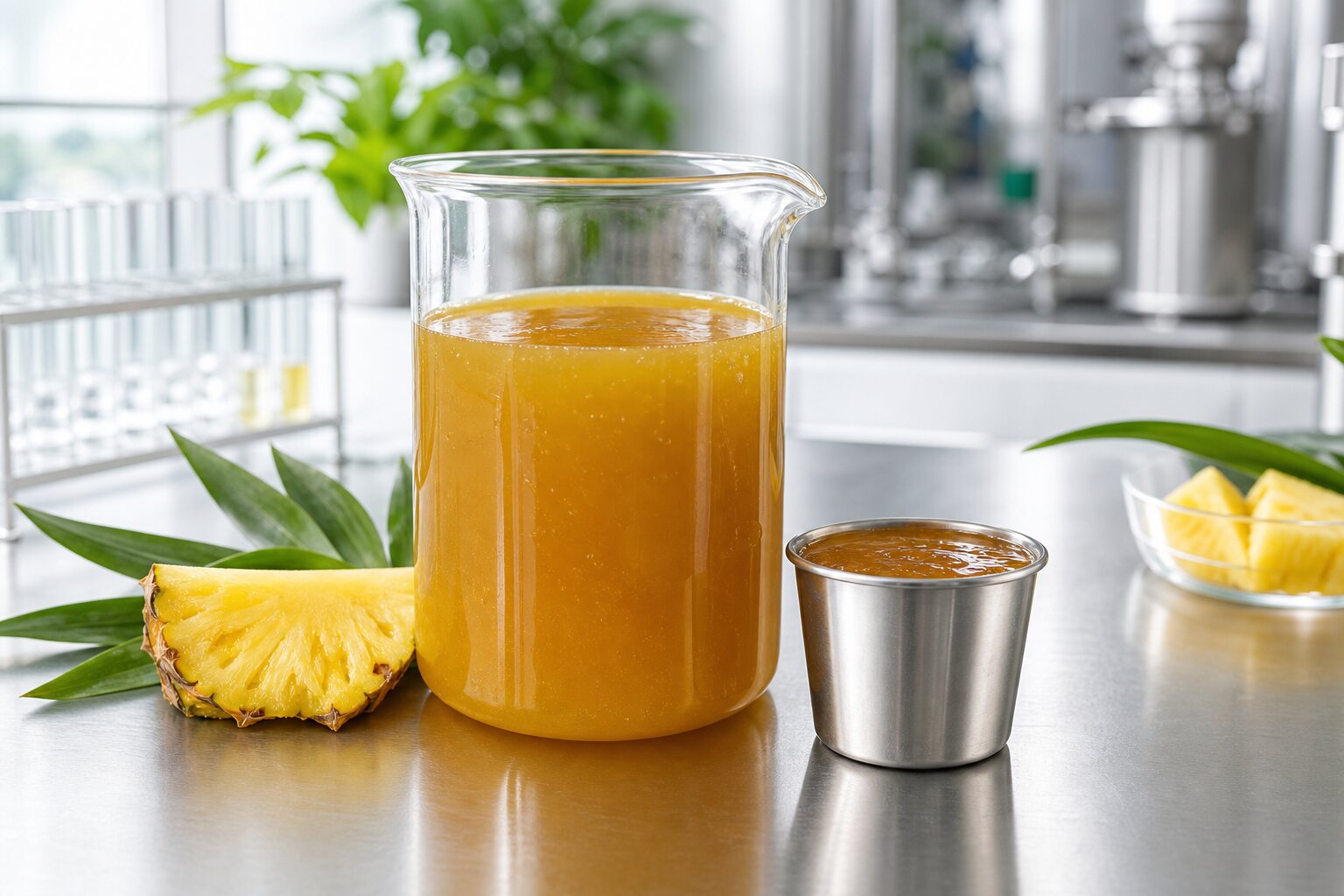
Fruit Concentrate
Pineapple Concentrate
Pineapple concentrate for beverage, sauce, dressing, glaze, bakery, and fruit-blend development with application-led review of dosage, sweet-tart balance, process, and formula efficiency.
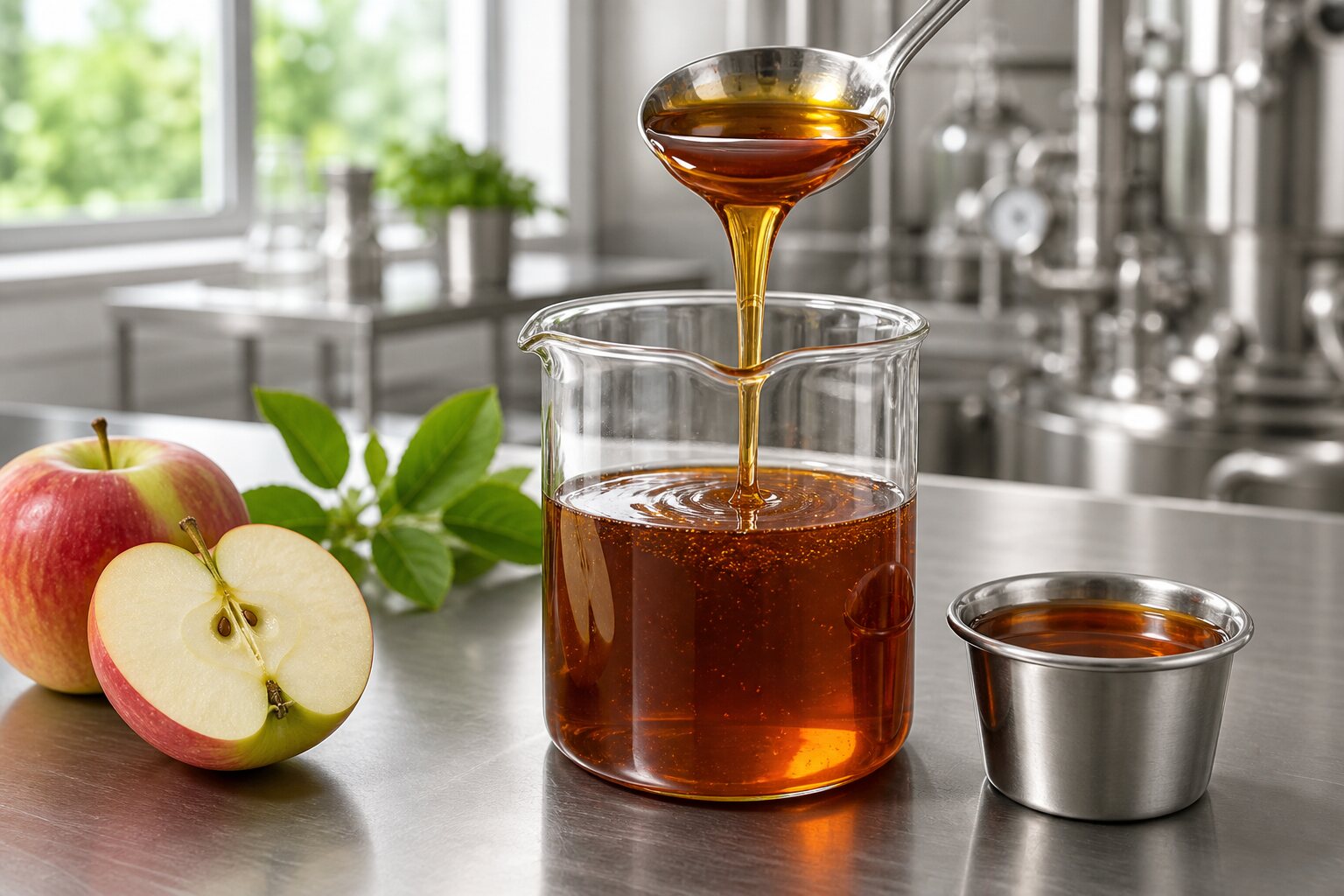
Fruit Concentrate
Apple Concentrate
Apple concentrate for beverage, fruit-blend, sauce, glaze, and bakery development with application-led review of dosage, sweetness-acidity, apple intensity, process, yield, and formula efficiency.
Continue to sourcing guides
Fruit puree for packaged drinks and RTD
Fruit puree for beverage products such as juice drinks, smoothies, nectars, and RTD drinks. Helps bring real fruit taste, color, and texture into the recipe.
Pineapple concentrate for tropical drinks
Pineapple concentrate for beverages, tea blends, mocktail bases, and tropical drinks that need clear pineapple flavor in a practical format.
Keep learning
Related articles
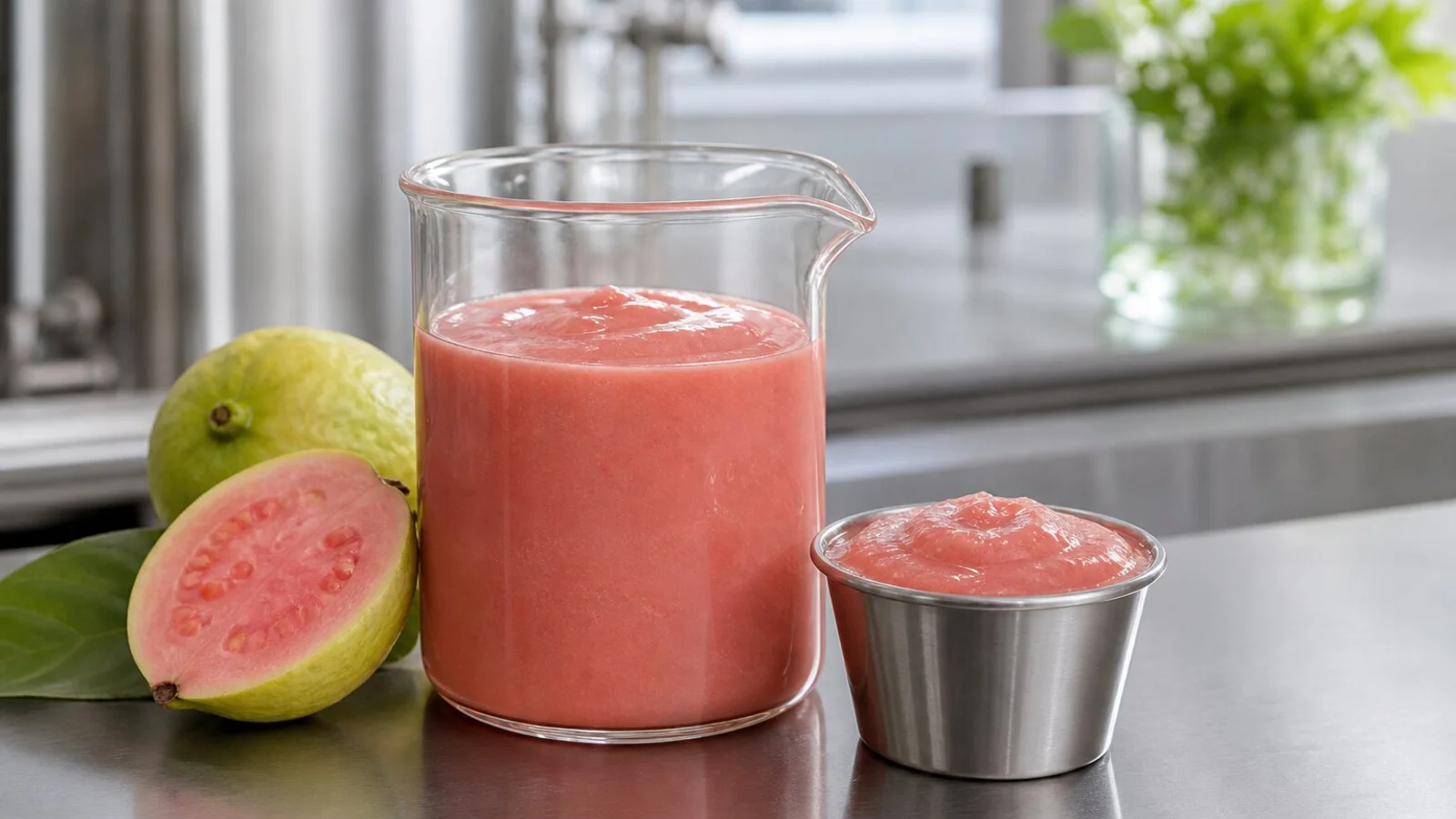
Fruit ingredient fundamentals
What is fruit puree, and when is it the right format?
Learn how fruit puree differs from juice, pulp, and concentrate, plus the checks R&D and procurement teams should make before formulation trials.
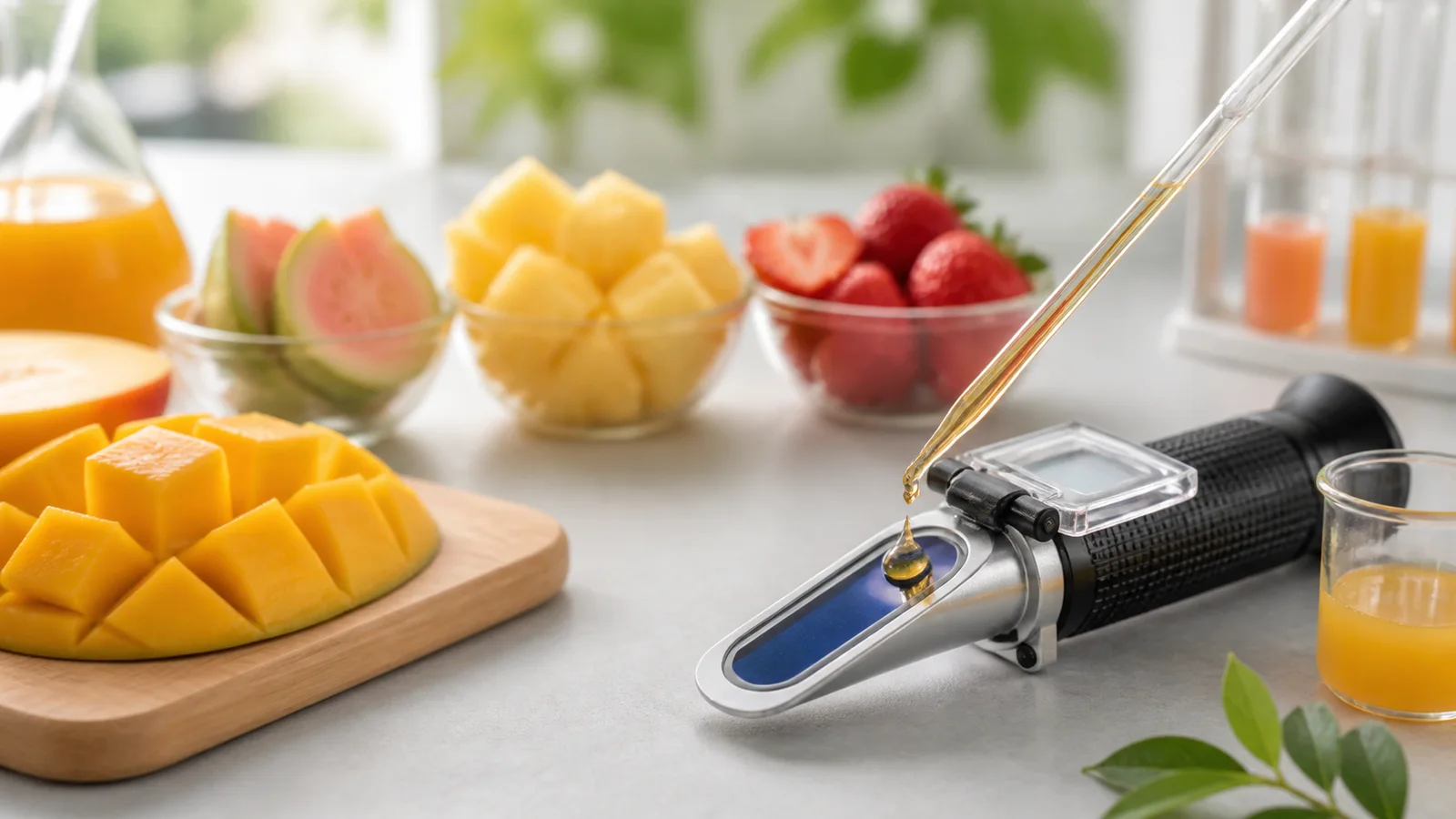
Quality control
What is Brix, and what does it actually measure?
Understand degrees Brix, refractometer use, temperature and matrix effects, and why Brix is not always an exact measure of sugar content.
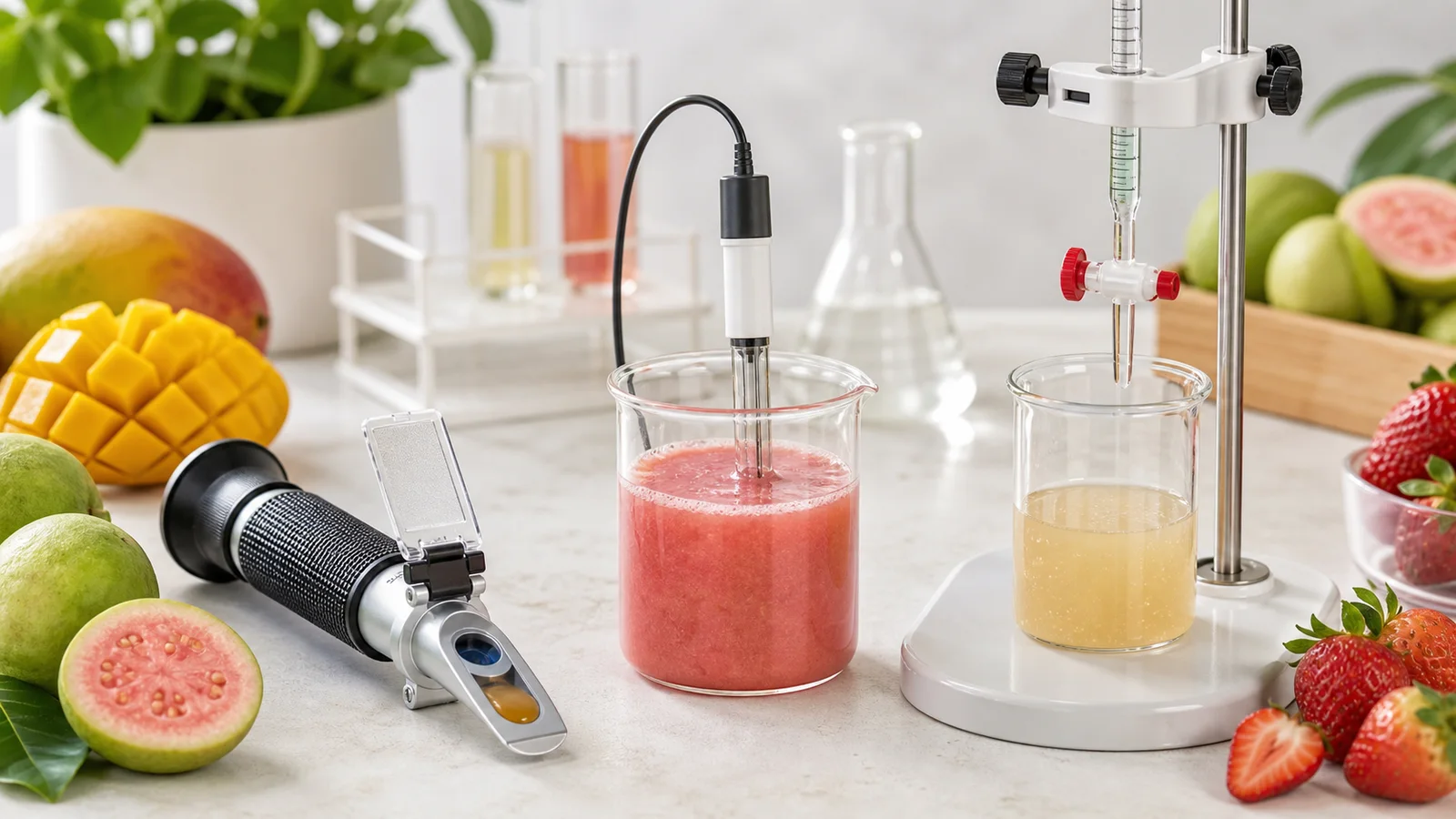
Quality control
Brix, pH, and total acidity answer different questions
Understand Brix, pH, and total acidity, how they relate to sensory consistency, and how to use them in formulation trials and quality control.