Fruit ingredient fundamentals
What is fruit puree, and when is it the right format?
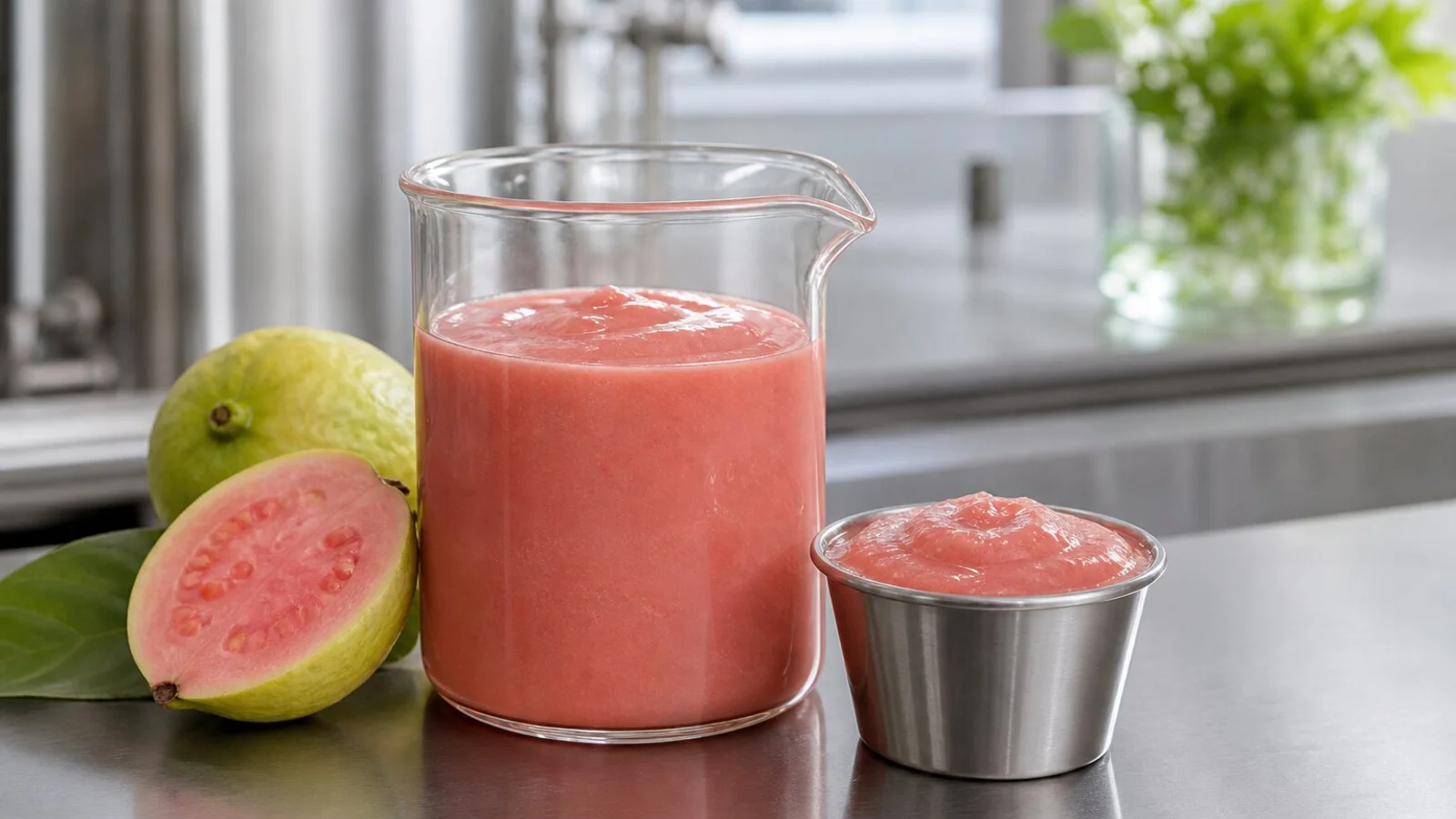
Fruit puree retains edible fruit material in a crushed, pulped, or sieved form. It should not be treated as a synonym for juice, pulp, or concentrate: each format contributes a different balance of fruit character, body, mouthfeel, storage demand, and processing behavior.
Quick answer
What Is Fruit Puree? Puree vs Juice, Pulp, and Concentrate
Puree is useful when a formula needs fruit identity together with body or texture. Juice emphasizes the liquid fraction, pulp commonly refers to fruit tissue or solids, and concentrate has had part of its water removed. Commercial identity still depends on the actual specification, composition, process, and the rules governing the finished product.
- 01Select against the actual composition and specification, not the ingredient name alone.
- 02Evaluate puree at the intended dosage and through the planned process.
- 03Brix is only one measure; acidity, viscosity, color, aroma, and particle size may also matter.
Industrial puree is more than blended fruit
A commercial puree needs a defined ingredient identity and parameters that a buyer can evaluate. Edible fruit material may be crushed, sieved, heat treated, and packed according to the intended supply format. Screen size affects particle distribution and mouthfeel, while processing and storage can affect color, aroma, and behavior in a finished formula.
That makes a kitchen comparison insufficient for procurement. R&D and quality teams should review the ingredient statement, technical specification, storage conditions, packaging format, and lot-specific COA. The sample also needs to be tested in the real base because sugar, dairy components, stabilizers, shear, and heat can change the result.
Puree, juice, pulp, and concentrate compared
Juice generally emphasizes liquid obtained from edible fruit. Puree retains more pulped structure and commonly contributes body. Pulp can refer to fruit tissue or a solid fraction, but its use varies by commodity and supplier. Concentrate is juice or another fruit material from which part of the water has been removed.
These formats do not form a quality ranking. Puree can suit smoothies, nectars, yogurt, fillings, and sauces; juice may suit a lighter drink; concentrate may support flavor intensity and storage efficiency. The correct choice follows the job the ingredient must perform rather than the assumption that the most concentrated option is always superior.
| Format | Typical contribution | What to verify |
|---|---|---|
| Puree | Fruit character, body, mouthfeel | Brix, pH/acidity, viscosity, particle size, process |
| Juice | Liquid fraction and fruit flavor | Composition, clarification, Brix, acidity |
| Pulp | Fruit tissue or fine solid fraction | Supplier definition, particle size, ratio in the material |
| Concentrate | Higher intensity and soluble solids | Concentration level, reconstitution, dosage |
What belongs in a formulation trial
Start with the intended function: primary flavor, body, color, or one component in a blend. Then set a starting dosage and evaluate only the measures relevant to the product—potentially Brix, pH, titratable acidity, viscosity, color, aroma, and physical stability. A beverage, dairy product, bakery filling, and food-service sauce will not weight these measures equally.
The trial should reproduce the planned mixing order, shear, heating, cooling, and storage conditions. Record the result after processing, not only immediately after blending. A consistent protocol allows the team to compare candidates on repeatable performance rather than on a one-time tasting impression.
How to read supplier claims and specifications
A fruit name on a product page does not disclose the whole material. Confirm whether it is a single ingredient or blend, whether other components are present, how it must be stored, and which parameters are guaranteed. When a value is a receiving criterion, ask for the method or measurement condition that sits behind it.
A COA should correspond to the lot or batch received, but it is not the complete qualification program. Supplier history, delivery controls, traceability, risk-based incoming checks, and change communication remain part of the buyer's own food-safety and quality system.
When puree may not be the first option
If the finished product must be very clear, carry little body, or minimize storage footprint, juice or concentrate may be easier to formulate. If visible pieces are central to the eating experience, chunky or frozen fruit may be more appropriate than a smooth puree.
A useful decision often comes from testing two or three formats in the same base. Compare sensory fit, yield, processing effort, cold-storage needs, documentation, and the full operating workflow—not merely the ingredient's price per kilogram.
Primary references
These references support the educational framework. Product-specific and regulatory decisions still require current-document review by qualified personnel.
Related ingredients
Fruit Puree
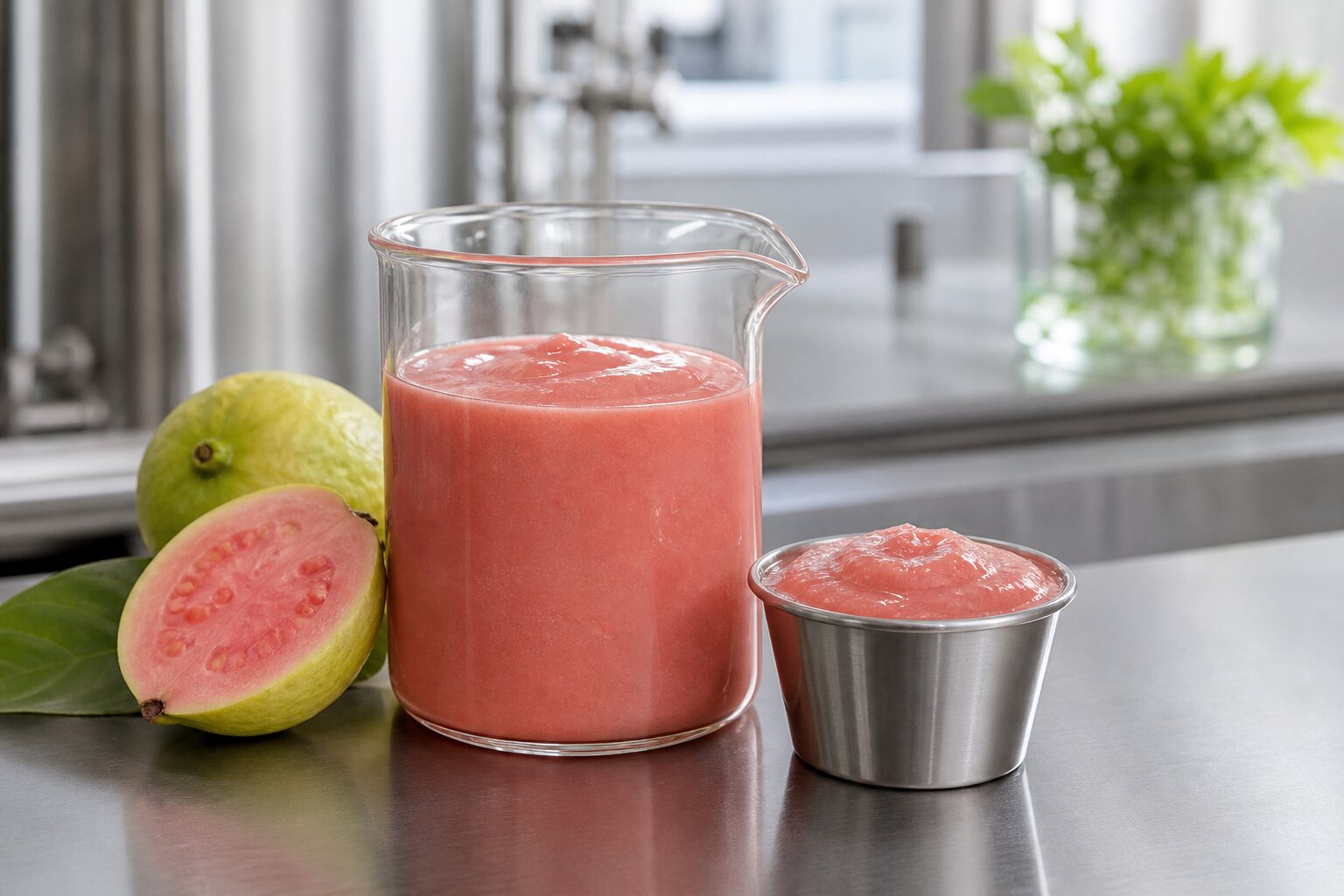
Guava Puree
Guava puree for RTD beverage, dairy, bakery, dessert, and beverage-service development with application-led review of flavour, body, process, and vendor needs.
Fruit Puree
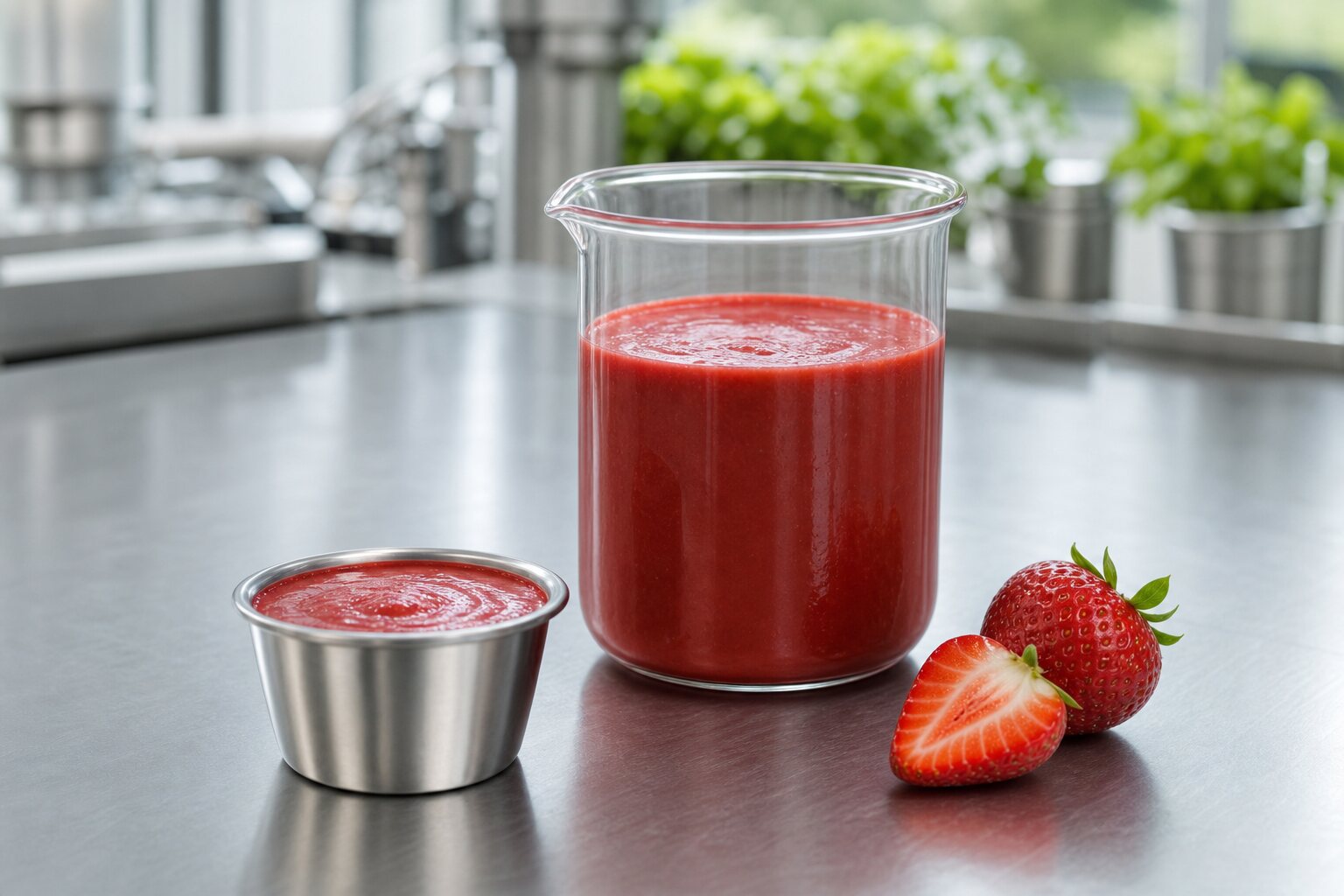
Strawberry Puree
Strawberry puree for dairy, ice cream, dessert, bakery, and beverage development with application-led review of colour, aroma, acidity, texture, and process.
Fruit Puree
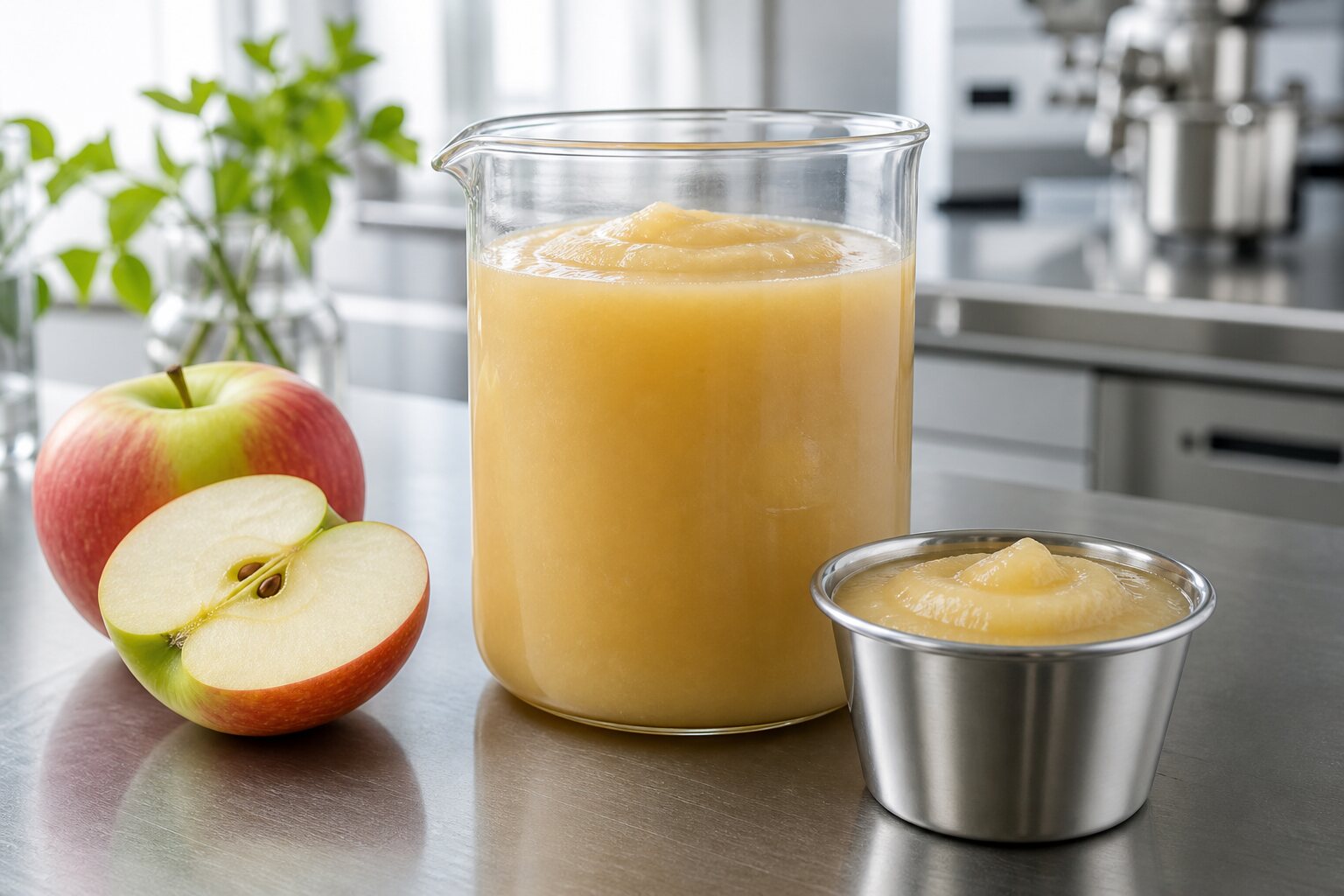
Apple Puree
Apple puree for beverage, dairy, bakery, sauce, and fruit-blend development with application-led review of fruit base, body, mouthfeel, blendability, process, and vendor needs.
Continue to sourcing guides
Fruit puree for F&B production
Fruit puree for beverage, dairy, bakery, dessert, and food service production, including guava and strawberry puree for commercial F&B products.
Fruit puree for packaged drinks and RTD
Fruit puree for beverage products such as juice drinks, smoothies, nectars, and RTD drinks. Helps bring real fruit taste, color, and texture into the recipe.
Keep learning
Related articles
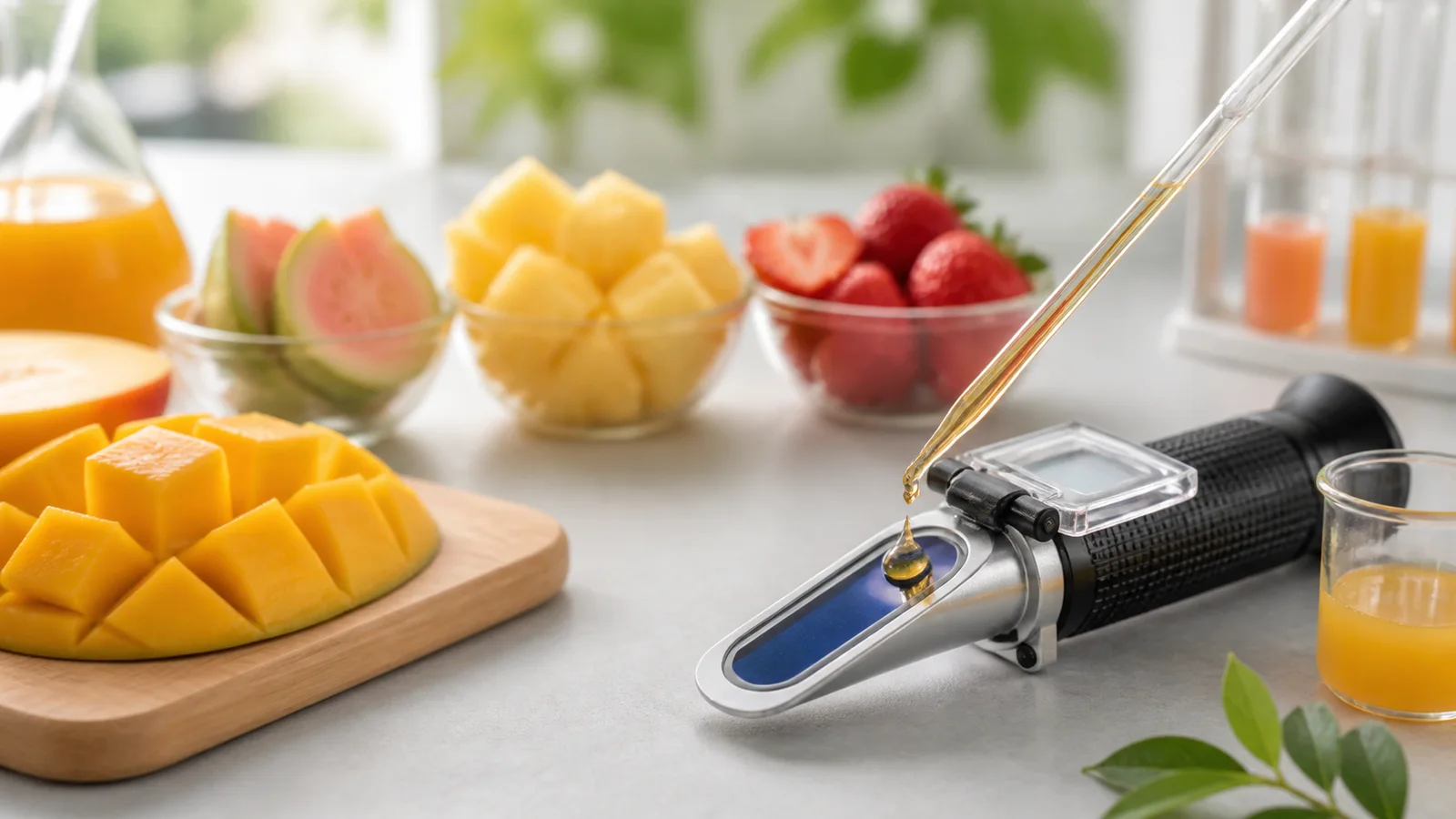
Quality control
What is Brix, and what does it actually measure?
Understand degrees Brix, refractometer use, temperature and matrix effects, and why Brix is not always an exact measure of sugar content.
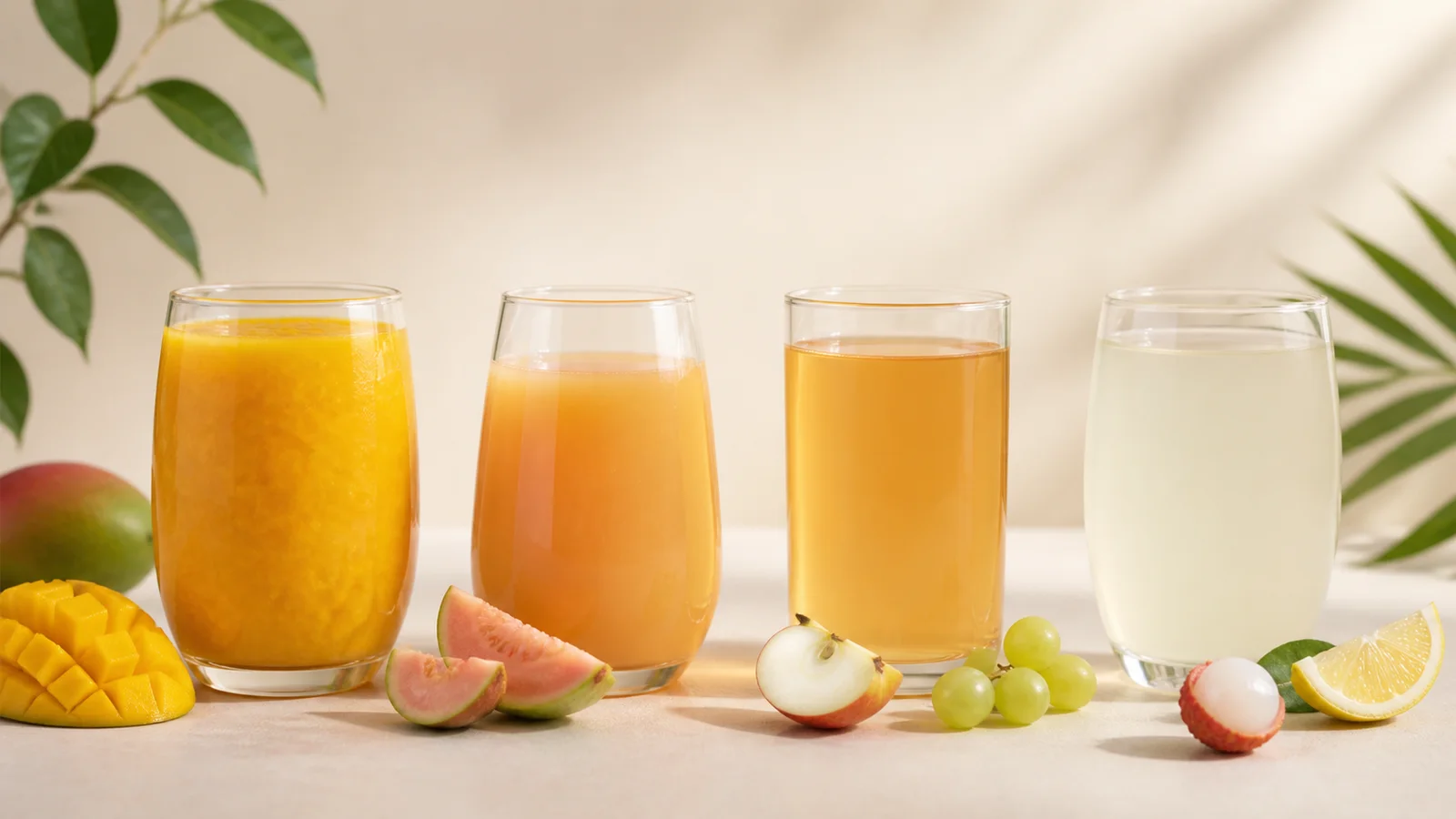
Regulation and formulation
Juice, nectar, juice drink, or fruit-flavored beverage?
A practical starting guide to juice, nectar, juice drink, and fruit-flavored beverage categories in Indonesia before formula and label approval.
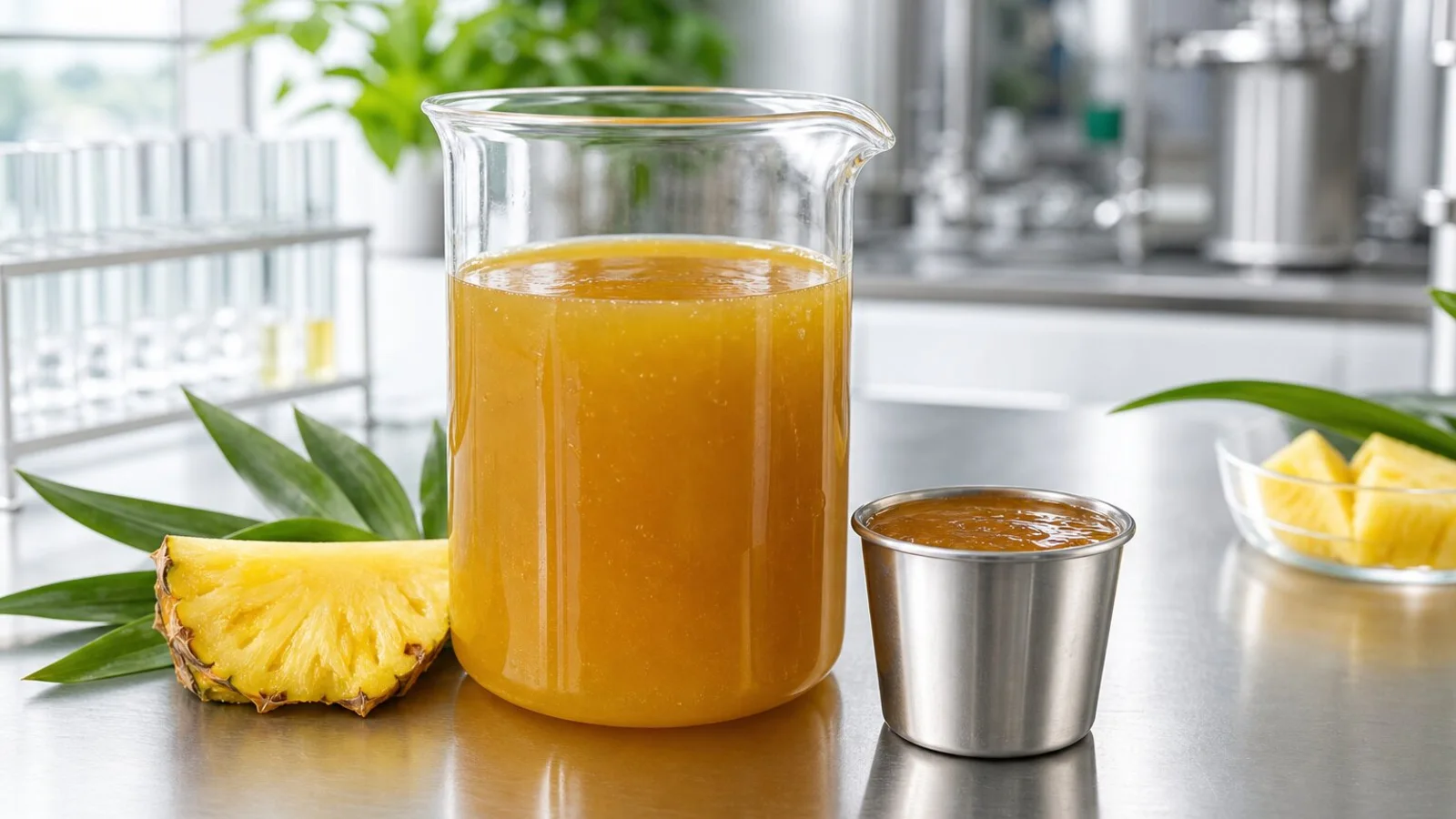
Formulation fundamentals
Fruit concentrate and syrup perform different jobs
Compare fruit concentrate and syrup by ingredient identity, Brix, flavor, dosage, labeling implications, and fit for an F&B formula.