Quality control
What is Brix, and what does it actually measure?
Brix is often the first number reviewed when comparing juice, puree, or concentrate. It is a practical refractometric indicator of soluble solids, but in a complex fruit matrix it should not automatically be treated as a precise measurement of sugar content.
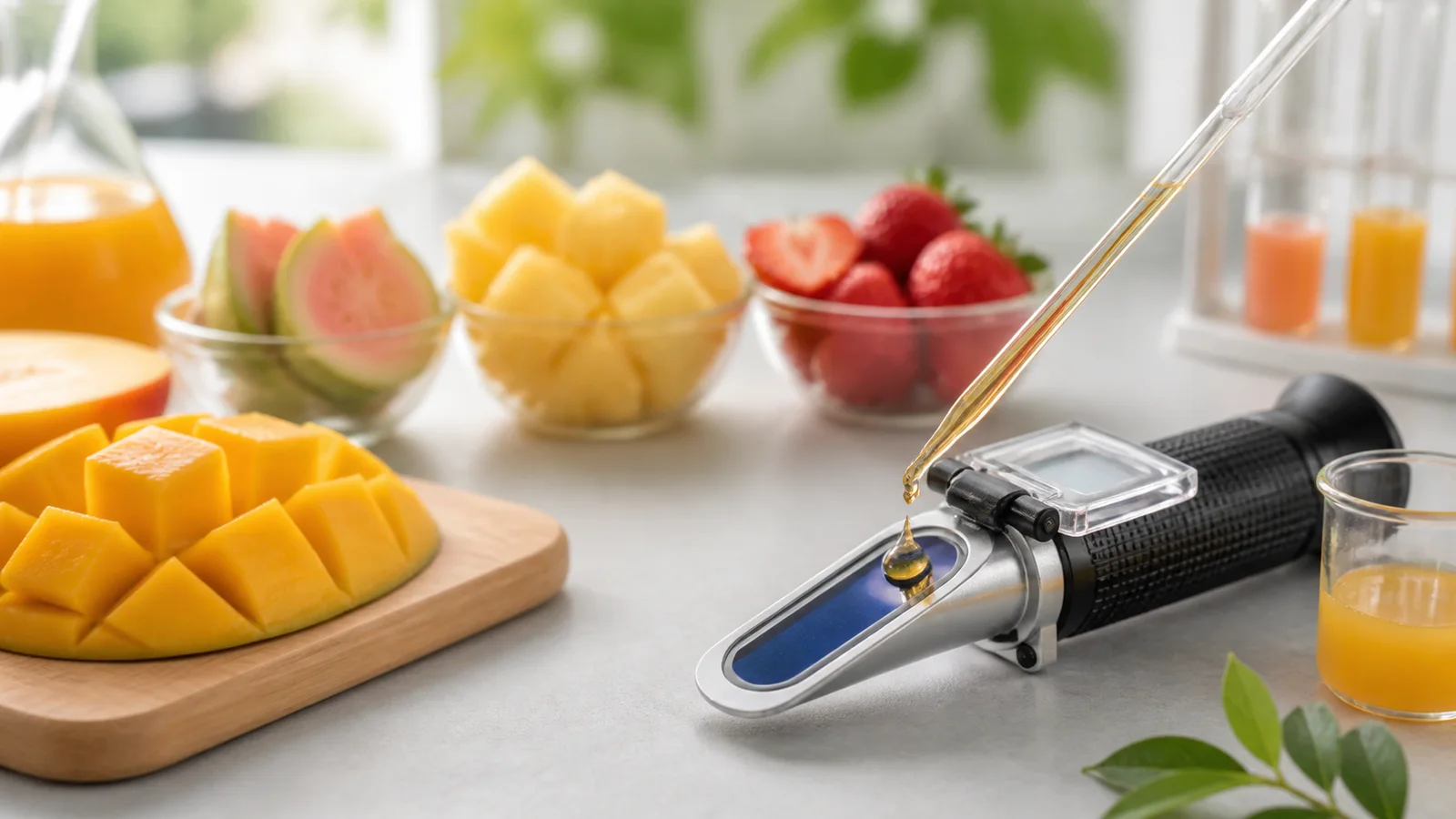
Quick answer
What Is Brix? Measurement, Meaning, and Limitations
One degree Brix ideally corresponds to one gram of sucrose in 100 grams of a sucrose-water solution. In real fruit materials, acids, minerals, and other dissolved components also influence refractive index. Brix therefore indicates soluble solids under a defined method and condition rather than identifying specific sugars.
- 01Use a calibrated instrument and a homogeneous sample under consistent conditions.
- 02Record temperature or use temperature compensation within the instrument's specified range.
- 03Compare results generated by the same method; unlike procedures can create false differences.
How Brix relates to refractive index
A refractometer measures how light changes direction as it passes through a sample, then maps that response to a Brix scale. The interpretation is direct for a pure sucrose solution. In juice or puree, however, the reading reflects all dissolved constituents that affect refractive index.
This is why 'Brix equals sugar' is too broad for many foods. Brix remains valuable as a rapid check for consistency, incoming inspection, concentration, or process monitoring—as long as the matrix and the limitations of the method are understood.
A more consistent Brix measurement workflow
Clean the prism, perform the required zero check, and homogenize the sample without introducing excess air. Apply a representative portion that fully covers the prism. A very viscous or particulate puree may require an agreed preparation procedure so that results from different operators are comparable.
Temperature changes refractive index. Automatic temperature compensation helps but does not remove the need to respect the instrument's range and the chosen method. Record sample identity, lot, time, temperature, instrument, and result, then clean the prism before the next sample.
- Confirm calibration status before use.
- Use a homogeneous sample and sufficient sample volume.
- Allow the reading to stabilize as instructed.
- Use replicates when the result drives acceptance.
Why equal Brix does not mean equal taste
Sweetness perception depends on sugar composition, acidity, aroma, serving temperature, and other ingredients. Two samples can share a Brix result while differing in pH, titratable acidity, aroma, and aftertaste. Body and particles in puree further change perception.
A formulation target should therefore not end with one number. Brix can act as a guardrail, while sensory work and other analytical measures show whether the product meets its objective. A change in acid or flavor can alter perceived sweetness even when Brix remains stable.
Using Brix in receiving and R&D trials
For incoming inspection, compare the measurement with the agreed specification and the lot-specific COA. If they differ, first review sampling, homogenization, instrument condition, temperature, and method before declaring the material nonconforming. Escalation should follow the buyer's quality system.
In R&D, measure the ingredient and finished product at consistent process points. Record dosage, dilution, heating, and every other source of soluble solids. That context makes the data useful during scale-up because the team can identify the source of a change rather than merely seeing the final number.
Interpretations to avoid
Do not use Brix alone to conclude microbiological safety, full ingredient identity, or specific sugar content without an appropriate additional method. It also does not replace pH, titratable acidity, viscosity, or water activity where those measures are relevant.
A target for one commodity cannot automatically be applied to another. Puree, single-strength juice, and concentrate have different functions and ranges. Base the decision on the supplier's actual specification, the formulation brief, and requirements for the finished product.
Primary references
These references support the educational framework. Product-specific and regulatory decisions still require current-document review by qualified personnel.
Related ingredients
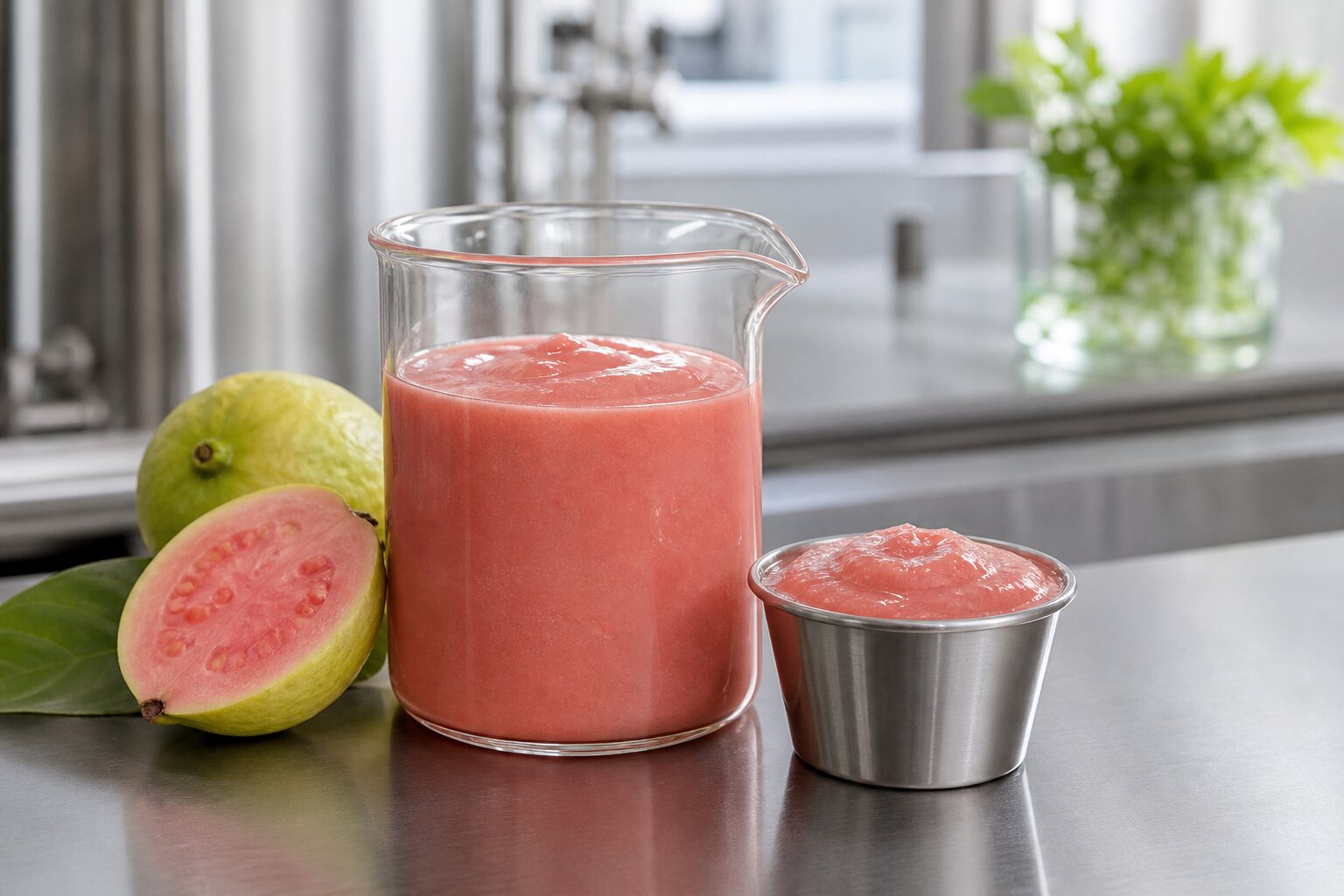
Fruit Puree
Guava Puree
Guava puree for RTD beverage, dairy, bakery, dessert, and beverage-service development with application-led review of flavour, body, process, and vendor needs.
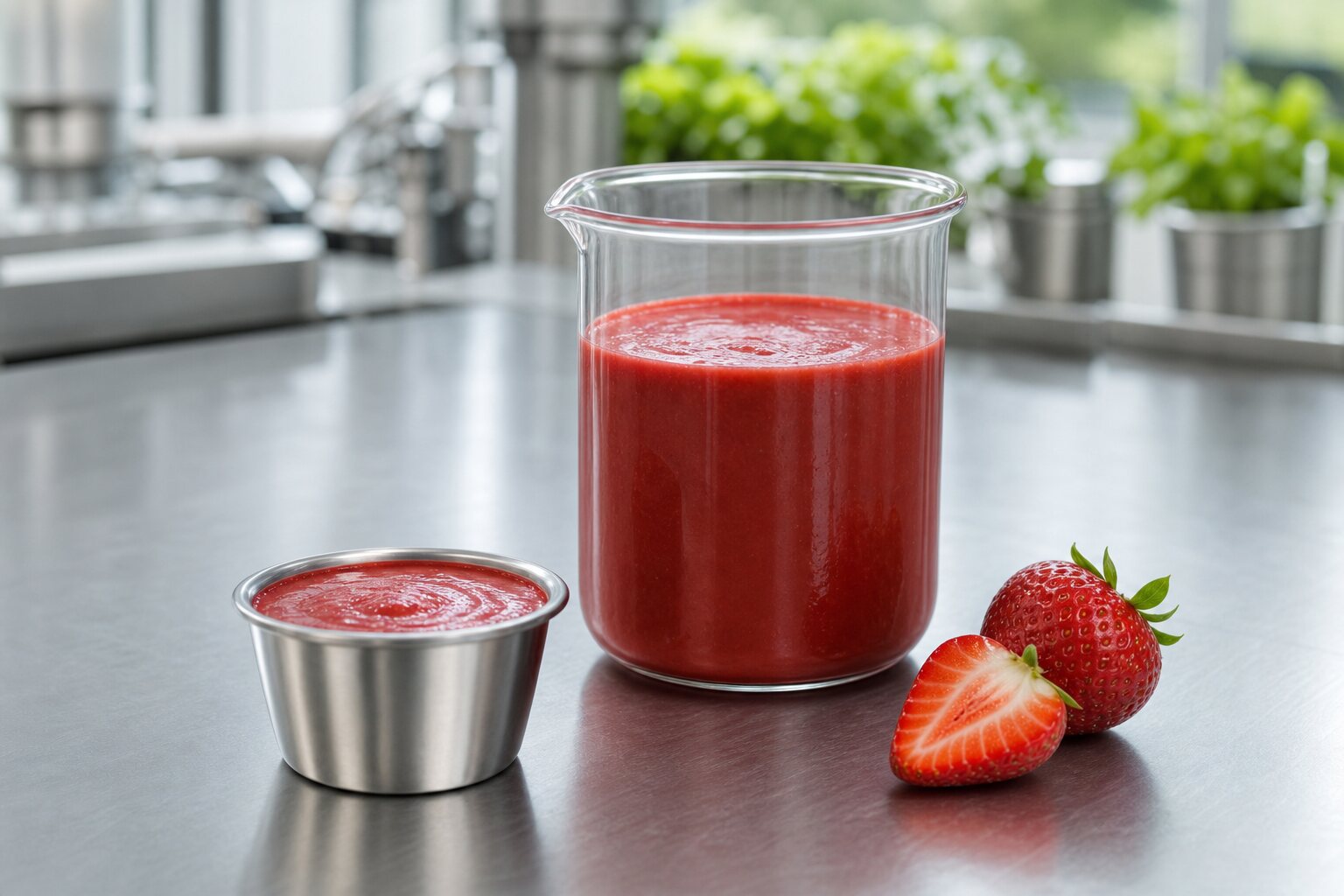
Fruit Puree
Strawberry Puree
Strawberry puree for dairy, ice cream, dessert, bakery, and beverage development with application-led review of colour, aroma, acidity, texture, and process.
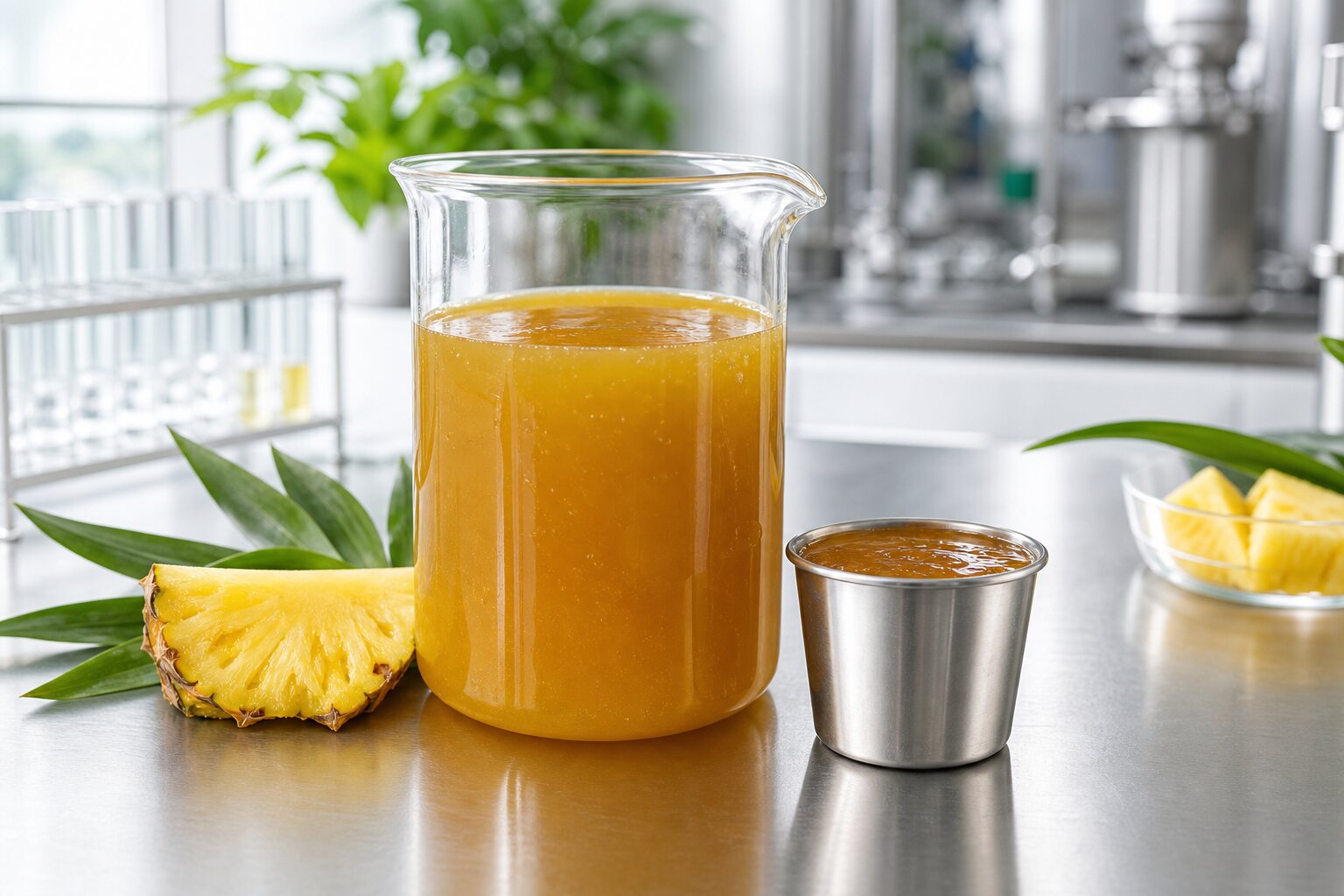
Fruit Concentrate
Pineapple Concentrate
Pineapple concentrate for beverage, sauce, dressing, glaze, bakery, and fruit-blend development with application-led review of dosage, sweet-tart balance, process, and formula efficiency.
Continue to sourcing guides
Fruit puree for packaged drinks and RTD
Fruit puree for beverage products such as juice drinks, smoothies, nectars, and RTD drinks. Helps bring real fruit taste, color, and texture into the recipe.
Pineapple concentrate for tropical drinks
Pineapple concentrate for beverages, tea blends, mocktail bases, and tropical drinks that need clear pineapple flavor in a practical format.
Keep learning
Related articles
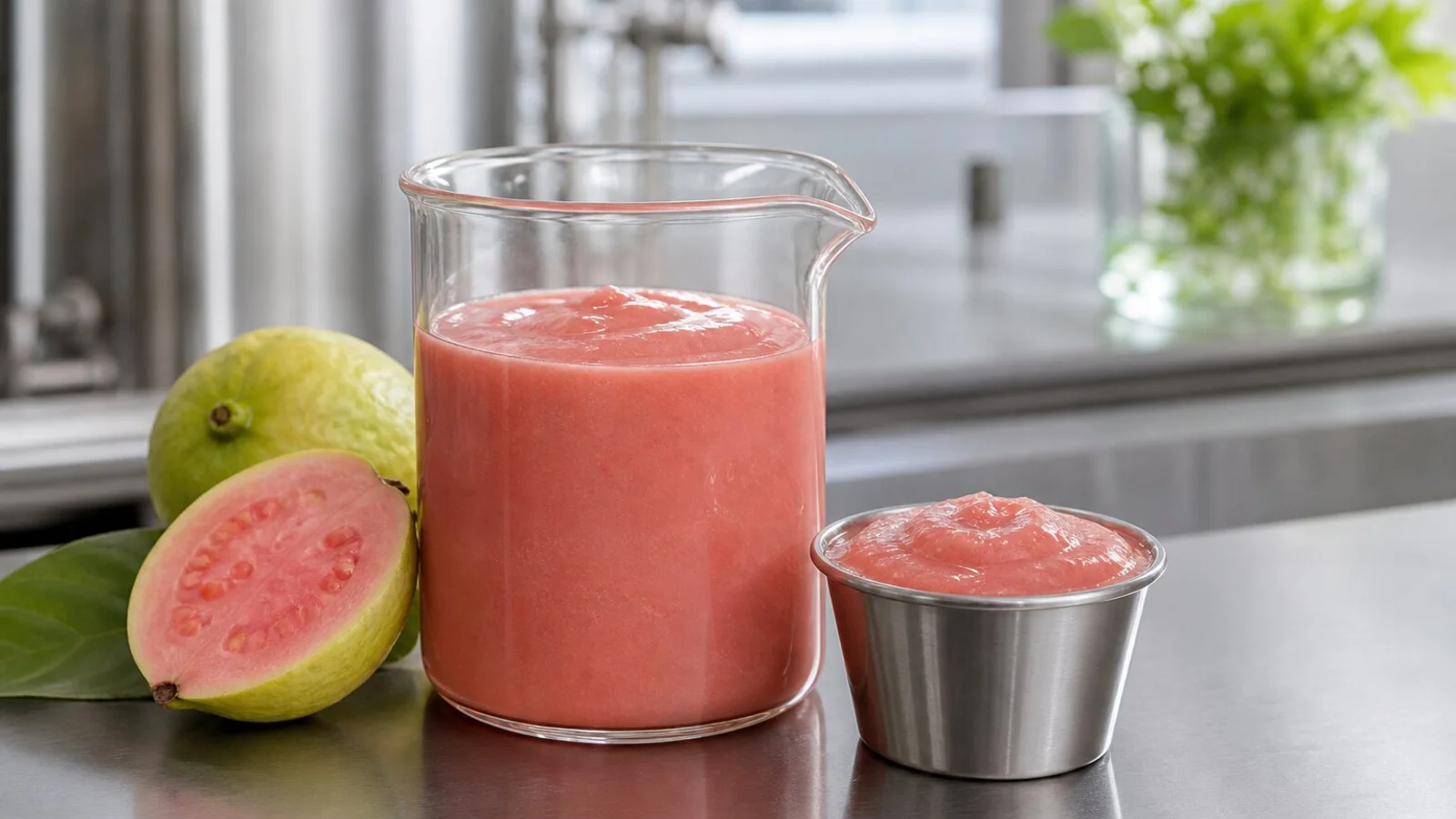
Fruit ingredient fundamentals
What is fruit puree, and when is it the right format?
Learn how fruit puree differs from juice, pulp, and concentrate, plus the checks R&D and procurement teams should make before formulation trials.
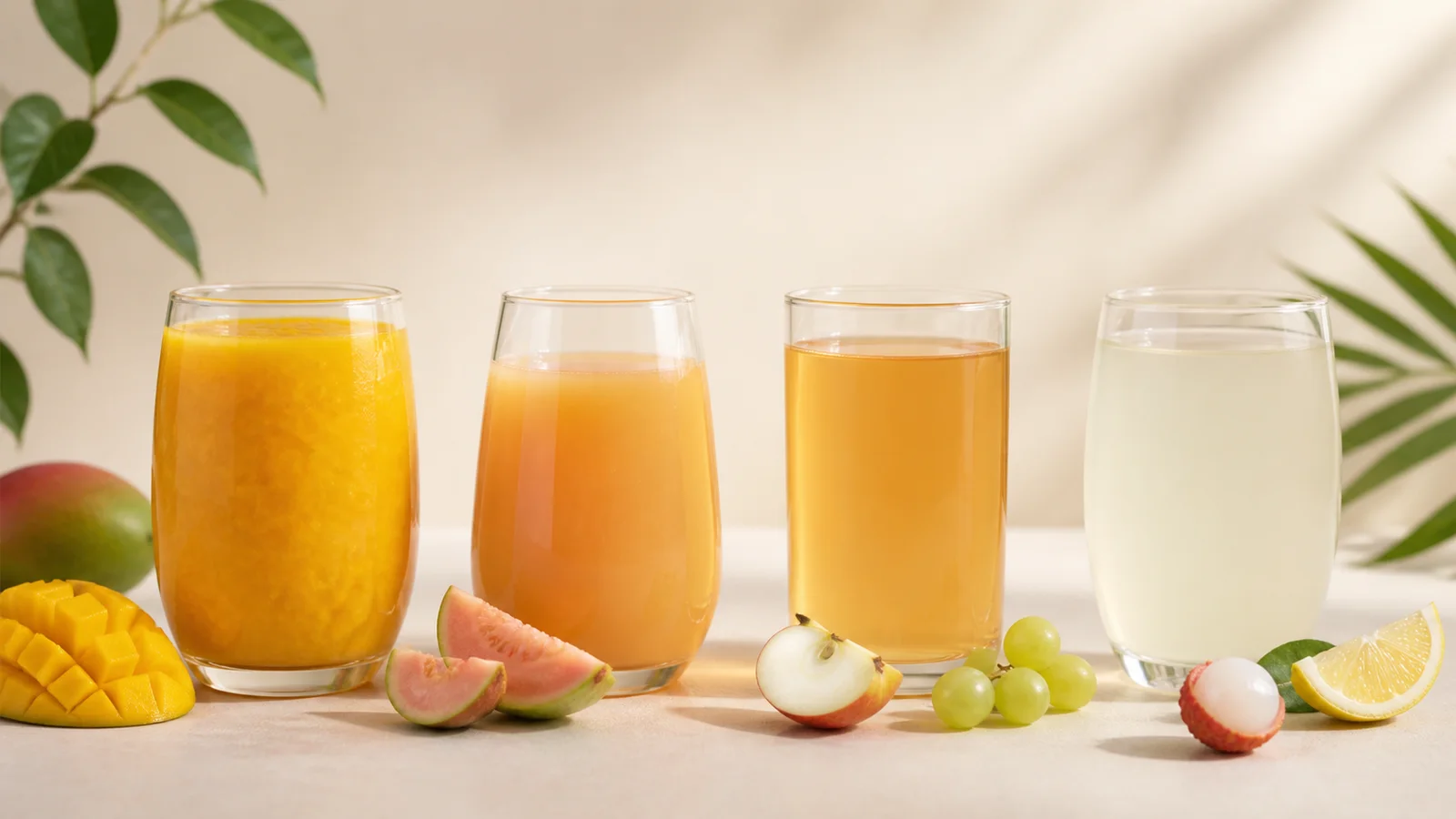
Regulation and formulation
Juice, nectar, juice drink, or fruit-flavored beverage?
A practical starting guide to juice, nectar, juice drink, and fruit-flavored beverage categories in Indonesia before formula and label approval.
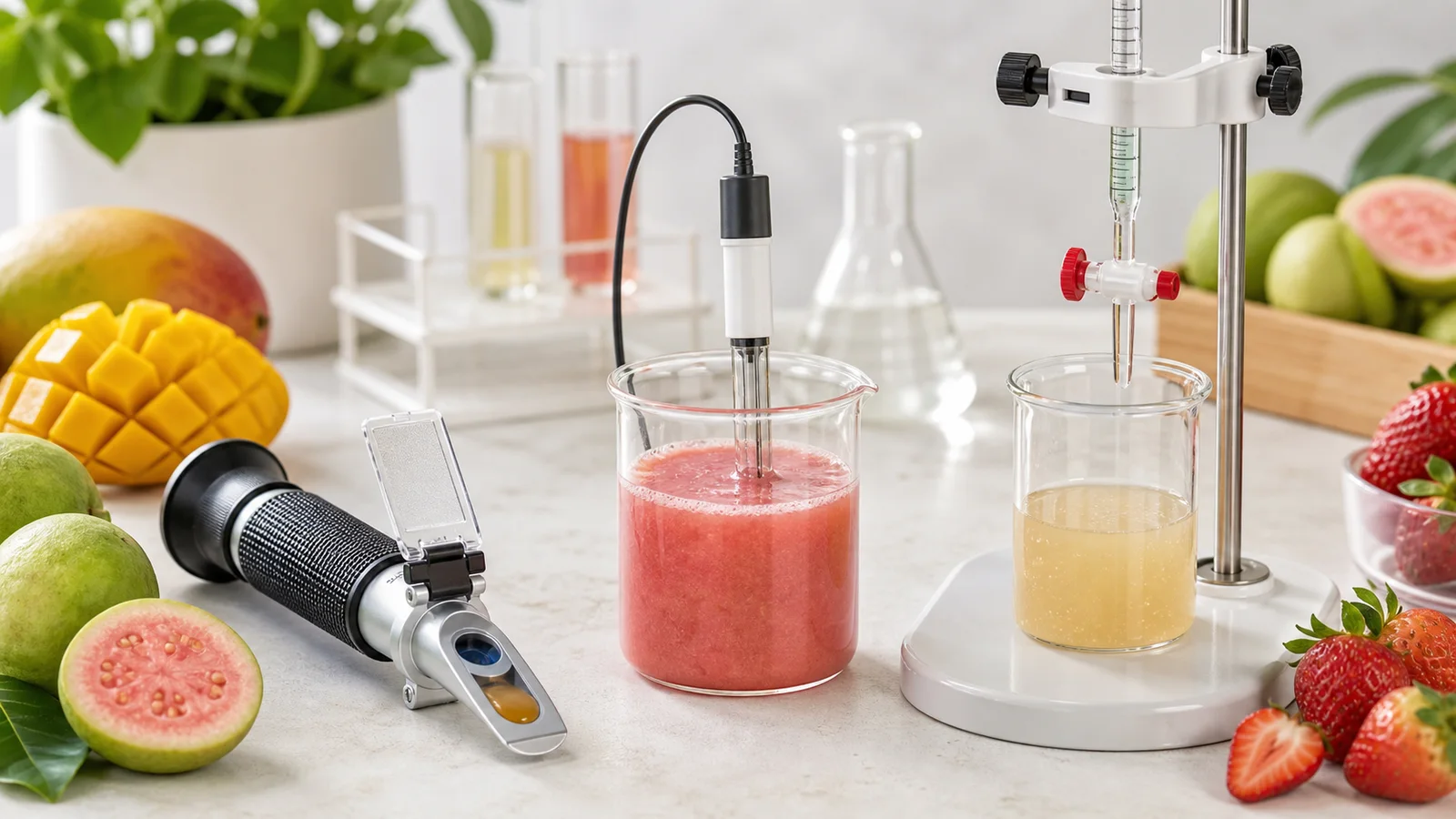
Quality control
Brix, pH, and total acidity answer different questions
Understand Brix, pH, and total acidity, how they relate to sensory consistency, and how to use them in formulation trials and quality control.