Quality control
Brix, pH, and total acidity answer different questions
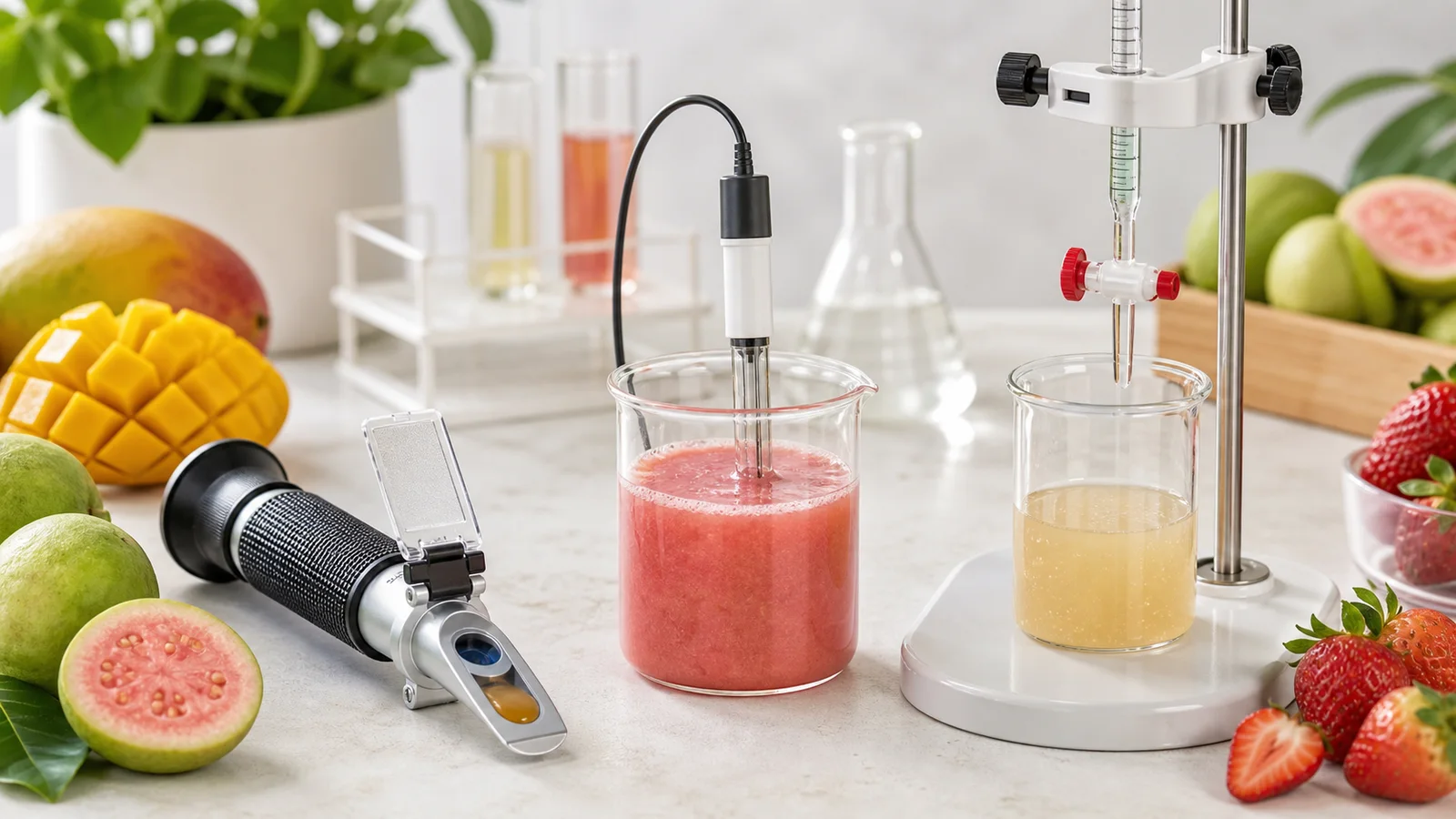
These three values frequently appear in fruit-ingredient specifications and COAs. Brix indicates soluble solids refractometrically, pH describes acid-base intensity, and total acidity measures titratable acid under a defined method. They complement rather than replace one another.
Quick answer
Brix, pH, and Total Acidity: How to Read All Three
Use Brix to monitor soluble solids, pH for acidity conditions relevant to formulation and process control, and total acidity for the amount of acid reacting in a titration. Two materials can have equal pH and different total acidity, or equal Brix and different sensory balance.
- 01Compare results only when sampling, preparation, temperature, and method are aligned.
- 02Use the same acid basis when reporting total acidity, as defined by the method.
- 03Do not use these three values alone to conclude shelf life or microbiological safety.
What each parameter measures
Brix derives from refractive index and in fruit matrices represents soluble solids affecting that reading, not specific sugars. pH relates to hydrogen-ion activity and describes acid-base intensity under the sample condition. Total acidity is obtained by titration to a defined endpoint and reported using the method's calculation basis.
These different concepts explain why one value cannot simply calculate the others without appropriate data and a valid model. Ingredient composition, buffer capacity, acid type, minerals, and other constituents affect the relationship. Always review units, acid basis, and method in the specification.
| Parameter | It answers | It does not automatically answer |
|---|---|---|
| Brix | How much soluble solid refractometrically? | Type and amount of a specific sugar |
| pH | How intense is the acid-base condition? | Total amount of acid in the sample |
| Total acidity | How much acid titrates under the method? | pH or sensory sourness directly |
Why pH and total acidity can move differently
pH is influenced by free hydrogen-ion activity, while total acidity measures acid components reacting during titration to an endpoint. A buffered system can carry more titratable acidity without a proportionate pH change. Acid type also affects taste and system behavior.
Sensory sourness likewise does not follow one value alone. Sugar, aroma, temperature, mouthfeel, and aftertaste interact with acidity. Analytical and sensory data should be reviewed together, especially during reformulation or supplier change.
Building a repeatable quality-control method
Define sampling point, preparation, homogenization, temperature, instrument, calibration frequency, replicates, and rounding. For pH, control electrode condition and buffer calibration. For titration, record reagent normality, endpoint, sample mass, dilution, and acid basis.
The specification should identify the agreed internal or reference method. If supplier and buyer use different procedures, align methods before disputing small differences. A retained sample can support investigation when incoming results do not match the COA.
- Match lot identity across the COA and sample.
- Record instrument identity and calibration status.
- Retain the raw result before rounding.
- Define escalation for out-of-specification and out-of-trend results.
Using the data in an R&D trial
Establish a baseline for the ingredient and formula base, then measure at relevant process points. After adding puree or concentrate, record dosage, water, sweetener, acid, heating, and hold time. This mass balance makes changes in Brix, pH, and total acidity traceable.
Initial targets can act as a design window, but acceptance still needs sensory, process behavior, and a stability plan. If scale-up changes shear, heating profile, or evaporation, validate the measurement points and targets used in the bench trial.
Limits for food-safety decisions
pH can be important in a particular hazard control, but one number does not prove an entire process is safe. Product, organism of concern, formula, heat process, packaging, water activity, hygiene, and storage require assessment in a validated food-safety plan.
Brix and total acidity likewise cannot replace microbiological criteria or a shelf-life study. Use each measurement for its defined purpose and base safety decisions on risk assessment, regulation, and qualified technical review.
Primary references
These references support the educational framework. Product-specific and regulatory decisions still require current-document review by qualified personnel.
Related ingredients
Fruit Puree
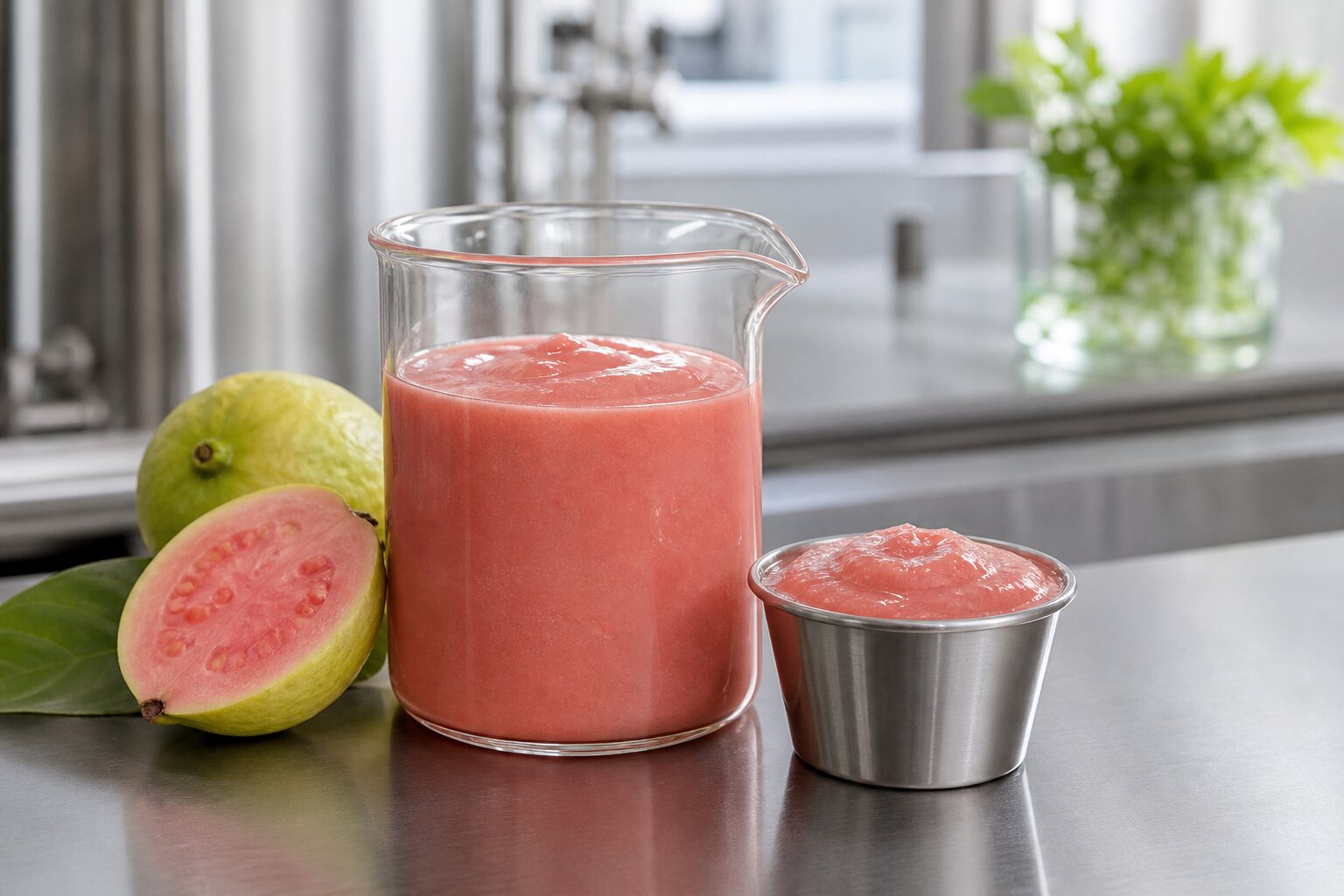
Guava Puree
Guava puree for RTD beverage, dairy, bakery, dessert, and beverage-service development with application-led review of flavour, body, process, and vendor needs.
Fruit Puree
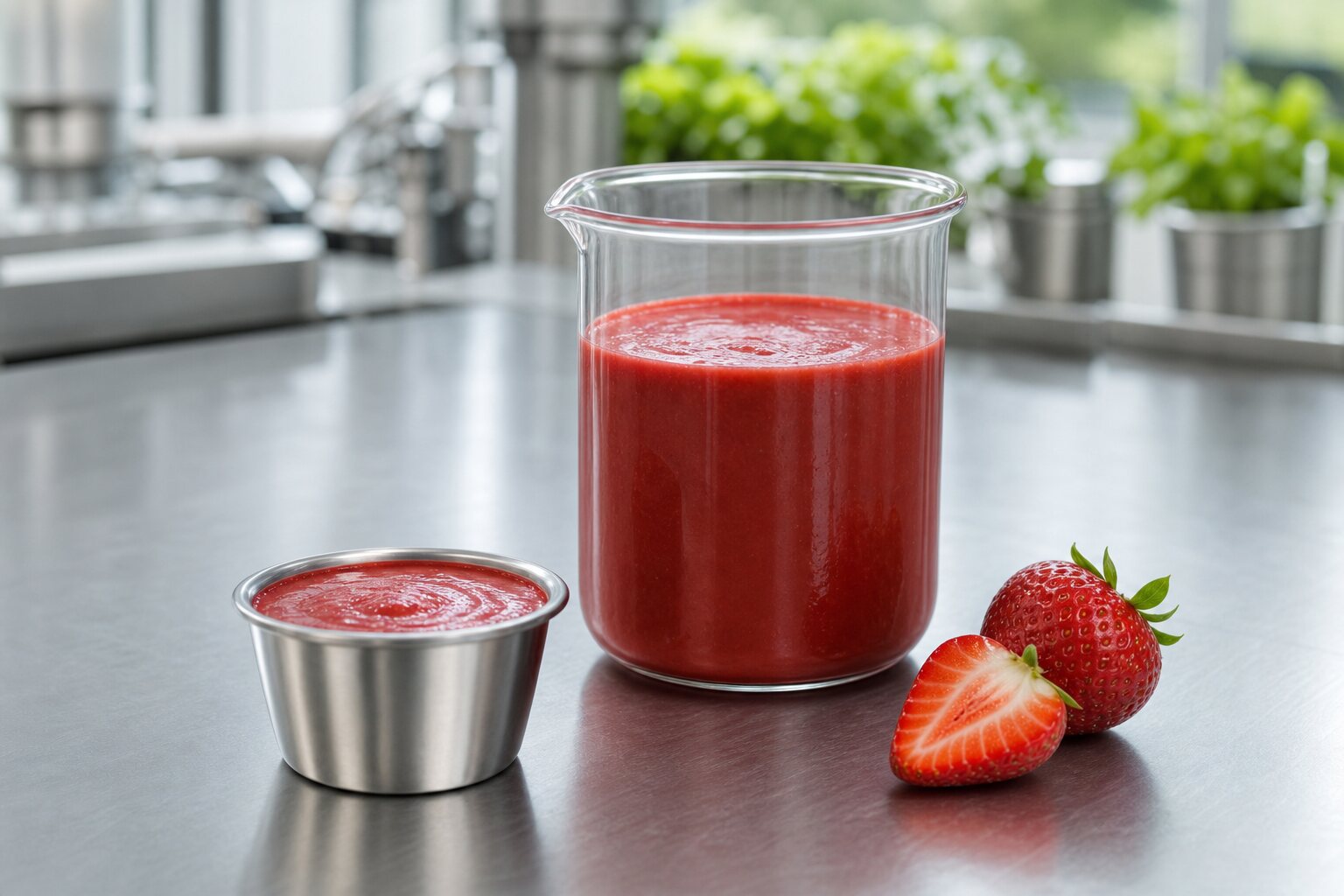
Strawberry Puree
Strawberry puree for dairy, ice cream, dessert, bakery, and beverage development with application-led review of colour, aroma, acidity, texture, and process.
Fruit Concentrate
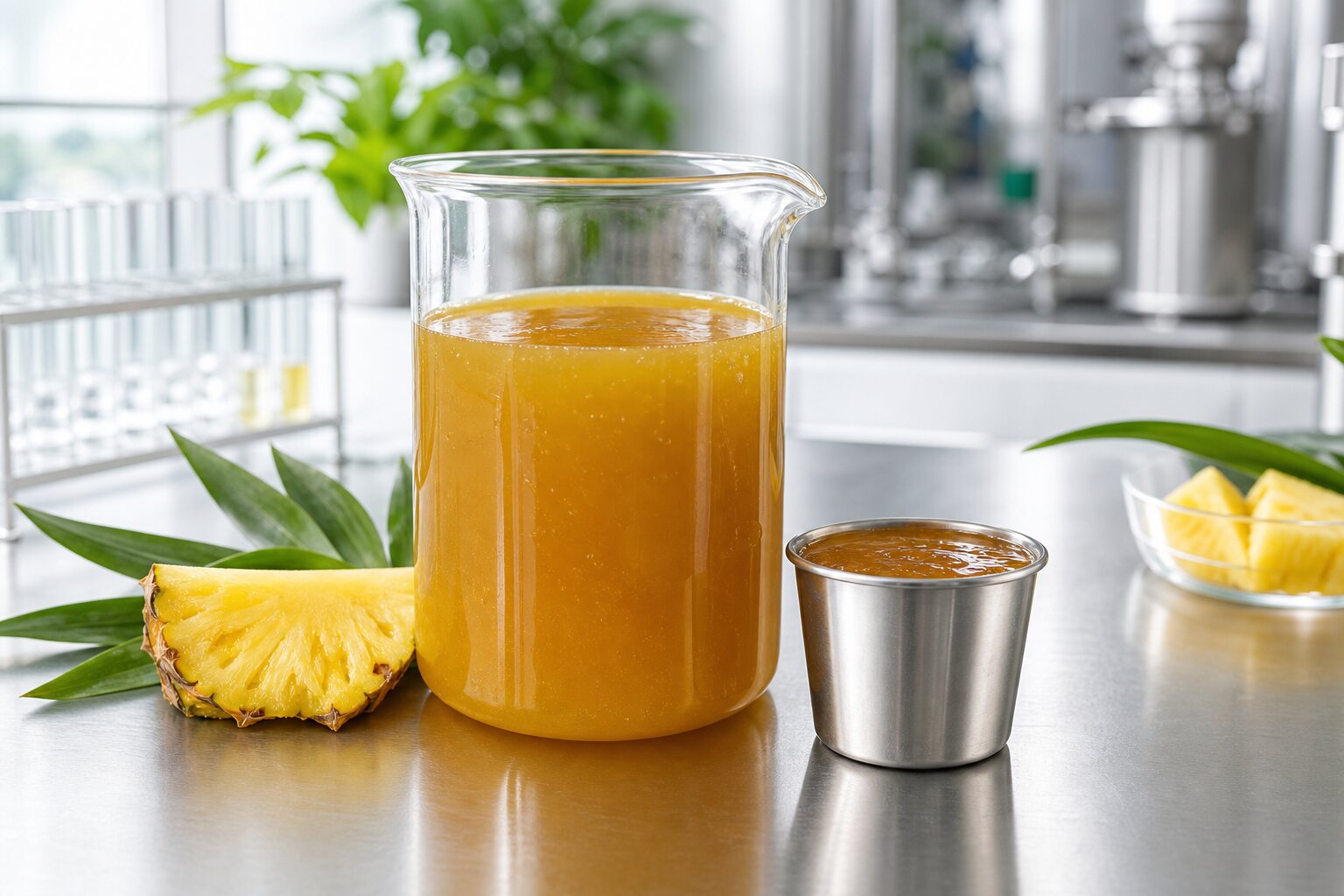
Pineapple Concentrate
Pineapple concentrate for beverage, sauce, dressing, glaze, bakery, and fruit-blend development with application-led review of dosage, sweet-tart balance, process, and formula efficiency.
Continue to sourcing guides
Fruit puree for packaged drinks and RTD
Fruit puree for beverage products such as juice drinks, smoothies, nectars, and RTD drinks. Helps bring real fruit taste, color, and texture into the recipe.
Pineapple concentrate for tropical drinks
Pineapple concentrate for beverages, tea blends, mocktail bases, and tropical drinks that need clear pineapple flavor in a practical format.
Keep learning
Related articles
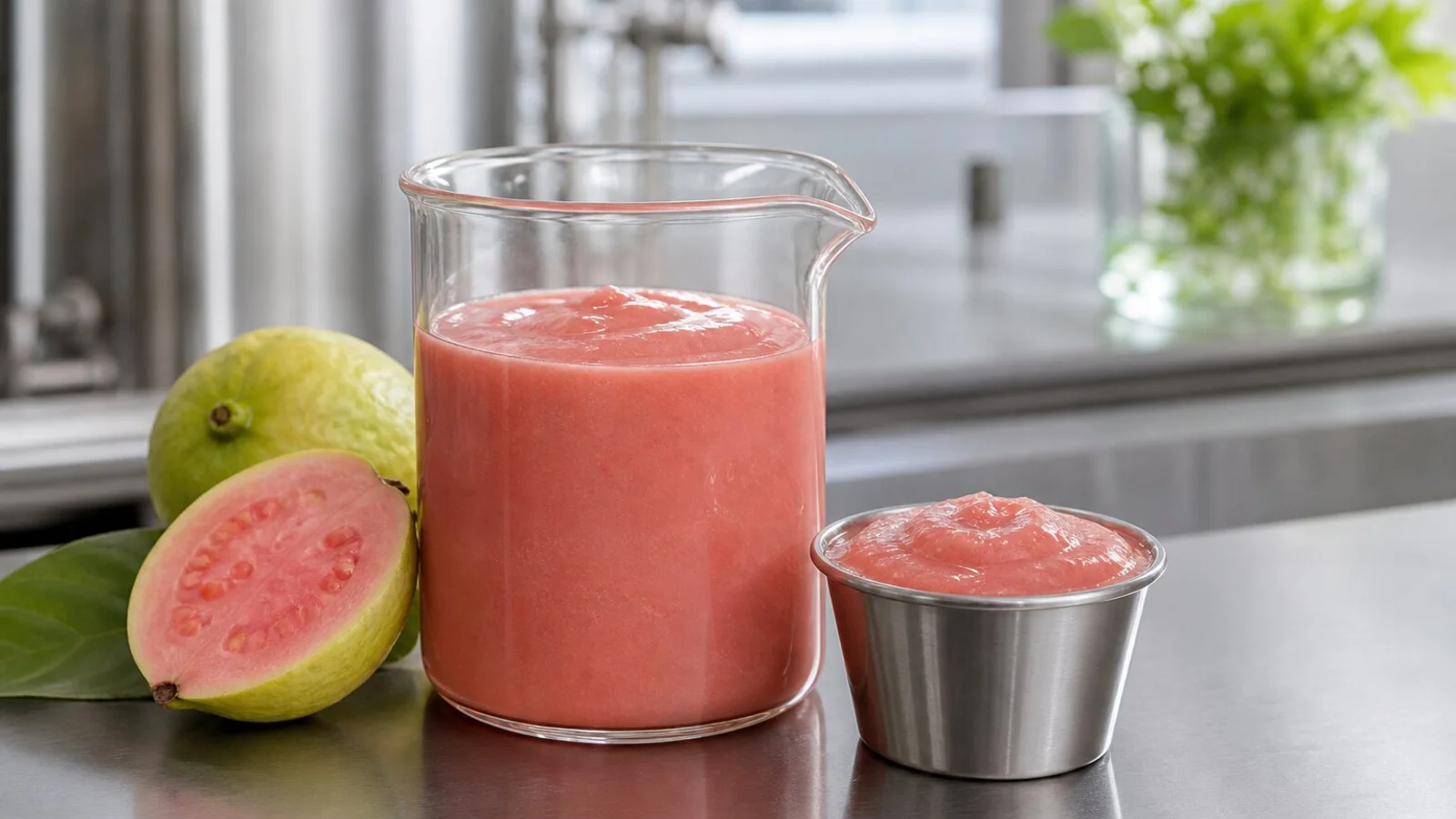
Fruit ingredient fundamentals
What is fruit puree, and when is it the right format?
Learn how fruit puree differs from juice, pulp, and concentrate, plus the checks R&D and procurement teams should make before formulation trials.
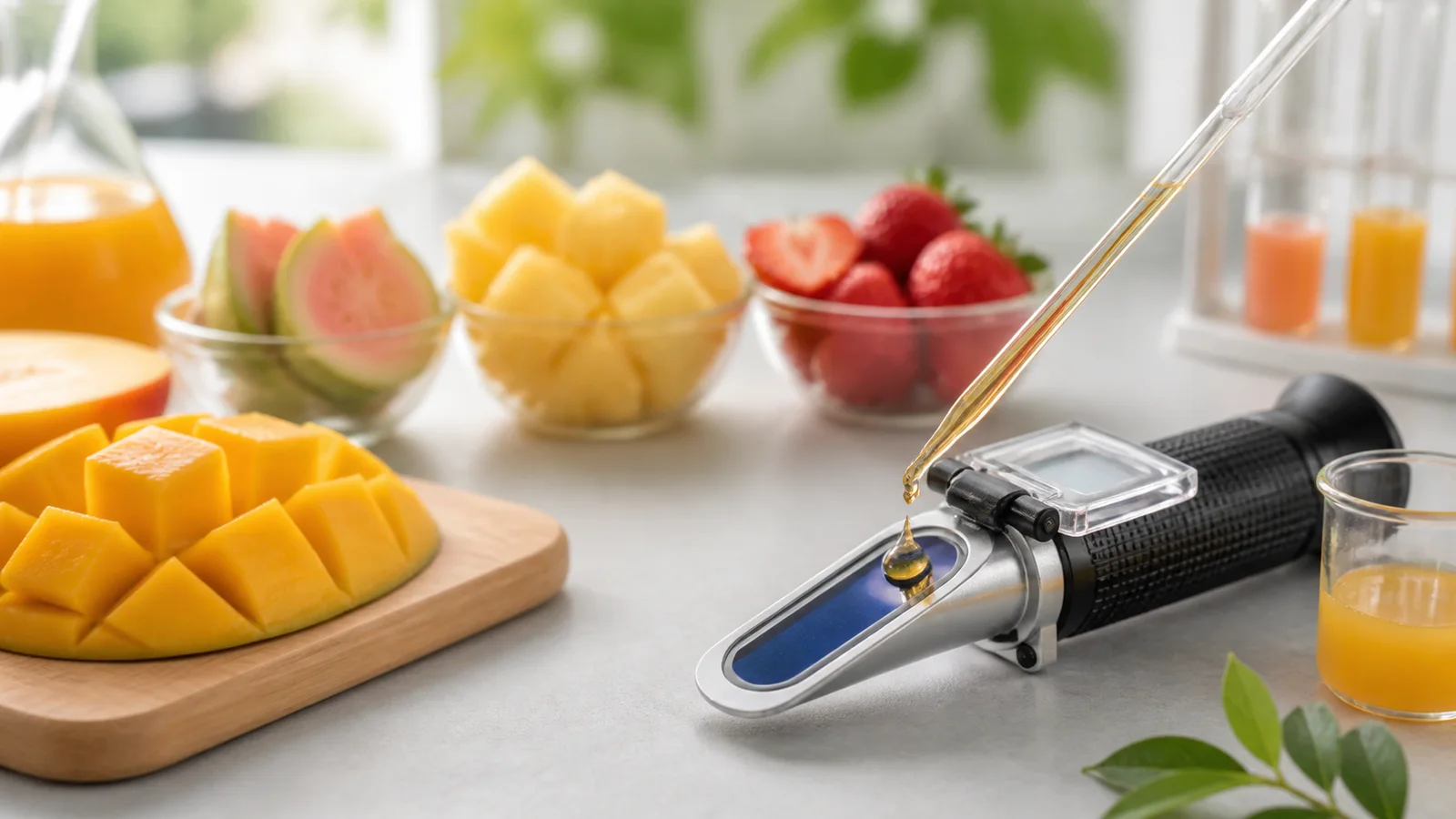
Quality control
What is Brix, and what does it actually measure?
Understand degrees Brix, refractometer use, temperature and matrix effects, and why Brix is not always an exact measure of sugar content.
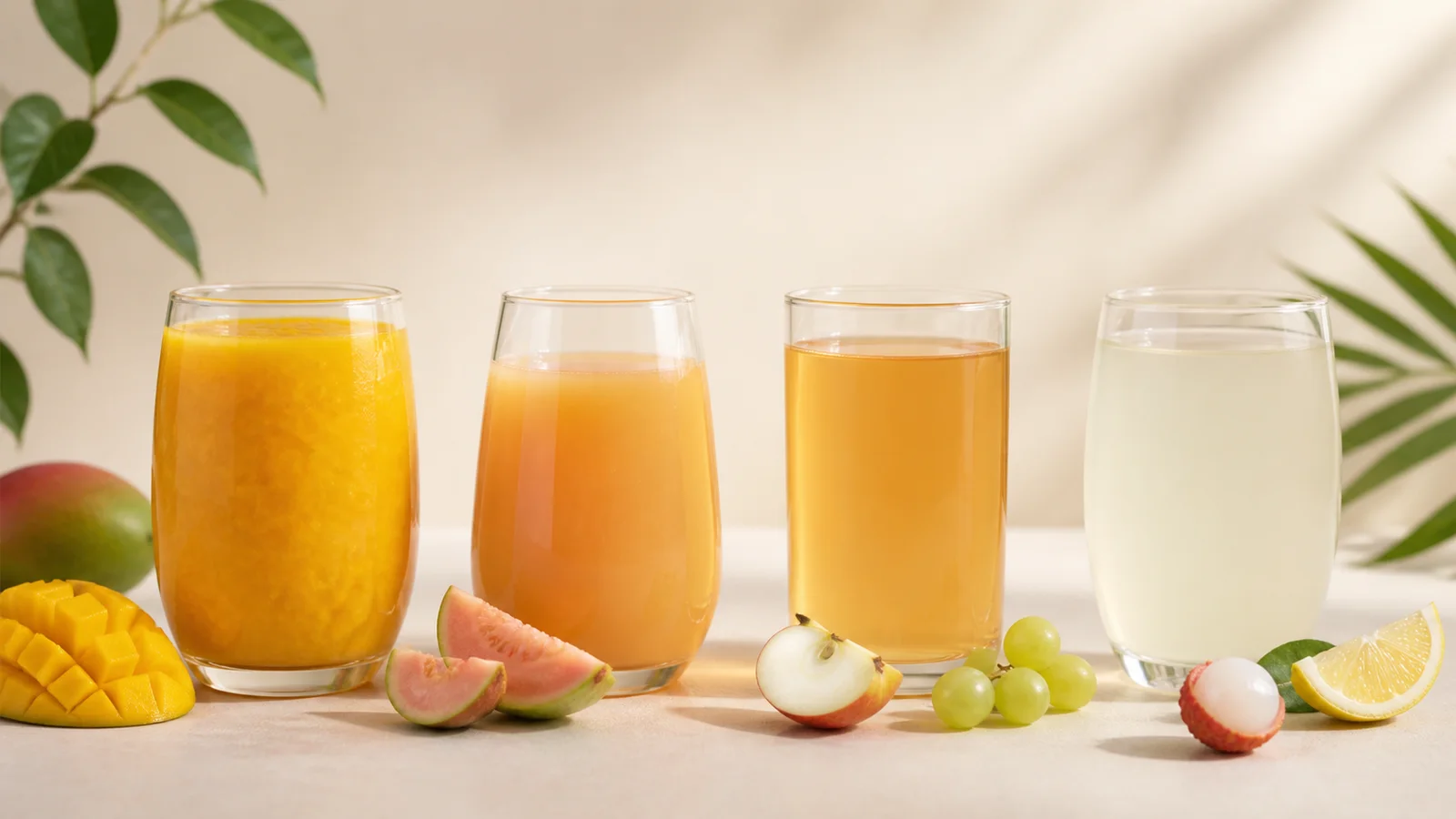
Regulation and formulation
Juice, nectar, juice drink, or fruit-flavored beverage?
A practical starting guide to juice, nectar, juice drink, and fruit-flavored beverage categories in Indonesia before formula and label approval.